View methods side by side.
Choose up to four methods. Add them using the search and share the comparison by copying its link.
| Criterion | 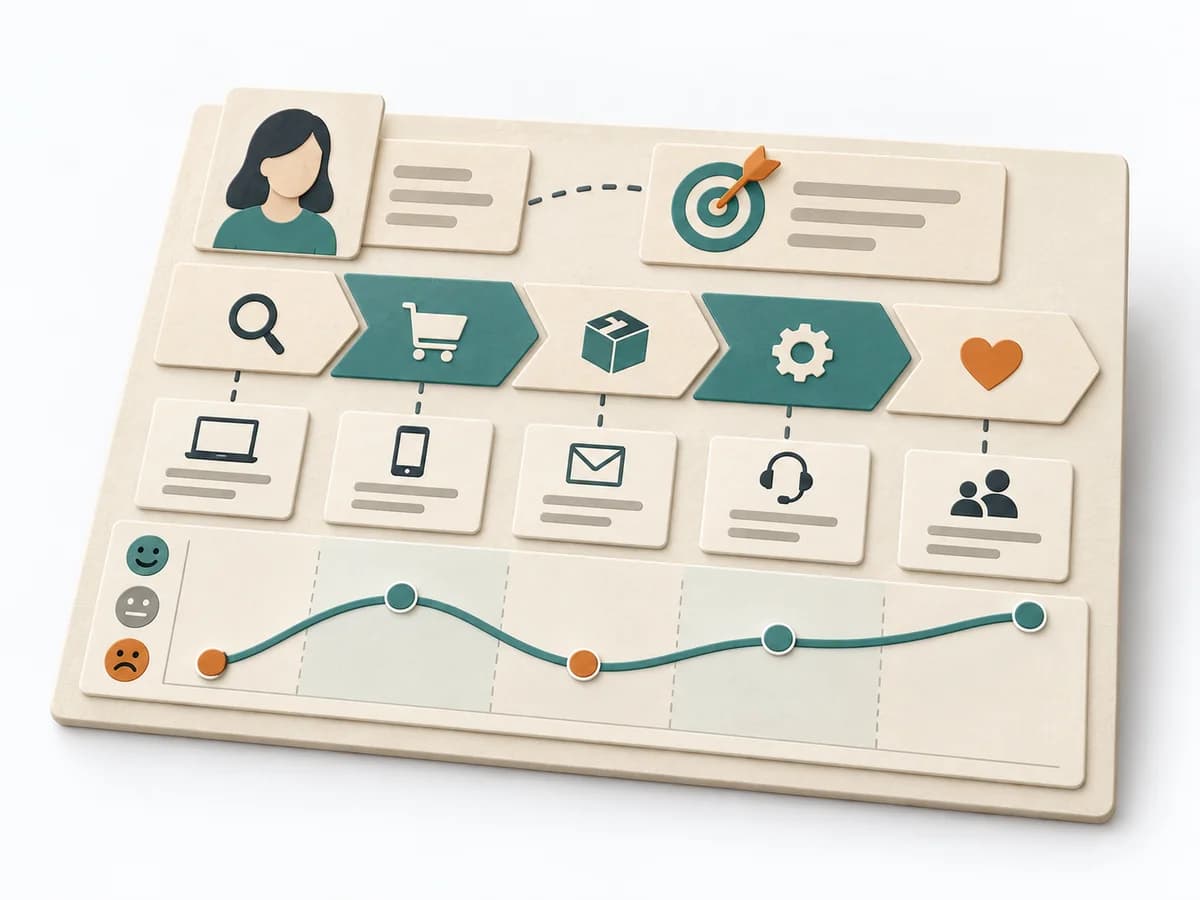 UX Design Customer Journey Canvas |  UX Research Personas | 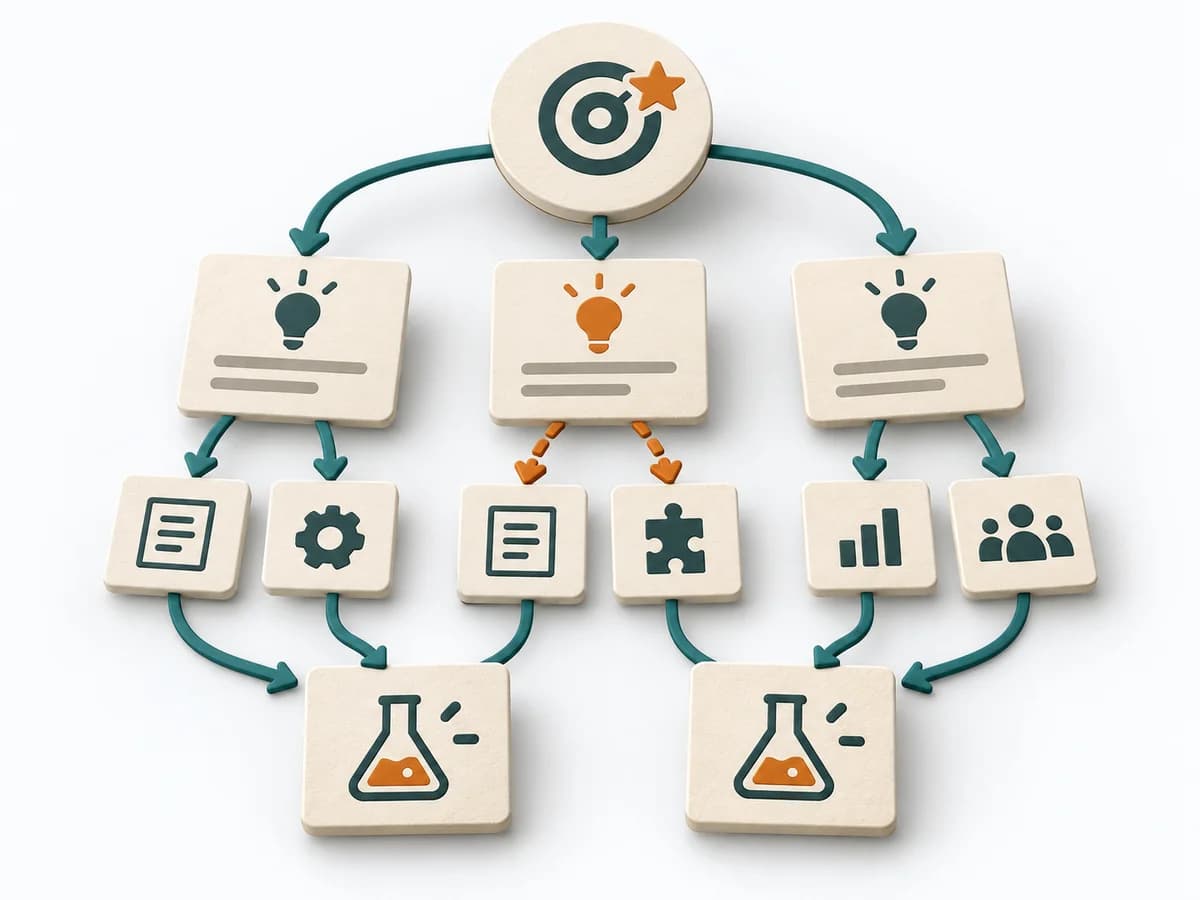 Product Discovery Opportunity Solution Tree |  UX Design Lean UX Canvas |
|---|---|---|---|---|
Purposedifferent | When a journey needs to be understood across several phases, it arranges experience, touchpoints, and opportunities into one picture. It makes gaps and friction along the user path clear. | When target groups stay too vague and teams talk about the same people differently, personas create a shared, solid picture of usage. Condensed profiles make needs, contexts, and differences tangible enough for decisions. | When discovery keeps swinging between goals, ideas, and learning loops, it creates clear steering logic. It connects the desired outcome, opportunities, and experiments into a legible structure. | The Lean UX Canvas helps clarify user behavior, touchpoints, and concept decisions. It makes assumptions and desired outcomes visible and captures the result as a completed canvas, hypothesis list, and first experiment. |
Complexitysame | Medium | Medium | Medium | Medium |
Timedifferent | 1-3 h | 1-3 Tage | 1-2 h Setup, laufend | 2-3 h |
Participantsdifferent | 3-10 | Internes Team | 2-6 | 3-8 |
Formatdifferent | Workshop | Workshop + async | Workshop + async | Workshop + async |
Outputdifferent | Customer Journey Canvas, Pain Points, Experience Opportunities | Persona Profiles, Needs Summary, Scenario Notes | Opportunity Solution Tree, Experiment Backlog, Learning Log | Completed Lean UX Canvas, Hypothesis list, First experiment |
Tagsno overlap | JourneyCustomerService designCanvas | ResearchCustomerSynthesis | DiscoveryOutcomesExperimentsOpportunity | CanvasHypothesisOutcomesDiscovery |