View methods side by side.
Choose up to four methods. Add them using the search and share the comparison by copying its link.
| Criterion | 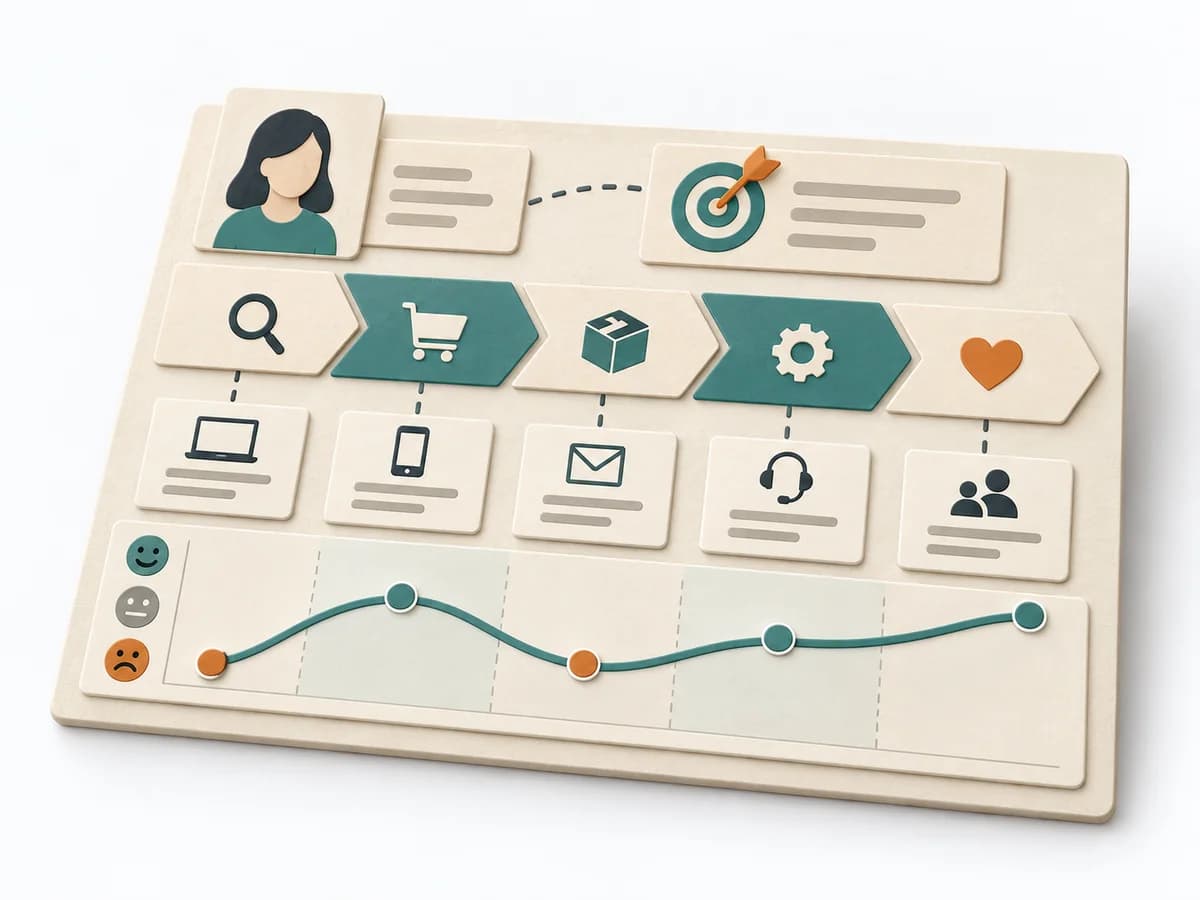 UX Design Customer Journey Canvas | 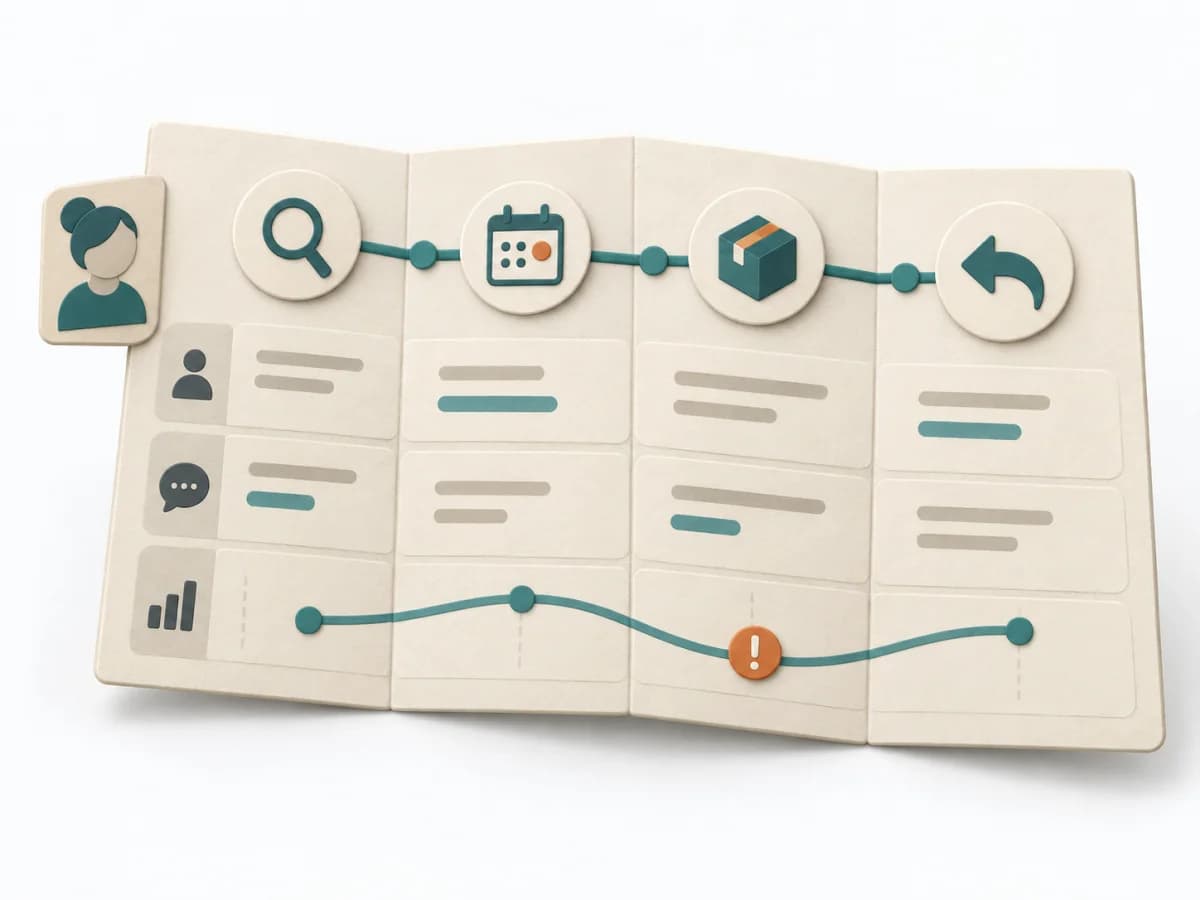 UX Research Customer Journey Mapping | 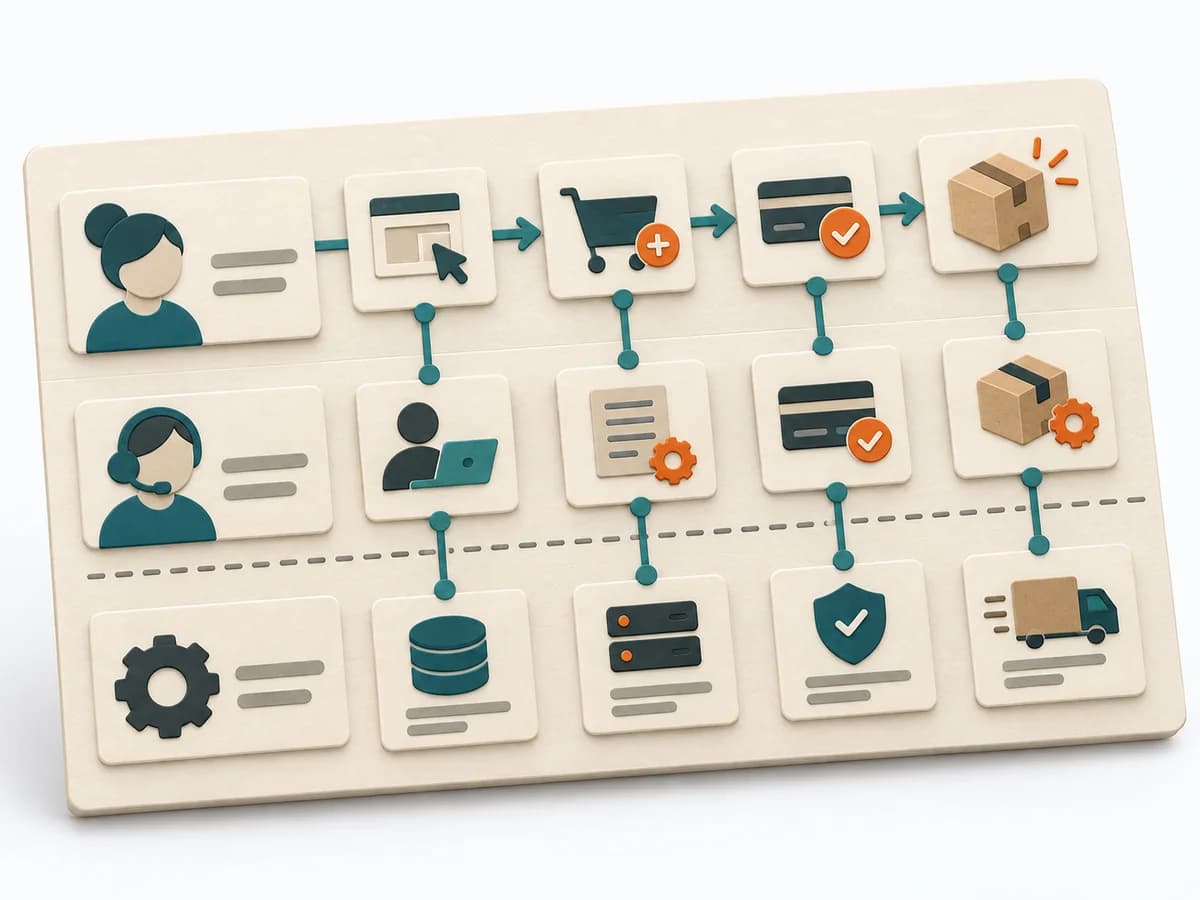 UX Design Service Blueprinting | 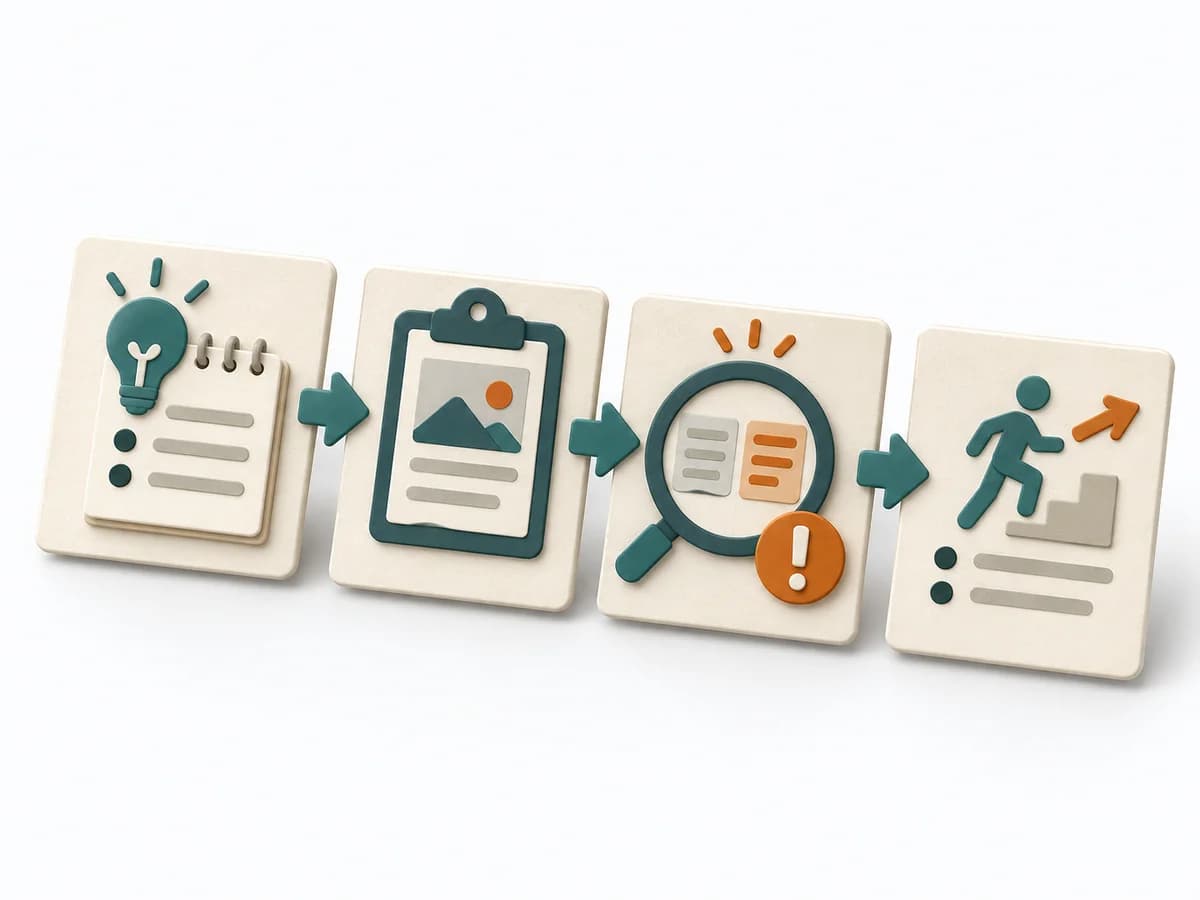 Operations After-Action Review |
|---|---|---|---|---|
Purposedifferent | When a journey needs to be understood across several phases, it arranges experience, touchpoints, and opportunities into one picture. It makes gaps and friction along the user path clear. | When a user journey falls apart across many touchpoints, customer journey mapping makes the experience visible as a coherent arc. Phases, emotions, and breaks become legible enough to prioritize critical moments deliberately. | When a service experience is spread across several touchpoints, it brings frontstage and backstage together. It shows where user contact and internal responsibility must fit. | After missions or project phases with unclear outcomes, the method makes visible what actually happened and what can be learned from it. It separates course, effect, and causes so experience turns into solid improvement. |
Complexitydifferent | Medium | Medium | High | Low |
Timedifferent | 1-3 h | 2-4 h | 0.5-2 Tage | 20-45 min |
Participantsdifferent | 3-10 | 4-10 | 6-12 | 3-12 |
Formatdifferent | Workshop | Workshop | Workshop | Workshop + async |
Outputdifferent | Customer Journey Canvas, Pain Points, Experience Opportunities | Journey Map, Pain-point List, Opportunity Backlog | Service Blueprint, Fail Points, Ownership Map | Lessons learned, Action items, Event summary |
Tagsno overlap | JourneyCustomerService designCanvas | JourneyServiceService design | Service designOperationsJourneyBlueprint | LearningOperationsImprovement |