View methods side by side.
Choose up to four methods. Add them using the search and share the comparison by copying its link.
| Criterion |  UX Design Customer Journey Canvas |  UX Research Customer Journey Mapping | 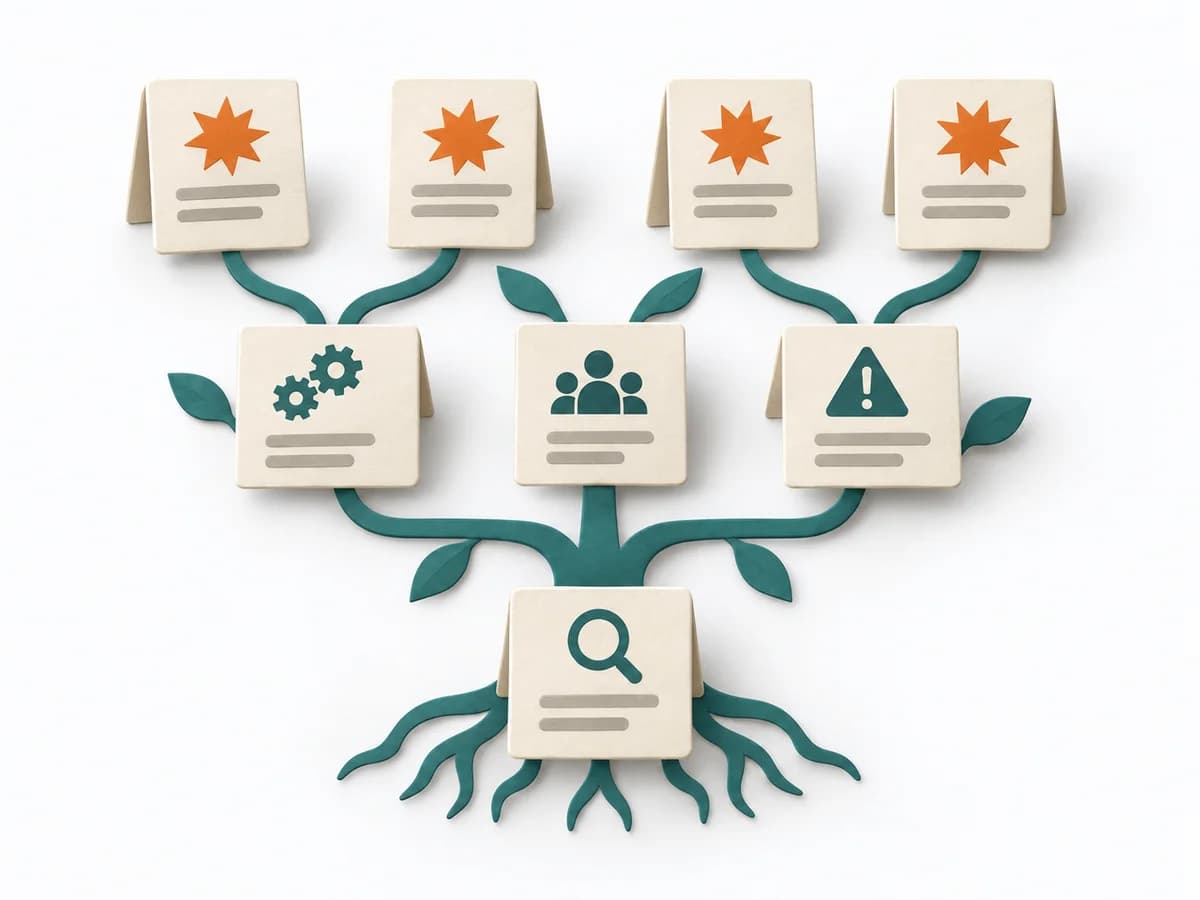 Operations Family Tree Analysis |  Operations 5 Whys |
|---|---|---|---|---|
Purposedifferent | When a journey needs to be understood across several phases, it arranges experience, touchpoints, and opportunities into one picture. It makes gaps and friction along the user path clear. | When a user journey falls apart across many touchpoints, customer journey mapping makes the experience visible as a coherent arc. Phases, emotions, and breaks become legible enough to prioritize critical moments deliberately. | For a series of incidents with a similar pattern, the method arranges individual events as branches of a common origin. It makes visible which conditions keep recurring. | For a single, hard-to-explain deviation, the method exposes the causal chain behind the visible symptom. It keeps the cause open until a controllable condition emerges instead of a mere description. |
Complexitydifferent | Medium | Medium | Medium | Low |
Timedifferent | 1-3 h | 2-4 h | 2-4 h | 15-30 min |
Participantsdifferent | 3-10 | 4-10 | 2-6 | 2-6 |
Formatdifferent | Workshop | Workshop | Workshop + async | Workshop |
Outputdifferent | Customer Journey Canvas, Pain Points, Experience Opportunities | Journey Map, Pain-point List, Opportunity Backlog | Family Tree Diagram, Pattern Notes, Systemic Measures | Root cause notes, Countermeasures |
Tagsno overlap | JourneyCustomerService designCanvas | JourneyServiceService design | Root causePatternsIncidentSystemic | Root causeIncidentLeanProblem solving |