View methods side by side.
Choose up to four methods. Add them using the search and share the comparison by copying its link.
| Criterion |  Systems Thinking Current Reality Tree |  Facilitation Stakeholder Mapping |  Operations 5 Whys | 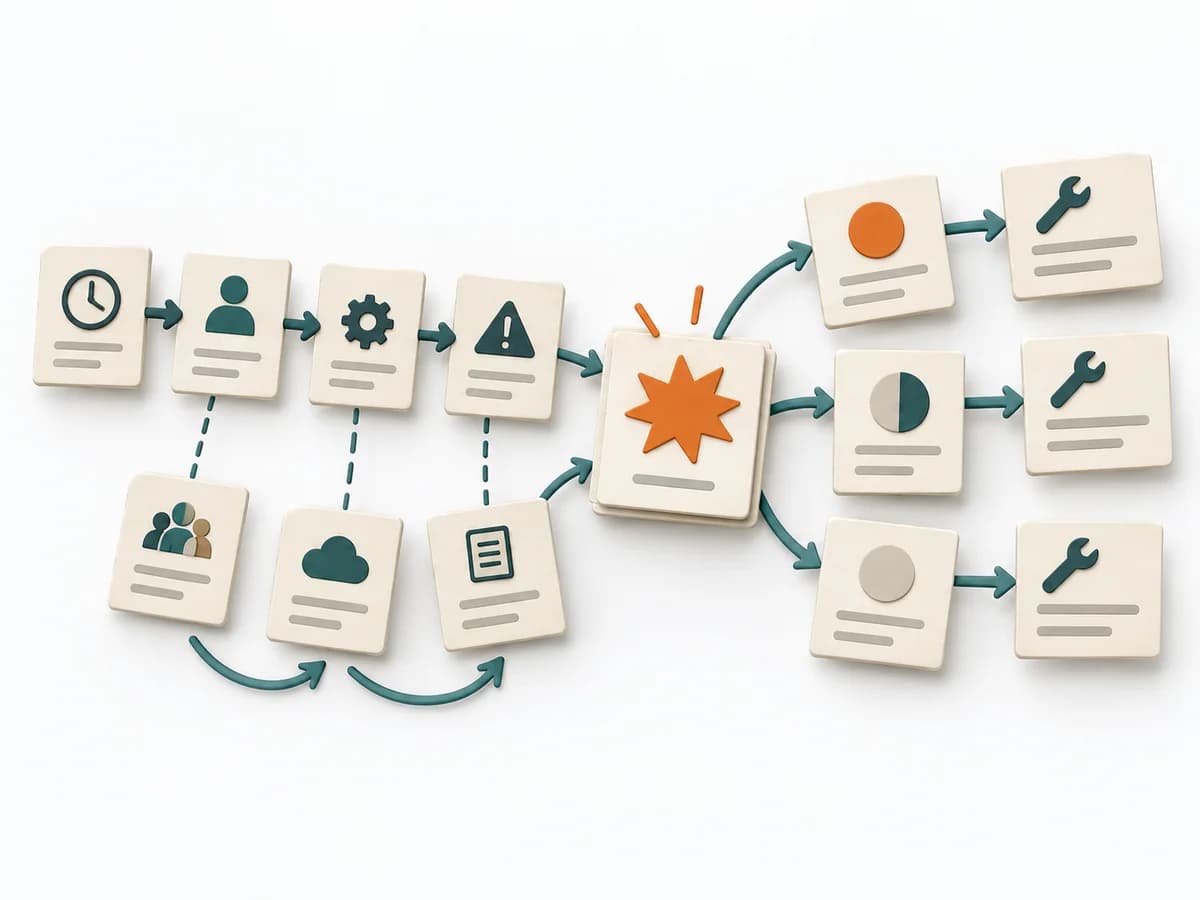 Operations Causal Factor Analysis |
|---|---|---|---|---|
Purposedifferent | A Current Reality Tree condenses many symptoms into a few causal chains. The method makes visible which core problems drive several negative effects at once. | When an initiative depends on many people, interests, and power dynamics, Stakeholder Mapping systematically orders the environment. It shows who influences, who is affected, and where relationship management or safeguarding matters first. | For a single, hard-to-explain deviation, the method exposes the causal chain behind the visible symptom. It keeps the cause open until a controllable condition emerges instead of a mere description. | For an event with a complicated course, the method breaks down the contributing factors along the timeline. It shows how conditions, decisions, and reactions together produce a course of events. |
Complexitydifferent | High | Low | Low | High |
Timedifferent | 2-6 h | 60–90 min | 15-30 min | 2-6 h |
Participantsdifferent | 3-8 | 2-8 | 2-6 | 3-10 |
Formatdifferent | Workshop | Workshop + async | Workshop | Workshop + async |
Outputdifferent | Current Reality Tree, Core Problems, Intervention Ideas | Stakeholder Map, Engagement Plan, Risk Notes | Root cause notes, Countermeasures | Event Timeline, Causal Factor Chart, Cause List, Corrective Actions |
Tagsno overlap | Systems thinkingRoot causeConstraintsCausality | StakeholdersAlignmentFacilitationChange | Root causeIncidentLeanProblem solving | CausalityIncidentRoot causeTimeline |