View methods side by side.
Choose up to four methods. Add them using the search and share the comparison by copying its link.
| Criterion | 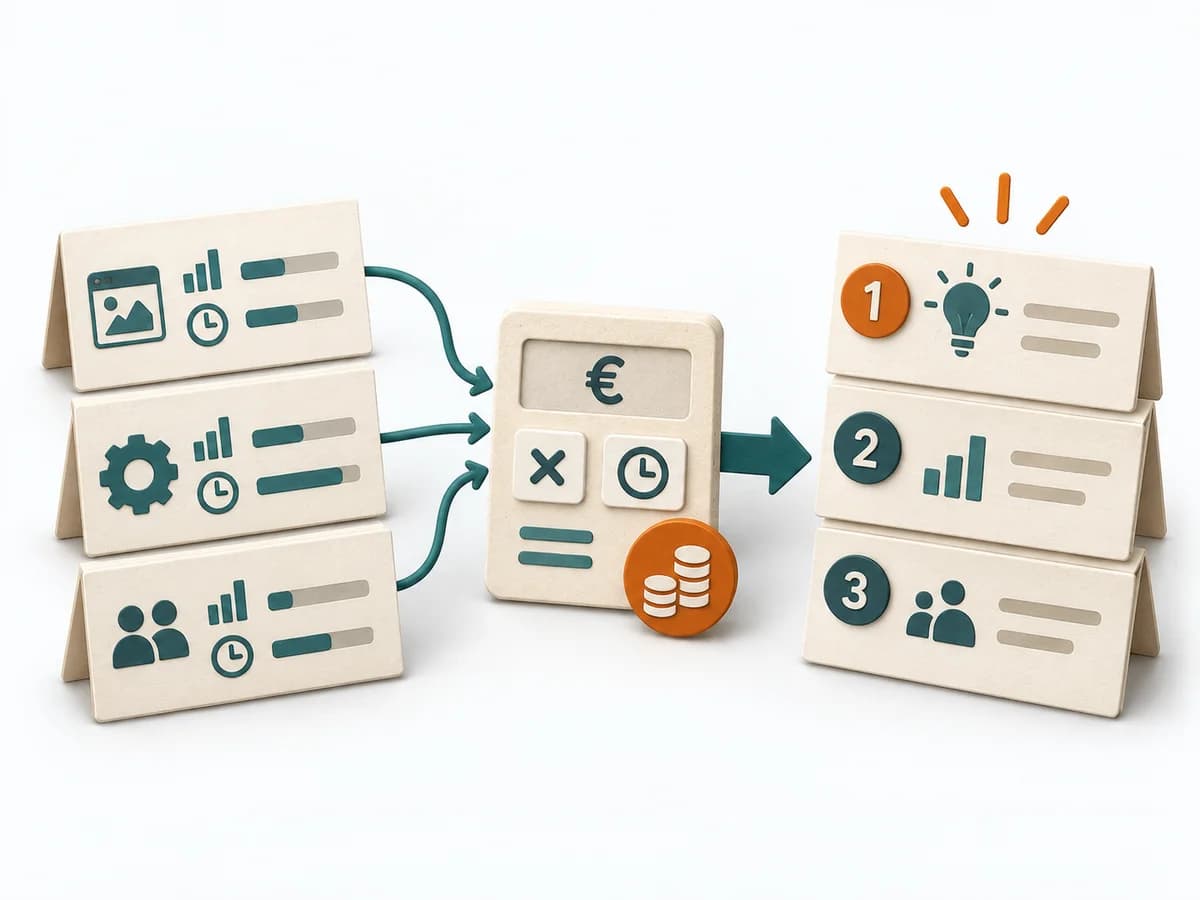 Delivery Cost of Delay |  Delivery MoSCoW |  Growth Flywheel |  Growth Hooked Model |
|---|---|---|---|---|
Purposedifferent | Helps clarify scope, order, and delivery flow in concrete terms. It makes work, constraints, and sequence manageable. The result is captured as a Cost of Delay table and prioritization sequence. | When a release carries too many demands and priorities are only ever negotiated, MoSCoW creates clear boundaries for the next cut. Must, Should, Could, and Won't make commitment, room for maneuver, and trade-off logic visible to everyone involved. | Growth often breaks down where a reinforcing mechanism builds up too much friction. A Flywheel shows the cycle of value, repetition, and reinforcement meant to sustain growth. | The Hooked Model helps clarify engagement loops, user behavior, and experiments. It makes repeat behavior measurable and captures the result as a hooked loop, trigger map, and reward design. |
Complexitydifferent | High | Low | Medium | Medium |
Timedifferent | 90-180 min | 30-90 min | 60-120 min | Multiple workshops over several weeks |
Participantsdifferent | 3-8 | 3-12 | 3-8 | 2-8 |
Formatdifferent | Workshop | Workshop + async | Workshop | Workshop + async |
Outputdifferent | CoD Table, Prioritization Sequence | Prioritized Backlog, Release Scope, Tradeoff Notes | Flywheel Map, Friction Points, Growth Levers, Experiment Backlog | Hooked loop, Trigger map, Reward design, Ethics check |
Tagsno overlap | PrioritizationDeliveryEconomicsDecision | PrioritizationScopeDecision | GrowthRetentionConversion | GrowthBehaviorRetention |