View methods side by side.
Choose up to four methods. Add them using the search and share the comparison by copying its link.
| Criterion | 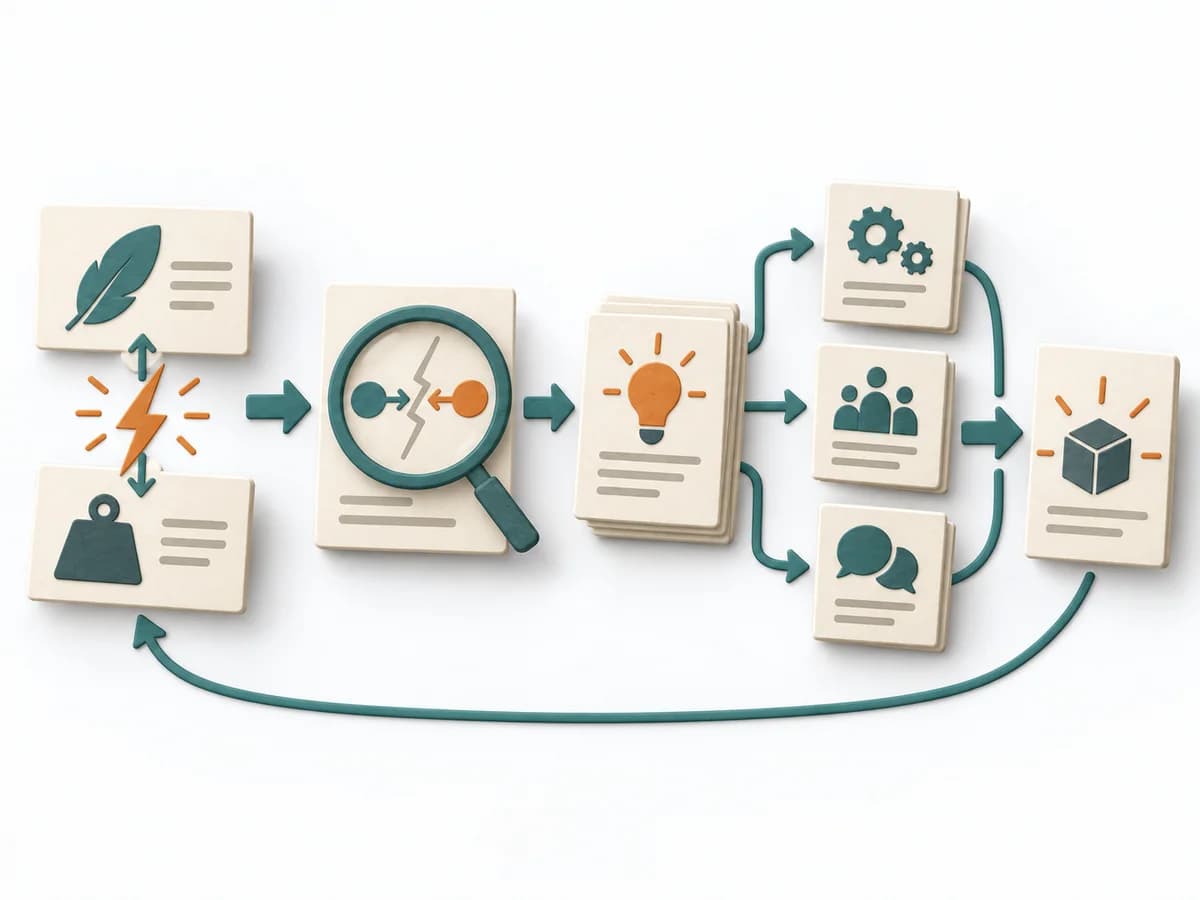 Innovation Contradiction Analysis |  Decision Making Constraint Analysis |  Operations Root Cause Analysis | 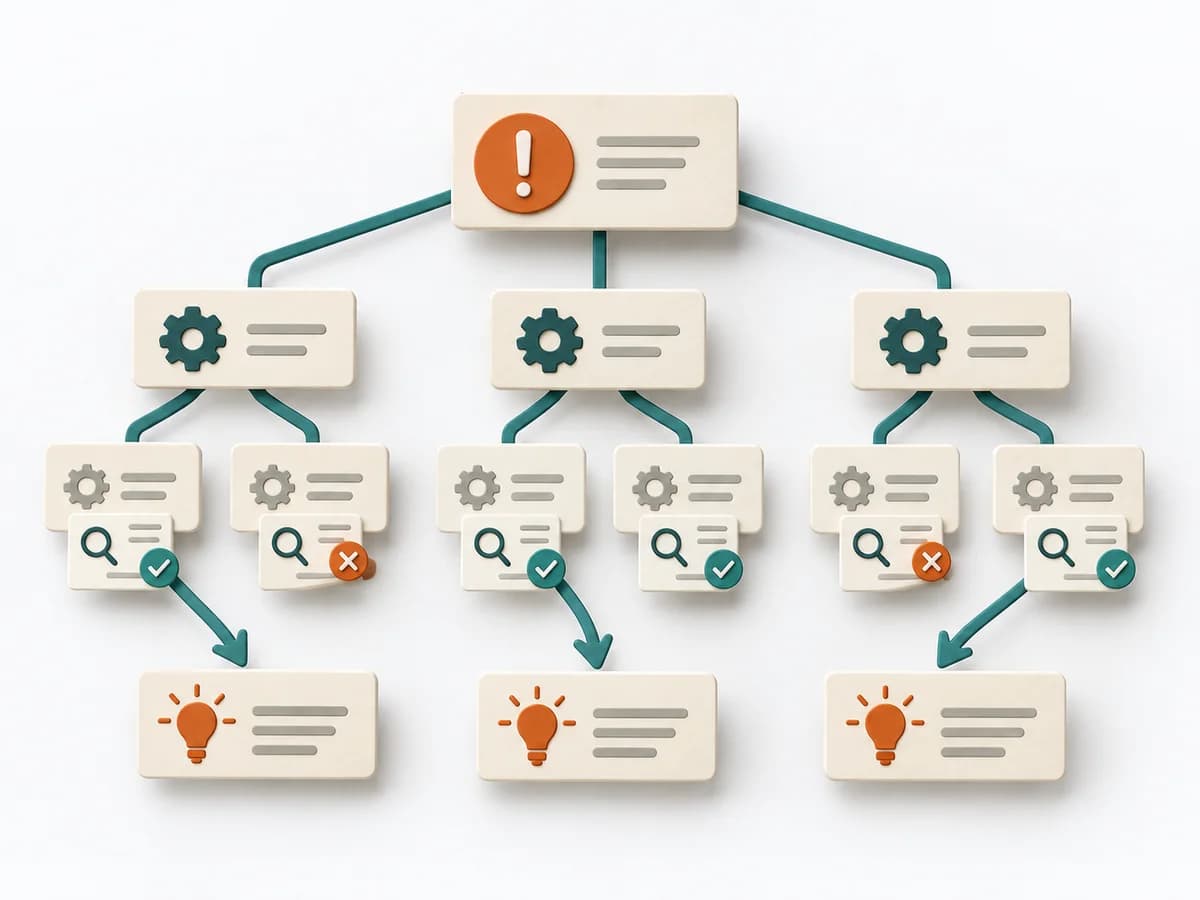 Operations Root Cause Tree Analysis |
|---|---|---|---|---|
Purposedifferent | When a system should improve while another measure suffers as a result, the method makes the underlying conflict precisely formulable. It separates the desired effect from its side effect. This makes solutions possible that address the contradiction deliberately instead of half-heartedly. | When an initiative stalls, the limit often lies not in the idea but in hard or soft boundary conditions. Constraint Analysis separates these limits and shows which of them can actually be shaped. | When a problem keeps recurring and the cause stays unclear, the method exposes the underlying mechanism. It separates symptom, guess, and robust explanation from one another. | For a problem with several suspected causes, the method builds a causal structure instead of a mere list. It makes visible how causes connect and where the strongest points of leverage lie. |
Complexitydifferent | Medium | Low | Medium | Medium |
Timedifferent | 60-120 min | 30-90 min | 1-4 h | 1-3 h |
Participantsdifferent | 2-8 | 2-8 | 3-8 | 2-8 |
Formatdifferent | Workshop | Workshop + async | Workshop + async | Workshop |
Outputdifferent | Contradiction Statement, Abstraction Notes, Solution Principles, Concept Ideas | Constraint List, Hard/Soft Classification, Option Impact Notes, Decision Boundaries | Problem Statement, Cause Hypotheses, Confirmed Causes, Action Plan | Cause Tree, Evidence Notes, Countermeasures |
Tagsno overlap | ContradictionsInnovationProblem solving | ConstraintsDecisionPlanningOptions | Root causeProblem solvingQualityIncident | Root causeTreeIncidentQuality |