View methods side by side.
Choose up to four methods. Add them using the search and share the comparison by copying its link.
| Criterion | 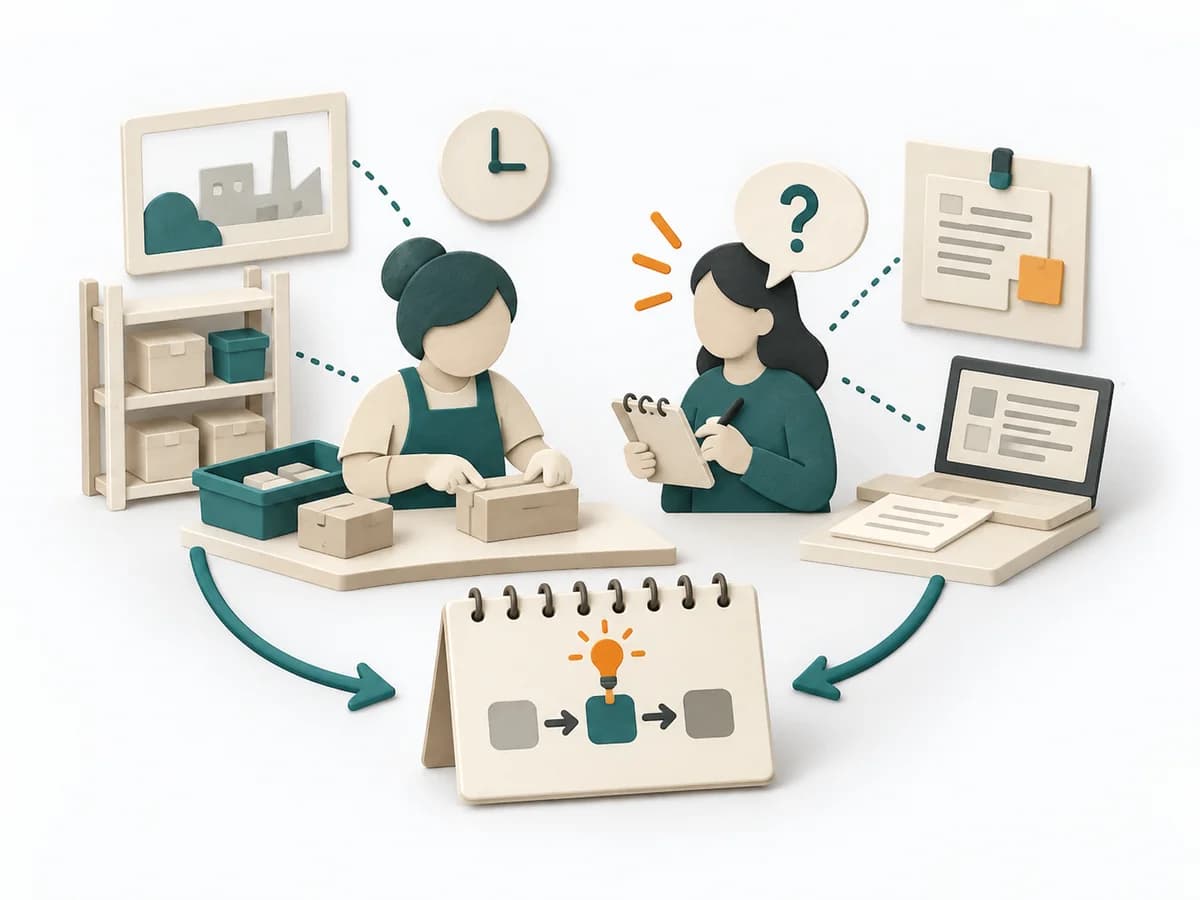 UX Research Contextual Inquiry | 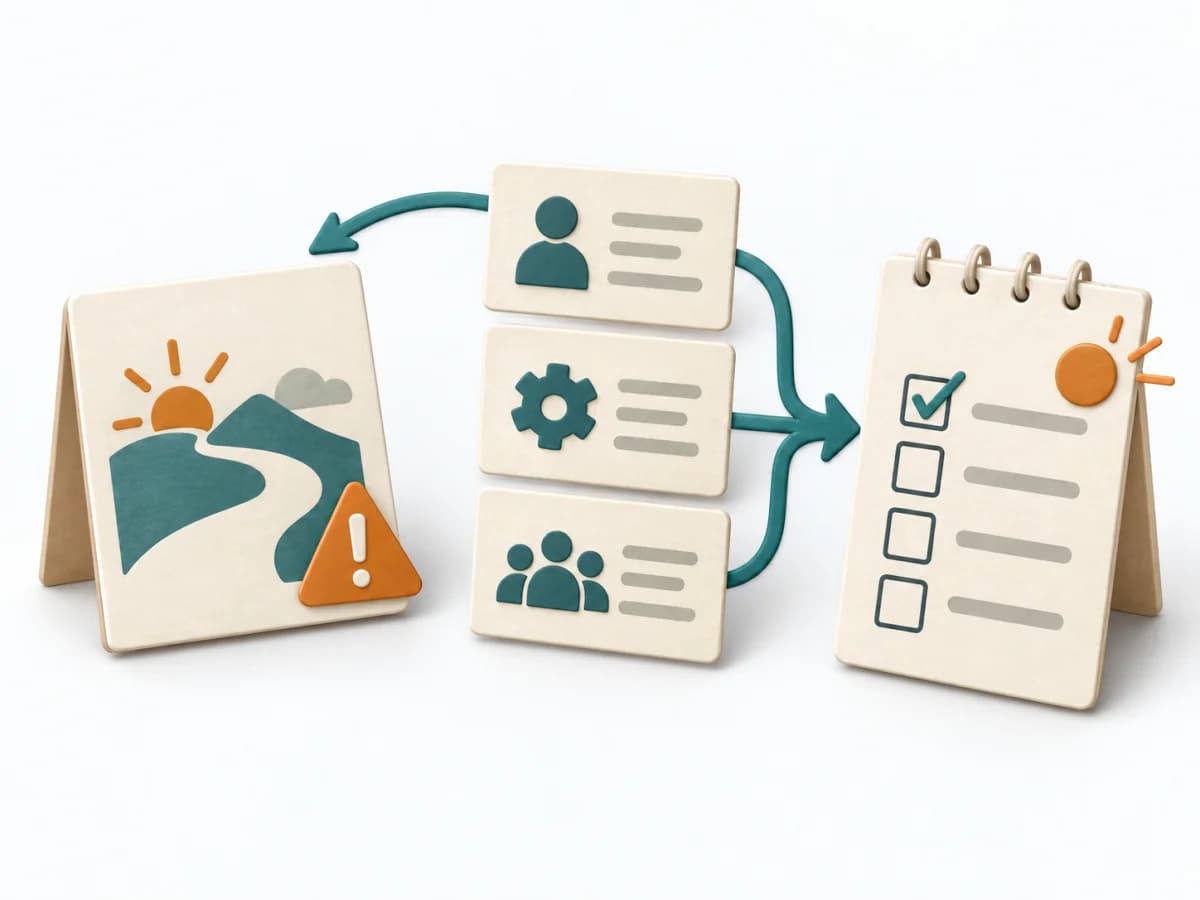 Decision Making Pre-Mortem |  Decision Making Decision Tree |  Decision Making Assumption Surfacing |
|---|---|---|---|---|
Purposedifferent | When work processes are known only from accounts and the real context stays hidden, Contextual Inquiry makes behavior at the workplace visible. Observation and follow-up questions together show how people actually work, get interrupted, and improvise. | In early initiatives with many uncertainties, planning quickly turns too optimistic. A pre-mortem makes the expected failure visible in advance and sharpens the view of causes, gaps, and countermeasures. | For decisions with follow-on paths and dependencies, a linear comparison is often not enough. A Decision Tree shows how options branch under conditions and which consequences hang on each branch. | Plans often contain assumptions that were never openly stated and remain dangerous precisely because of that. Assumption Surfacing makes these silent premises visible and prioritizes which of them carry the initiative or could sink it. |
Complexitydifferent | Medium | Low | Medium | Low |
Timedifferent | 1-3 Wochen | 20–45 min | 30-90 min | 45-90 min |
Participantsdifferent | 4-12 Beobachtungen | Small cross-functional group | 1-6 | 2-8 |
Formatdifferent | Workshop + async | Workshop | Workshop + async | Workshop + async |
Outputdifferent | Field Notes, Workflow Insights, Pain Points | Risk list, Mitigation plan, Assumption log | Decision Tree, Option Map, Assumption List | Assumption List, Critical Assumptions, Learning Plan |
Tagsno overlap | UX researchObservationContext | RiskDecisionFailurePlanning | DecisionTreeOptions | AssumptionsRiskDecisionDiscovery |