View methods side by side.
Choose up to four methods. Add them using the search and share the comparison by copying its link.
| Criterion | 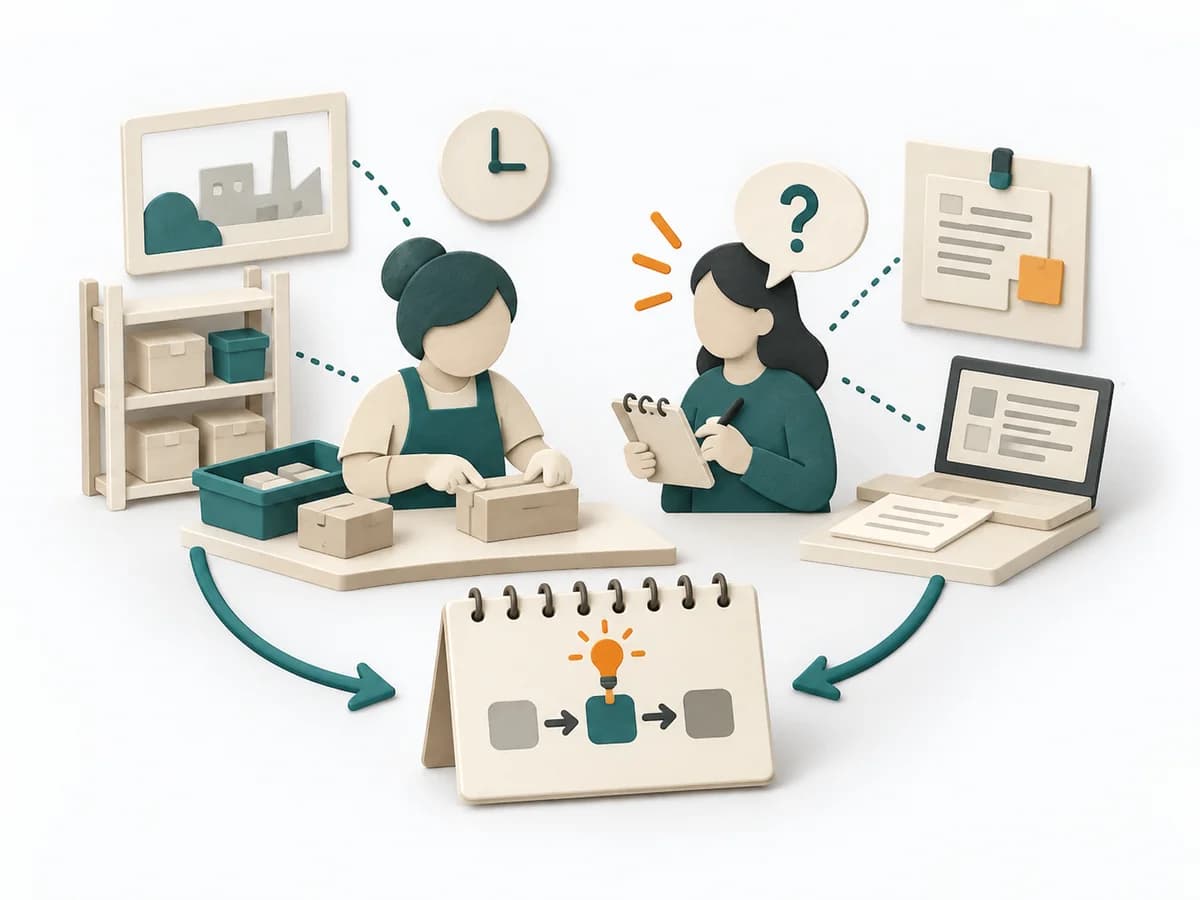 UX Research Contextual Inquiry |  Knowledge Modeling Knowledge Mapping |  Operations Barrier Analysis |  Operations Fault Tree Analysis |
|---|---|---|---|---|
Purposedifferent | When work processes are known only from accounts and the real context stays hidden, Contextual Inquiry makes behavior at the workplace visible. Observation and follow-up questions together show how people actually work, get interrupted, and improvise. | Knowledge Mapping makes knowledge, gaps, and transfer paths visible across a field. It fits when expertise should not just exist but also be findable and transferable. | For a risk that can only be managed through multiple layers of protection, the method examines the effectiveness of each barrier. It shows where safeguards are missing, too weak, or fail under real conditions. | For a critical top event with several possible triggers, the method logically models failure paths. It makes visible which combinations of conditions can lead to damage. |
Complexitydifferent | Medium | Medium | Medium | High |
Timedifferent | 1-3 Wochen | 1-3 h | 2-4 h | 2-6 h |
Participantsdifferent | 4-12 Beobachtungen | 3-12 | 2-6 | 3-8 |
Formatdifferent | Workshop + async | Workshop | Workshop + async | Workshop + async |
Outputdifferent | Field Notes, Workflow Insights, Pain Points | Knowledge Map, Critical Knowledge Areas, Transfer Plan | Barrier Inventory, Failure Analysis per Barrier, Action Backlog | Fault Tree, Critical Paths, Cause Hypotheses, Control Actions |
Tagsno overlap | UX researchObservationContext | KnowledgeMappingRisk | Root causeSafetyIncident | RiskRoot causeSafety |