View methods side by side.
Choose up to four methods. Add them using the search and share the comparison by copying its link.
| Criterion | 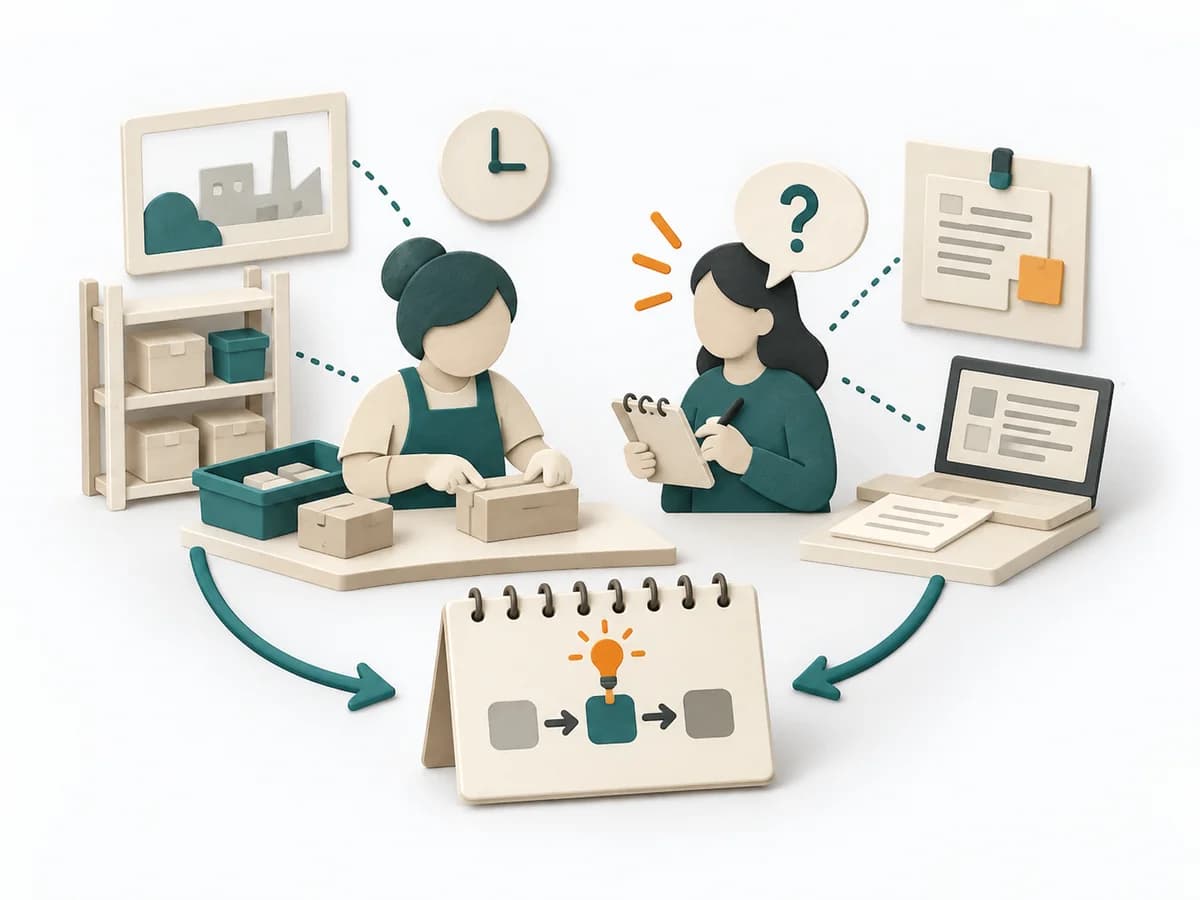 UX Research Contextual Inquiry |  Knowledge Modeling IBIS | 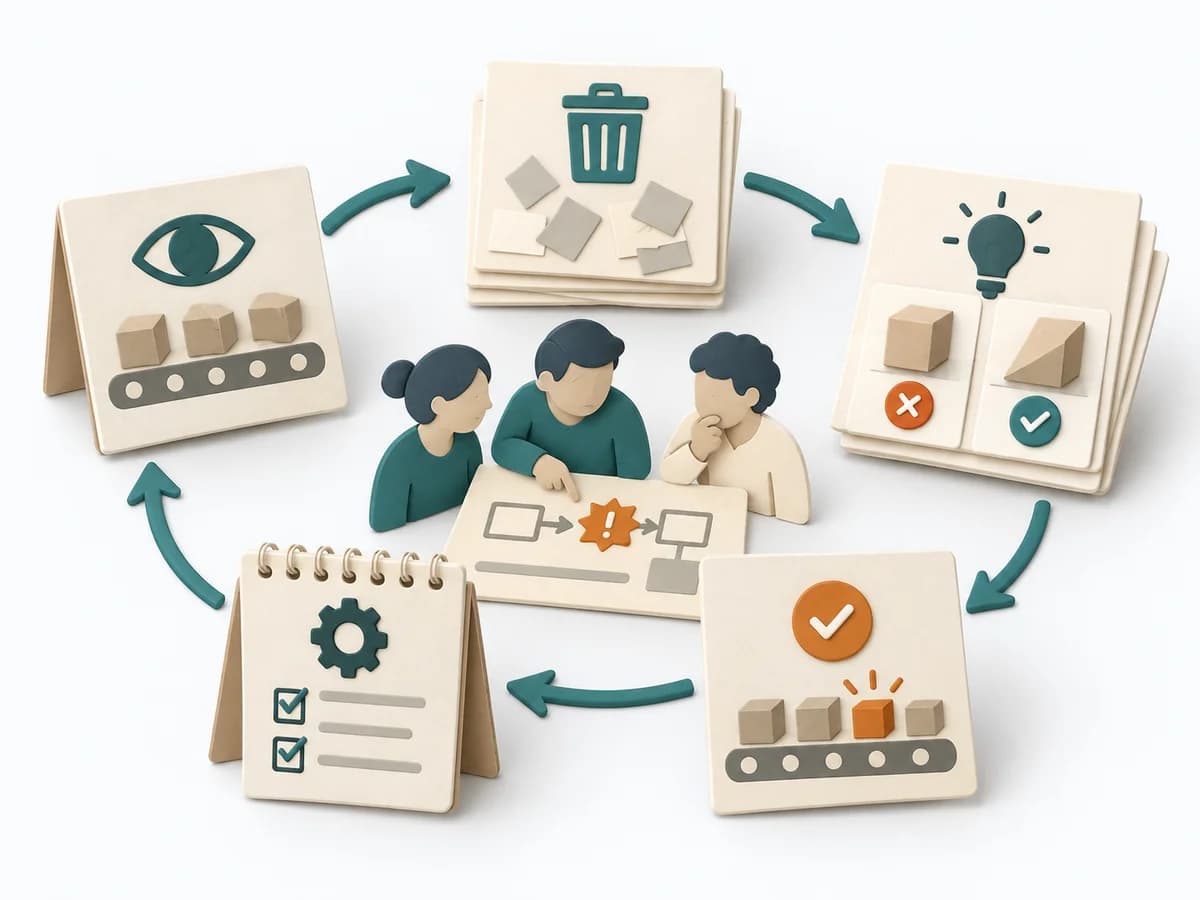 Operations Kaizen Event |  Operations Kepner-Tregoe |
|---|---|---|---|---|
Purposedifferent | When work processes are known only from accounts and the real context stays hidden, Contextual Inquiry makes behavior at the workplace visible. Observation and follow-up questions together show how people actually work, get interrupted, and improvise. | IBIS structures thinking about complex questions as a sequence of issues, ideas, and arguments. The method keeps discussions open without forcing them into premature consensus. | For a tightly scoped process segment with noticeable waste, the method bundles shared energy for change. It suits situations that call for fast learning loops and visible adjustments. | For a disturbance that's hard to pin down, the method cleanly separates problem, cause, and decision. It reduces mixing when symptoms allow several interpretations. |
Complexitydifferent | Medium | Medium | Medium | High |
Timedifferent | 1-3 Wochen | 1-3 h | 0.5-5 Tage | 2-8 h |
Participantsdifferent | 4-12 Beobachtungen | 2-8 | 4-10 | 2-8 |
Formatdifferent | Workshop + async | Workshop + async | Workshop | Workshop + async |
Outputdifferent | Field Notes, Workflow Insights, Pain Points | Issue Map, Positions, Argument Notes | Kaizen Charter, Waste List, Improvement Experiments, Standard Work Update | Problem Analysis, Decision Analysis, Risk Plan |
Tagsno overlap | UX researchObservationContext | RationaleKnowledgeDecision | LeanContinuous improvementOperations | Problem solvingRoot causeDecisionOperations |