View methods side by side.
Choose up to four methods. Add them using the search and share the comparison by copying its link.
| Criterion |  UX Research Contextual Inquiry | 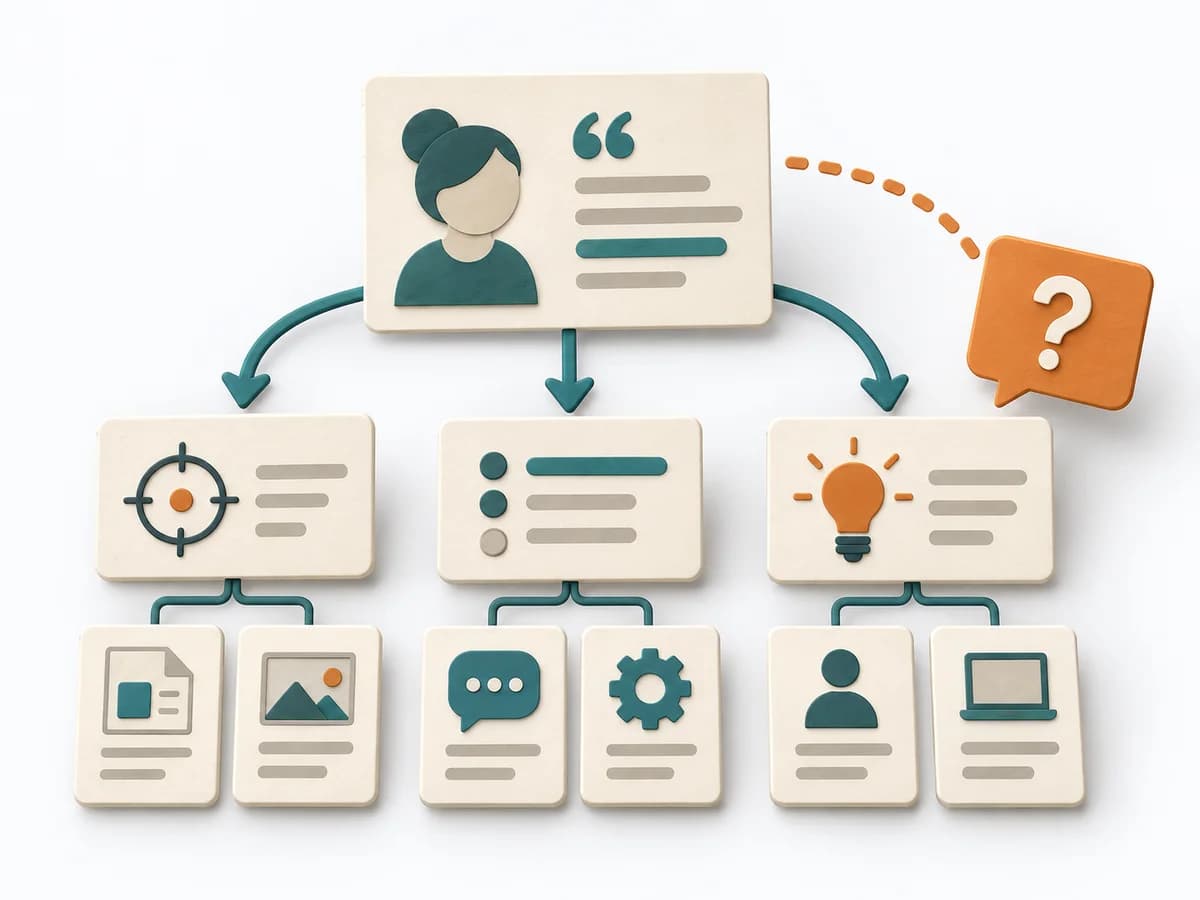 Agile Example Mapping | 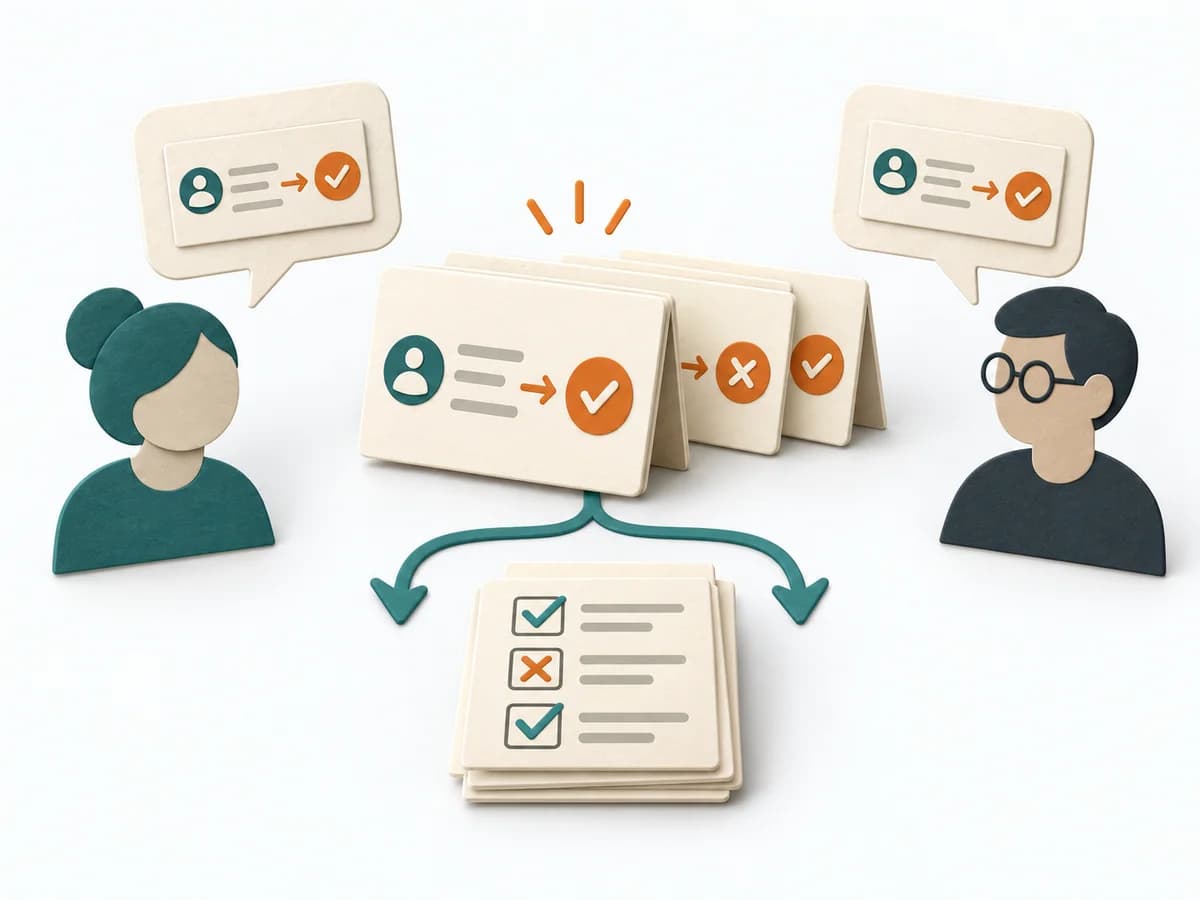 Agile Specification by Example | 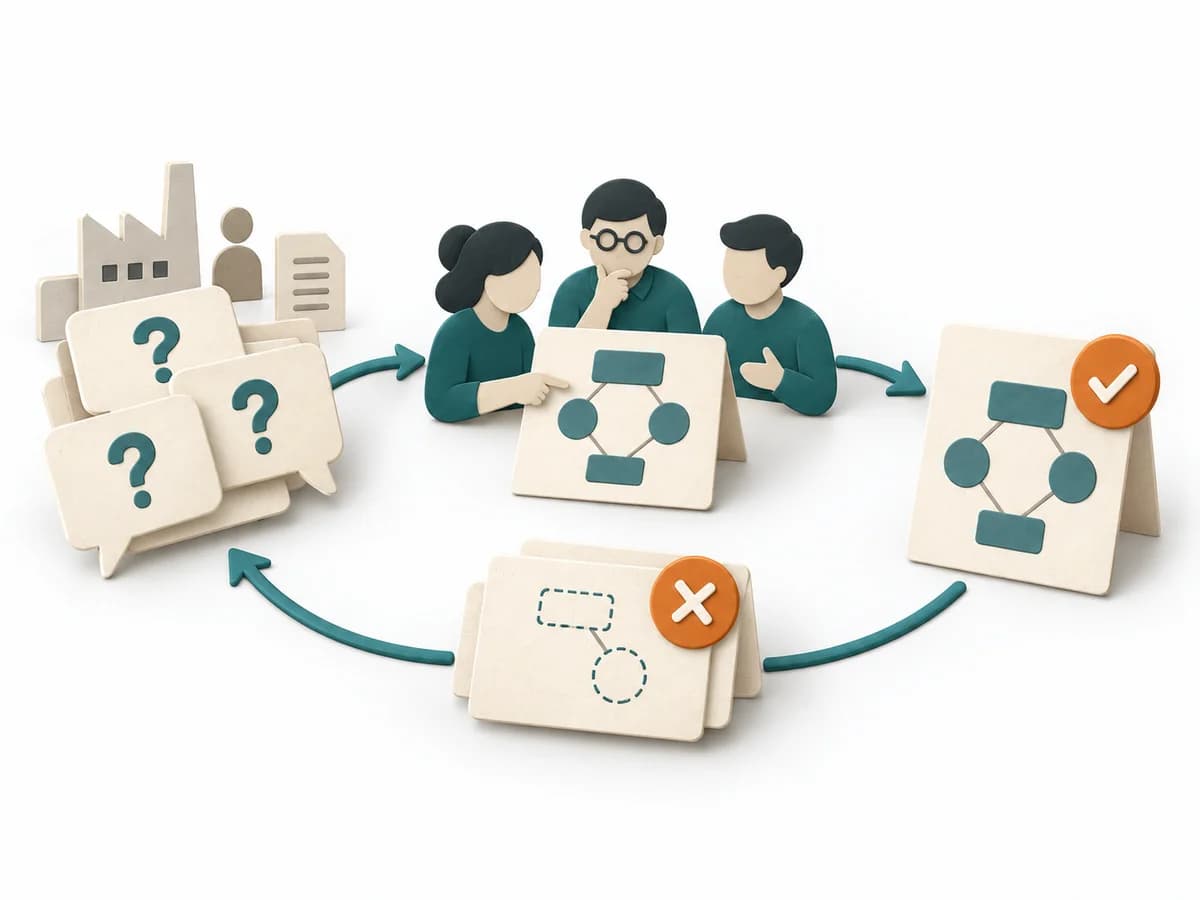 Knowledge Modeling Competency Questions |
|---|---|---|---|---|
Purposedifferent | When work processes are known only from accounts and the real context stays hidden, Contextual Inquiry makes behavior at the workplace visible. Observation and follow-up questions together show how people actually work, get interrupted, and improvise. | When a story carries business rules and exceptions, it brings clarity before implementation. It makes examples, open questions, and boundaries visible enough that the logic becomes jointly sound. | When business rules need to become precise, it ties language, example, and test together. It sorts work by value, risk, and delivery ability. The result is captured as an Example Table and Acceptance Tests. | Competency Questions translate a domain model into concrete questions that it must be able to answer. The method keeps the model's scope clean and prevents pretty but useless structures. |
Complexitydifferent | Medium | Low | Medium | Medium |
Timedifferent | 1-3 Wochen | 30-60 min | 60-90 min pro Feature | 2-4 h |
Participantsdifferent | 4-12 Beobachtungen | 3-7 | 3-6 | 2-8 |
Formatdifferent | Workshop + async | Workshop | Workshop | Workshop + async |
Outputdifferent | Field Notes, Workflow Insights, Pain Points | Example Map, Acceptance Criteria, Open Questions | Example Table, Acceptance Tests | Competency Question Set, Required Concepts, Test Queries, Coverage Matrix |
Tagsno overlap | UX researchObservationContext | Behavior-Driven DevelopmentRequirementsExamplesRefinement | AgileRequirementsExamplesBehavior-Driven Development | OntologyKnowledge graphScopeRequirementsSemantic |