View methods side by side.
Choose up to four methods. Add them using the search and share the comparison by copying its link.
| Criterion | 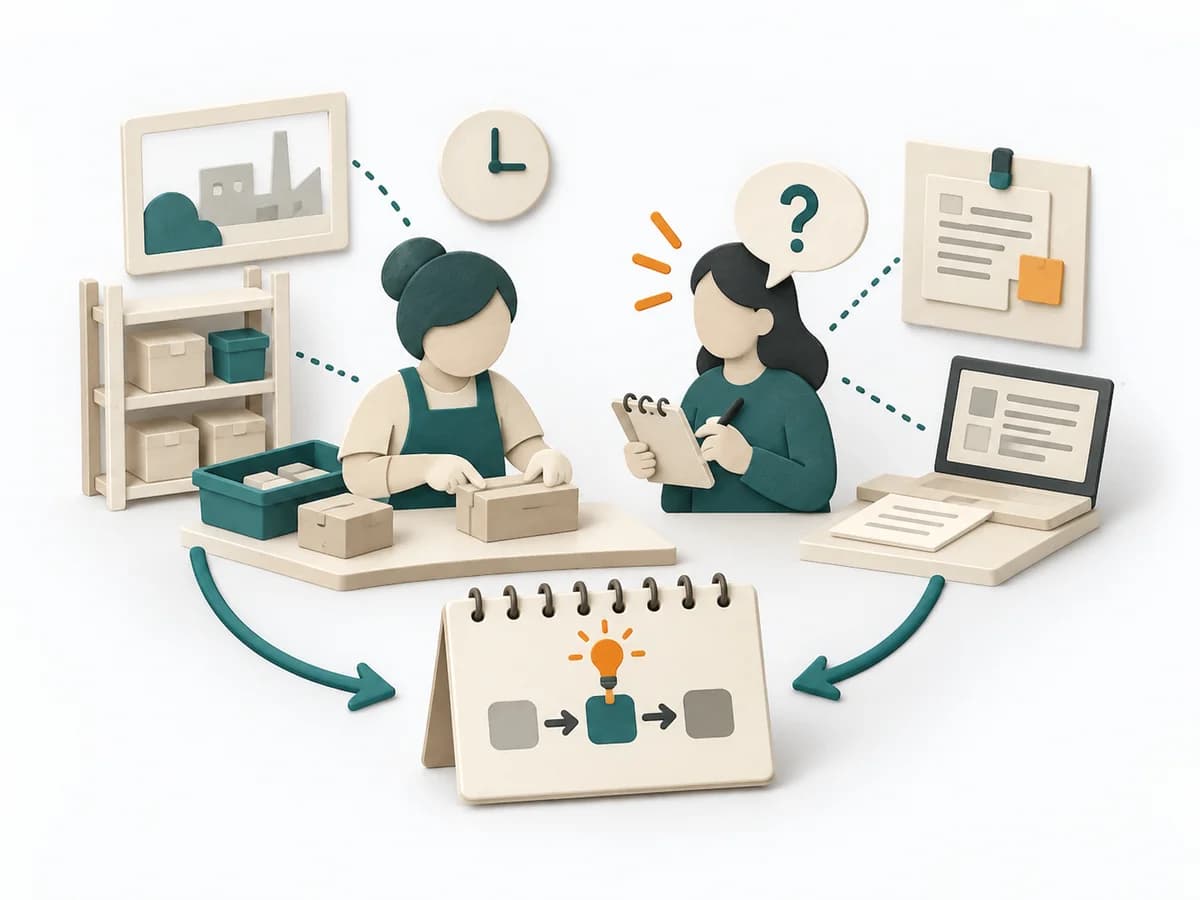 UX Research Contextual Inquiry |  Product Strategy DIBB |  Domain Modeling Context Map |  Decision Making Delphi Method |
|---|---|---|---|---|
Purposedifferent | When work processes are known only from accounts and the real context stays hidden, Contextual Inquiry makes behavior at the workplace visible. Observation and follow-up questions together show how people actually work, get interrupted, and improvise. | DIBB helps clarify target groups, value, goals, and priorities by making the logic behind a decision explicit. It captures results as a DIBB document, belief list, bet list, and learning report. | When several contexts need to talk to each other, it makes their relationships and dependencies legible. It helps sort integration pressure and responsibilities across system boundaries. | When knowledge is distributed and direct dominance should be avoided, groups quickly fall under the sway of their opinion leaders. The Delphi Method gathers assessments iteratively and gradually brings expert judgments closer together. |
Complexitydifferent | Medium | Low | Medium | High |
Timedifferent | 1-3 Wochen | 1-2 h | 1-3 h | 1-4 Wochen |
Participantsdifferent | 4-12 Beobachtungen | 2-8 | 2-8 | 6-30 Experten |
Formatdifferent | Workshop + async | Workshop + async | Workshop + async | Async |
Outputdifferent | Field Notes, Workflow Insights, Pain Points | DIBB document, Belief list, Bet list, Learning report | Context Map, Integration Patterns, Boundary Notes | Expert Forecast, Consensus Range, Assumption Notes |
Tagsno overlap | UX researchObservationContext | StrategyDecisionAssumptionsHypothesis | Domain-Driven DesignBoundariesStrategy | ForecastingExpertsDecisionStrategy |