View methods side by side.
Choose up to four methods. Add them using the search and share the comparison by copying its link.
| Criterion | 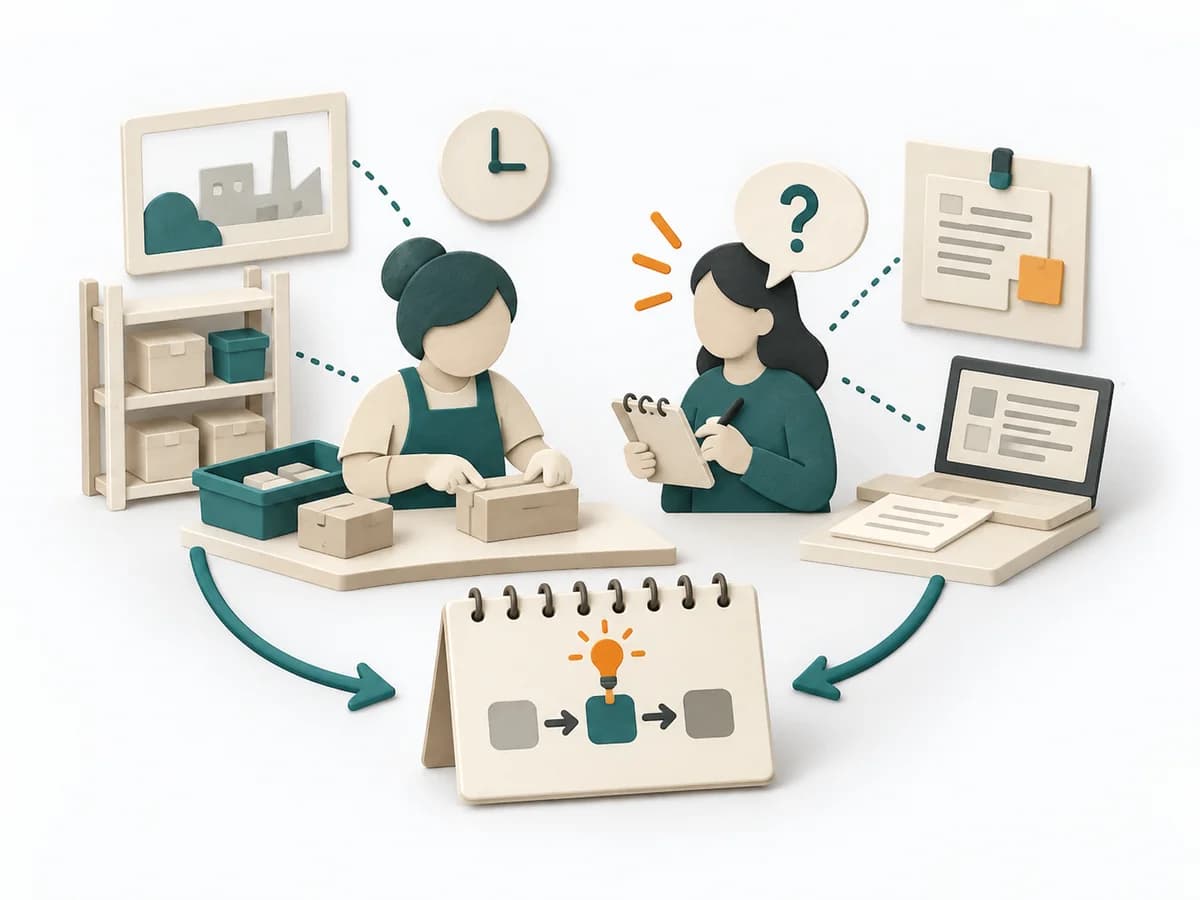 UX Research Contextual Inquiry |  Product Discovery Context Canvas | 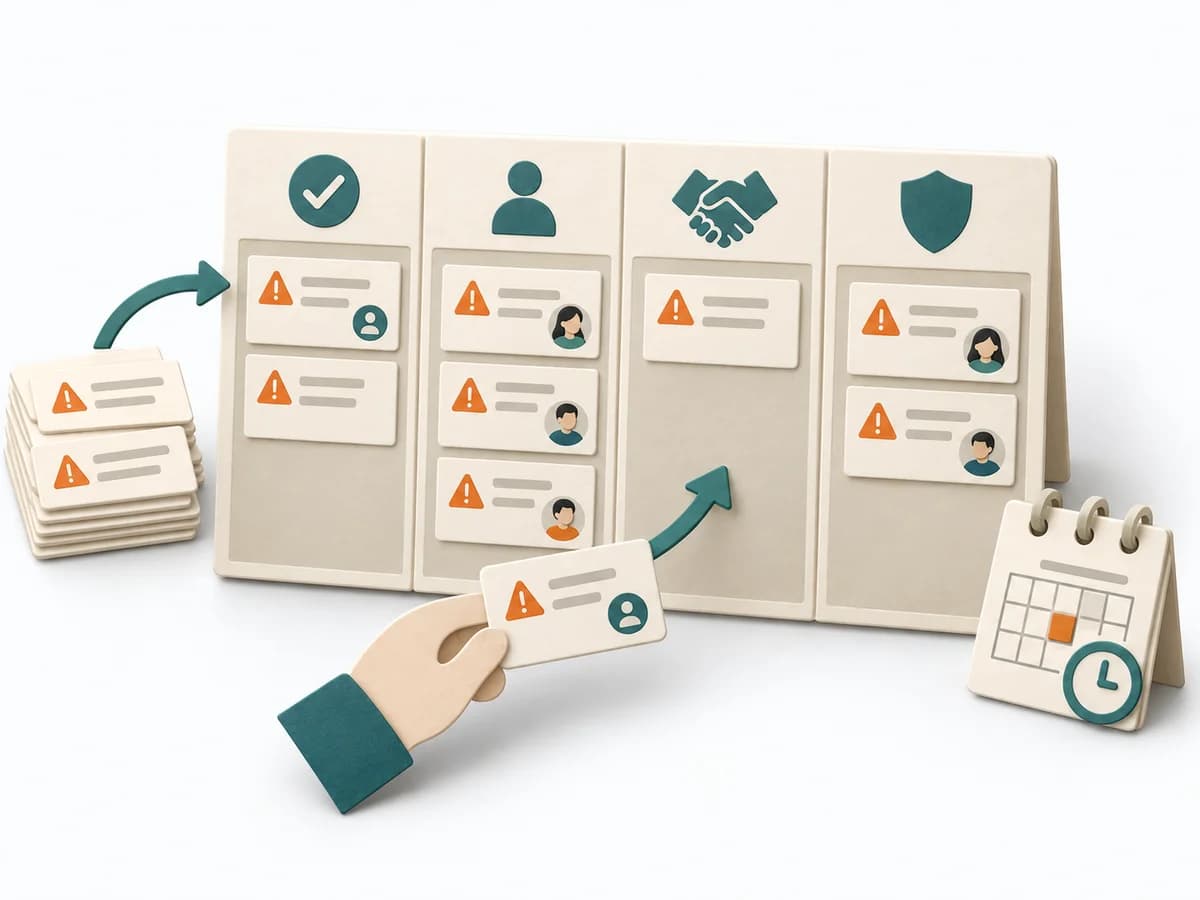 Agile ROAM Board |  UX Research Diary Study |
|---|---|---|---|---|
Purposedifferent | When work processes are known only from accounts and the real context stays hidden, Contextual Inquiry makes behavior at the workplace visible. Observation and follow-up questions together show how people actually work, get interrupted, and improvise. | When an environment of users, systems, and constraints is hard to grasp, it puts the context compactly on the table. It creates a clear reading of influence, boundary, and dependency. | When work needs to move between different states or columns, it makes that movement and its handoffs legible. It sorts work by value, risk, and delivery ability. The result is captured as a ROAM Board and an Owner List. | When experiences build up over days or weeks and a single session cannot capture them, Diary Study records the course of everyday life. Recurring triggers, moods, and habits become visible this way, beyond the sharpness of memory. |
Complexitydifferent | Medium | Low | Low | Medium |
Timedifferent | 1-3 Wochen | 45-90 min | 20-40 min initial, dann laufend | 1-4 Wochen |
Participantsdifferent | 4-12 Beobachtungen | 3-10 | 3-15 | 5-20 |
Formatdifferent | Workshop + async | Workshop | Workshop + async | Async |
Outputdifferent | Field Notes, Workflow Insights, Pain Points | Context canvas, Open questions, Shared context notes | ROAM Board, Owner List | Diary Entries, Longitudinal Patterns, Experience Timeline |
Tagsno overlap | UX researchObservationContext | ContextFramingRequirementsCanvas | RiskAgileTrackingAlignment | UX researchTrackingBehavior |