View methods side by side.
Choose up to four methods. Add them using the search and share the comparison by copying its link.
| Criterion | 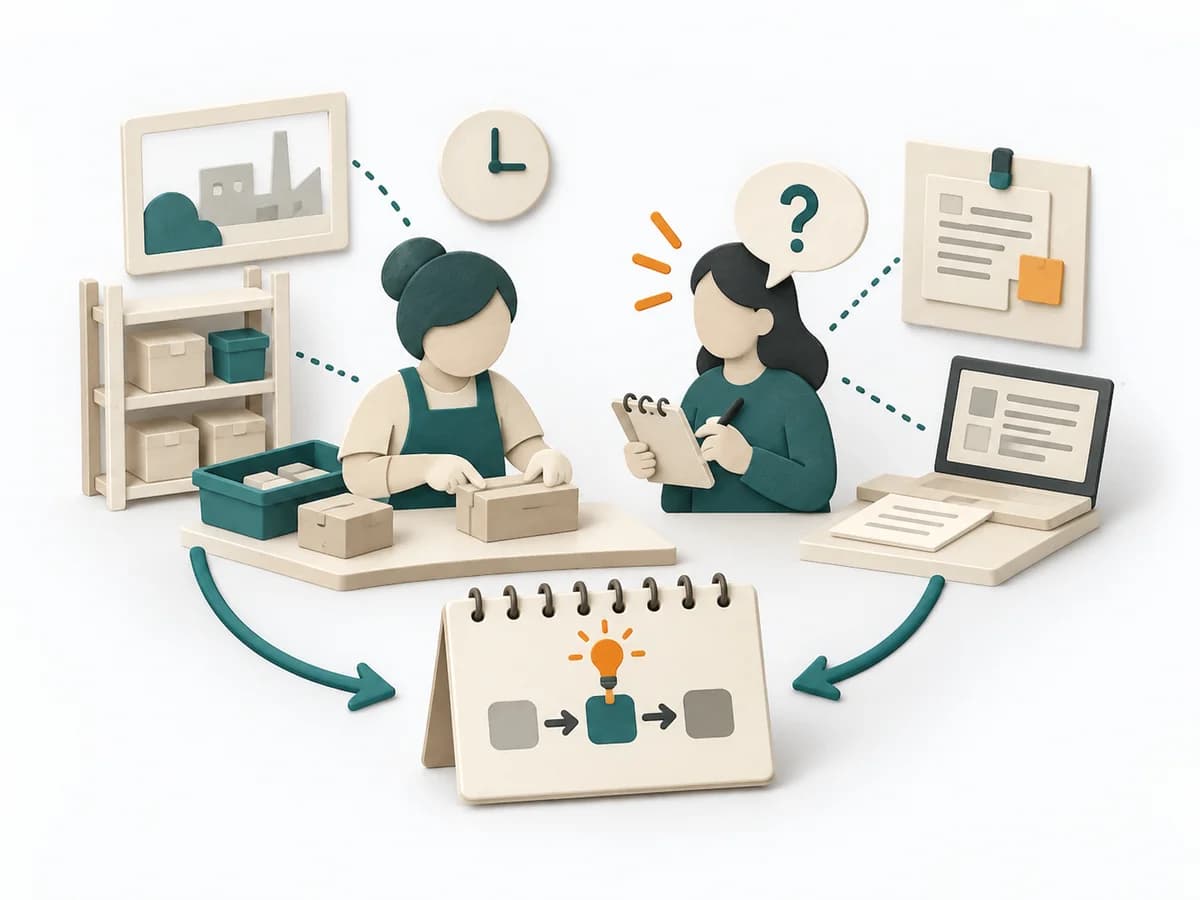 UX Research Contextual Inquiry | 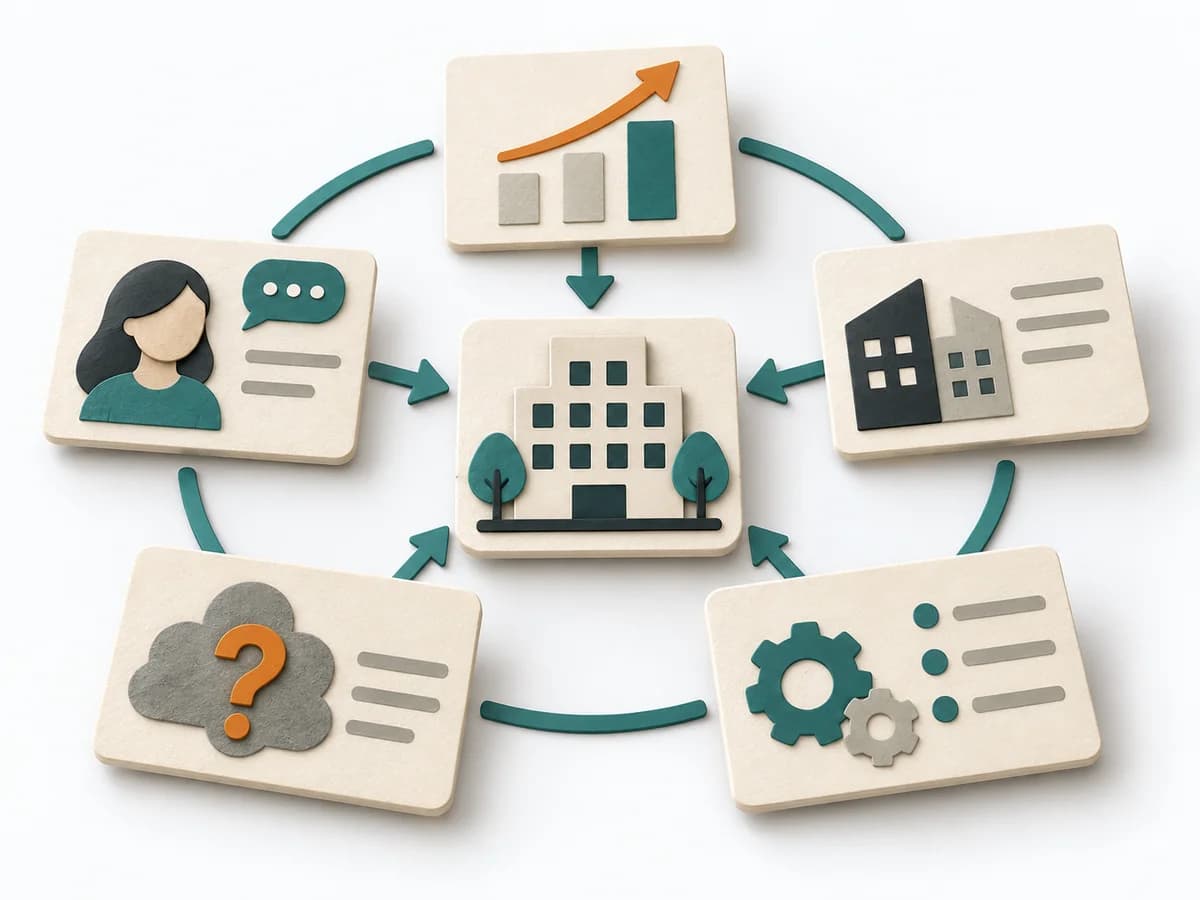 Product Discovery Context Canvas |  Knowledge Modeling Knowledge Mapping |  Knowledge Modeling Concept Mapping |
|---|---|---|---|---|
Purposedifferent | When work processes are known only from accounts and the real context stays hidden, Contextual Inquiry makes behavior at the workplace visible. Observation and follow-up questions together show how people actually work, get interrupted, and improvise. | When an environment of users, systems, and constraints is hard to grasp, it puts the context compactly on the table. It creates a clear reading of influence, boundary, and dependency. | Knowledge Mapping makes knowledge, gaps, and transfer paths visible across a field. It fits when expertise should not just exist but also be findable and transferable. | Concept Mapping arranges terms and relationships in a network that makes subject-matter connections tangible. It fits when a topic needs to be understood structurally rather than linearly. |
Complexitydifferent | Medium | Low | Medium | Medium |
Timedifferent | 1-3 Wochen | 45-90 min | 1-3 h | 1-2 h |
Participantsdifferent | 4-12 Beobachtungen | 3-10 | 3-12 | 1-8 |
Formatdifferent | Workshop + async | Workshop | Workshop | Workshop + async |
Outputdifferent | Field Notes, Workflow Insights, Pain Points | Context canvas, Open questions, Shared context notes | Knowledge Map, Critical Knowledge Areas, Transfer Plan | Concept Map, Relationship Labels, Knowledge Gaps |
Tagsno overlap | UX researchObservationContext | ContextFramingRequirementsCanvas | KnowledgeMappingRisk | KnowledgeConceptsMappingSensemaking |