View methods side by side.
Choose up to four methods. Add them using the search and share the comparison by copying its link.
| Criterion |  UX Research Contextual Inquiry | 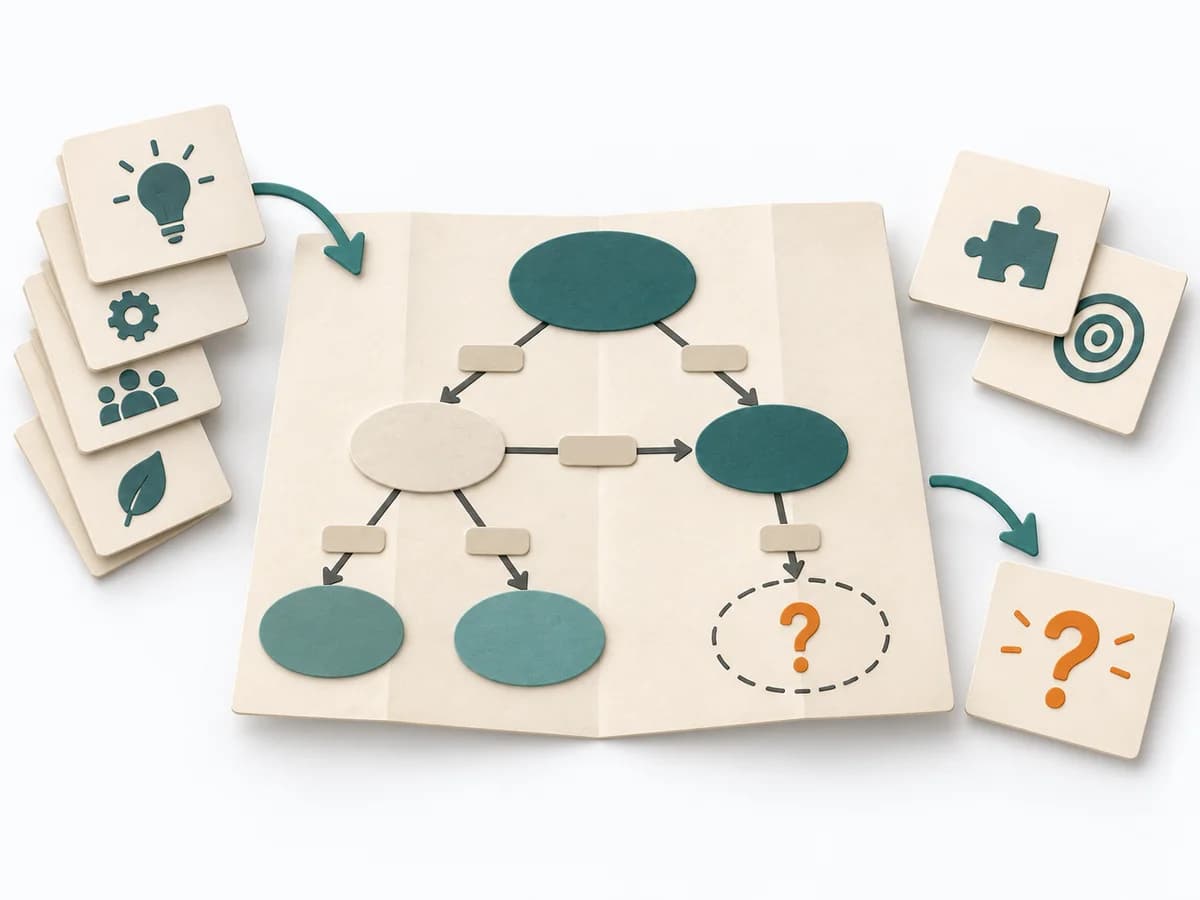 Knowledge Modeling Concept Mapping | 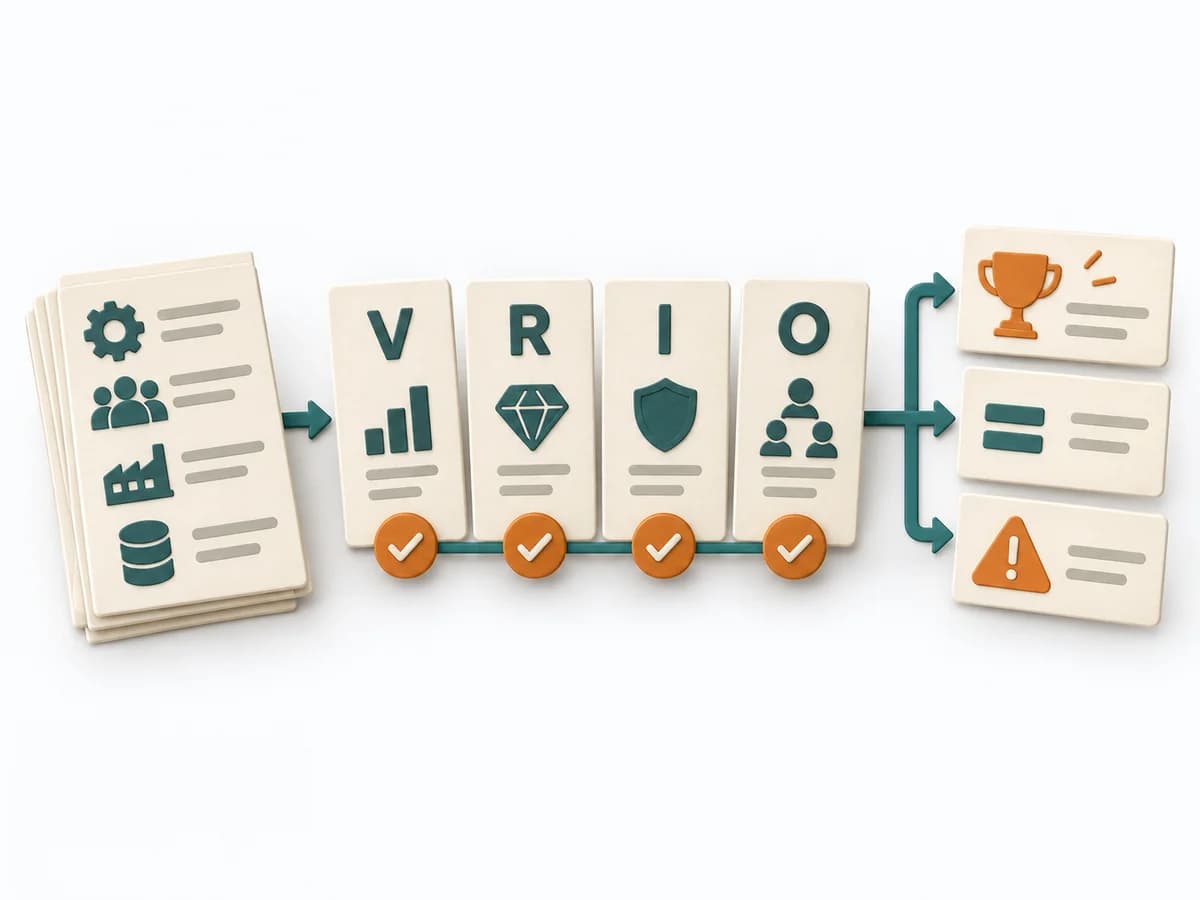 Business Strategy VRIO Framework |  Knowledge Modeling Knowledge Mapping |
|---|---|---|---|---|
Purposedifferent | When work processes are known only from accounts and the real context stays hidden, Contextual Inquiry makes behavior at the workplace visible. Observation and follow-up questions together show how people actually work, get interrupted, and improvise. | Concept Mapping arranges terms and relationships in a network that makes subject-matter connections tangible. It fits when a topic needs to be understood structurally rather than linearly. | The VRIO Framework rates resources and capabilities on whether they are Valuable, Rare, Inimitable, and Organized. It compares strengths, risks, market logic, and courses of action. The result is captured as a VRIO table and strategic actions. | Knowledge Mapping makes knowledge, gaps, and transfer paths visible across a field. It fits when expertise should not just exist but also be findable and transferable. |
Complexitysame | Medium | Medium | Medium | Medium |
Timedifferent | 1-3 Wochen | 1-2 h | 90-180 min | 1-3 h |
Participantsdifferent | 4-12 Beobachtungen | 1-8 | 3-6 | 3-12 |
Formatdifferent | Workshop + async | Workshop + async | Workshop | Workshop |
Outputdifferent | Field Notes, Workflow Insights, Pain Points | Concept Map, Relationship Labels, Knowledge Gaps | VRIO Table, Strategic Actions | Knowledge Map, Critical Knowledge Areas, Transfer Plan |
Tagsno overlap | UX researchObservationContext | KnowledgeConceptsMappingSensemaking | StrategyDiagnosisBusiness modelCapability | KnowledgeMappingRisk |