View methods side by side.
Choose up to four methods. Add them using the search and share the comparison by copying its link.
| Criterion | 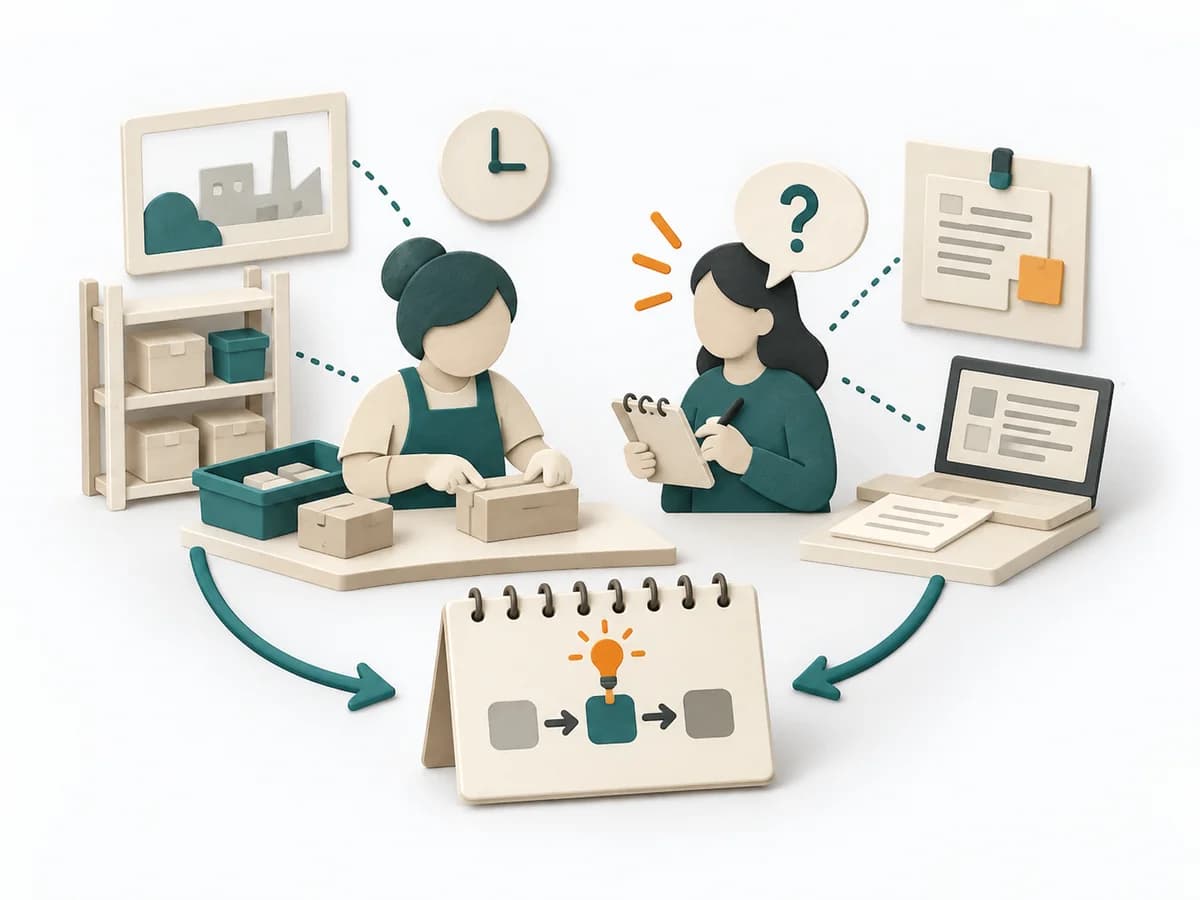 UX Research Contextual Inquiry |  Knowledge Modeling Concept Mapping | 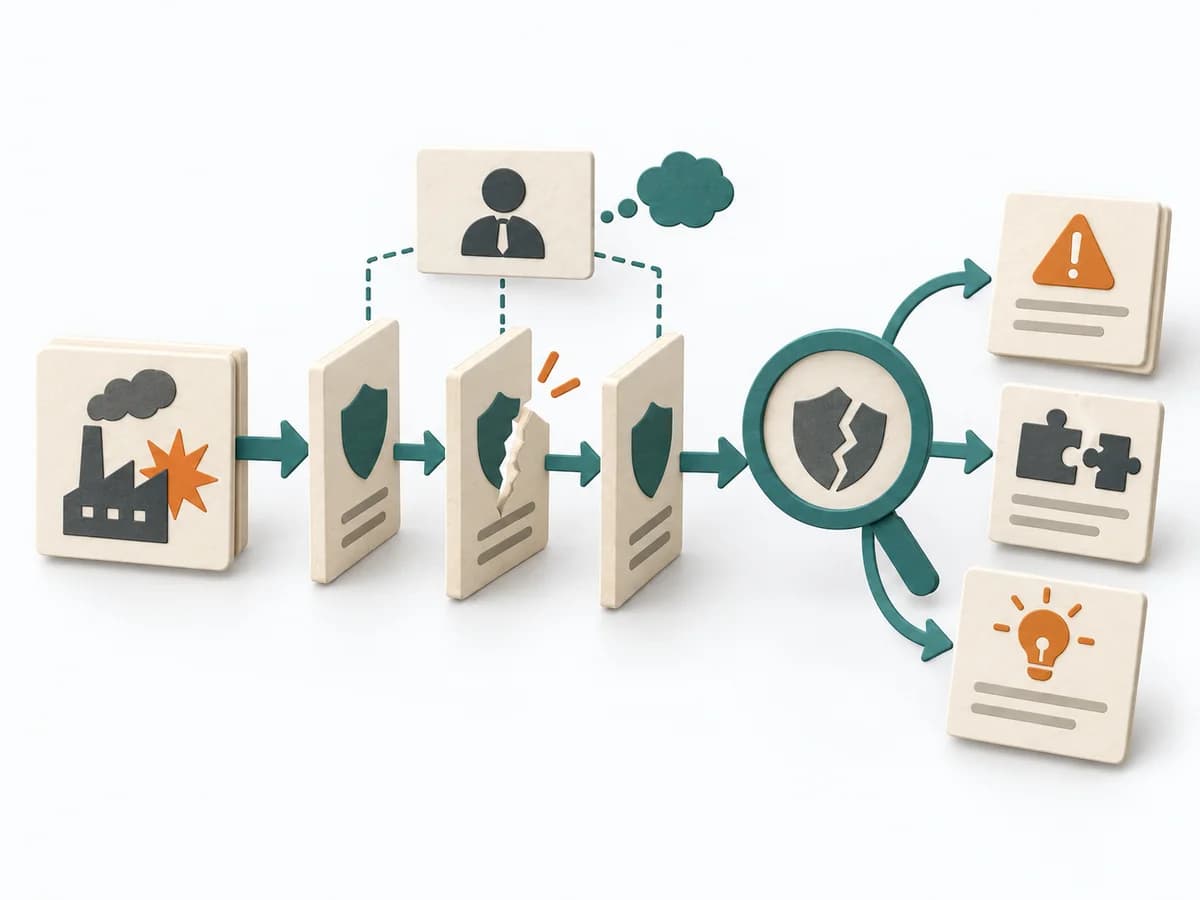 Operations MORT Analysis |  Operations Causal Factor Analysis |
|---|---|---|---|---|
Purposedifferent | When work processes are known only from accounts and the real context stays hidden, Contextual Inquiry makes behavior at the workplace visible. Observation and follow-up questions together show how people actually work, get interrupted, and improvise. | Concept Mapping arranges terms and relationships in a network that makes subject-matter connections tangible. It fits when a topic needs to be understood structurally rather than linearly. | For a safety-relevant event or a system with high protection requirements, the method examines where controls failed. It exposes both technical and organizational gaps. | For an event with a complicated course, the method breaks down the contributing factors along the timeline. It shows how conditions, decisions, and reactions together produce a course of events. |
Complexitydifferent | Medium | Medium | High | High |
Timedifferent | 1-3 Wochen | 1-2 h | Mehrere Tage bis Wochen | 2-6 h |
Participantsdifferent | 4-12 Beobachtungen | 1-8 | 2-6 | 3-10 |
Formatsame | Workshop + async | Workshop + async | Workshop + async | Workshop + async |
Outputdifferent | Field Notes, Workflow Insights, Pain Points | Concept Map, Relationship Labels, Knowledge Gaps | MORT Worksheets, Findings per Branch, Corrective Actions, Systemic Recommendations | Event Timeline, Causal Factor Chart, Cause List, Corrective Actions |
Tagsno overlap | UX researchObservationContext | KnowledgeConceptsMappingSensemaking | Root causeSafetySystemicIncident | CausalityIncidentRoot causeTimeline |