View methods side by side.
Choose up to four methods. Add them using the search and share the comparison by copying its link.
| Criterion | 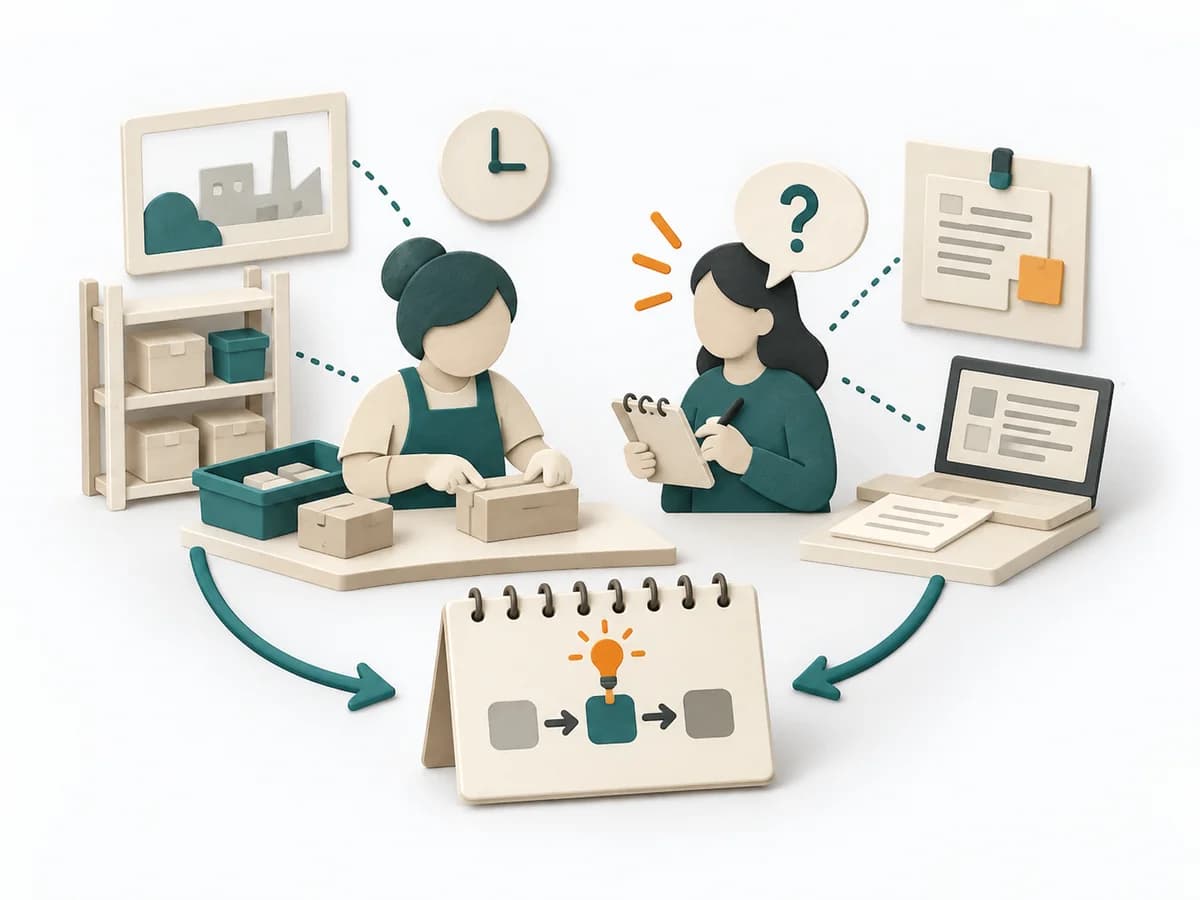 UX Research Contextual Inquiry |  Knowledge Modeling Concept Mapping | 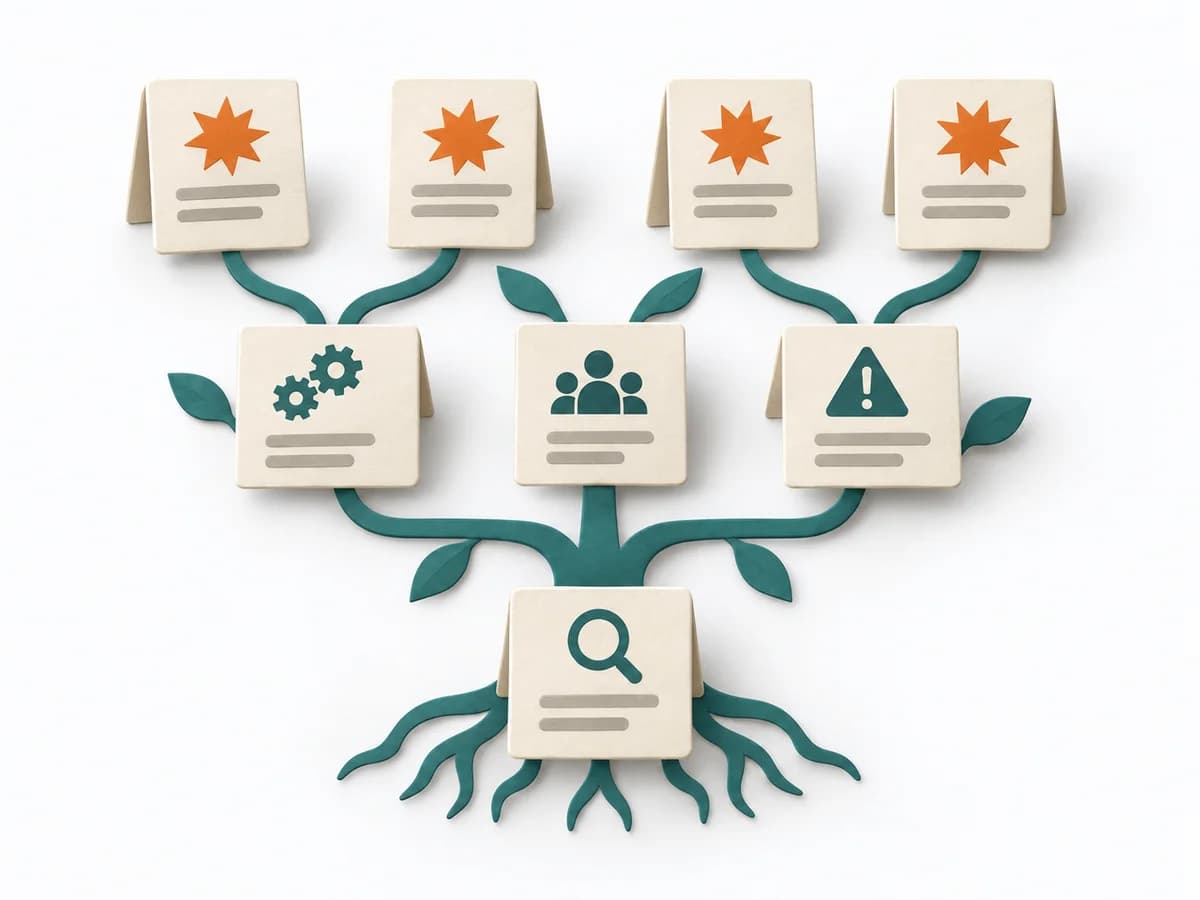 Operations Family Tree Analysis |  Operations Barrier Analysis |
|---|---|---|---|---|
Purposedifferent | When work processes are known only from accounts and the real context stays hidden, Contextual Inquiry makes behavior at the workplace visible. Observation and follow-up questions together show how people actually work, get interrupted, and improvise. | Concept Mapping arranges terms and relationships in a network that makes subject-matter connections tangible. It fits when a topic needs to be understood structurally rather than linearly. | For a series of incidents with a similar pattern, the method arranges individual events as branches of a common origin. It makes visible which conditions keep recurring. | For a risk that can only be managed through multiple layers of protection, the method examines the effectiveness of each barrier. It shows where safeguards are missing, too weak, or fail under real conditions. |
Complexitysame | Medium | Medium | Medium | Medium |
Timedifferent | 1-3 Wochen | 1-2 h | 2-4 h | 2-4 h |
Participantsdifferent | 4-12 Beobachtungen | 1-8 | 2-6 | 2-6 |
Formatsame | Workshop + async | Workshop + async | Workshop + async | Workshop + async |
Outputdifferent | Field Notes, Workflow Insights, Pain Points | Concept Map, Relationship Labels, Knowledge Gaps | Family Tree Diagram, Pattern Notes, Systemic Measures | Barrier Inventory, Failure Analysis per Barrier, Action Backlog |
Tagsno overlap | UX researchObservationContext | KnowledgeConceptsMappingSensemaking | Root causePatternsIncidentSystemic | Root causeSafetyIncident |