View methods side by side.
Choose up to four methods. Add them using the search and share the comparison by copying its link.
| Criterion | 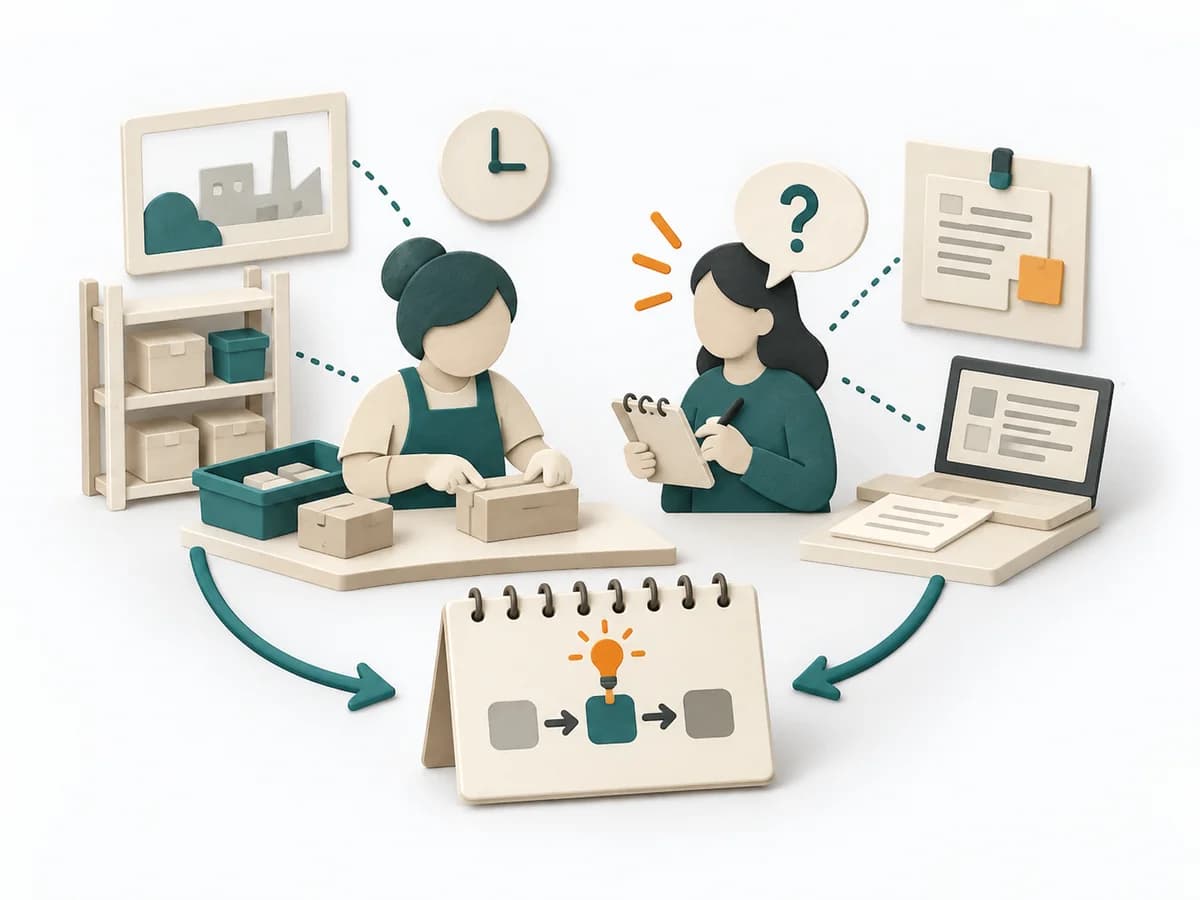 UX Research Contextual Inquiry | 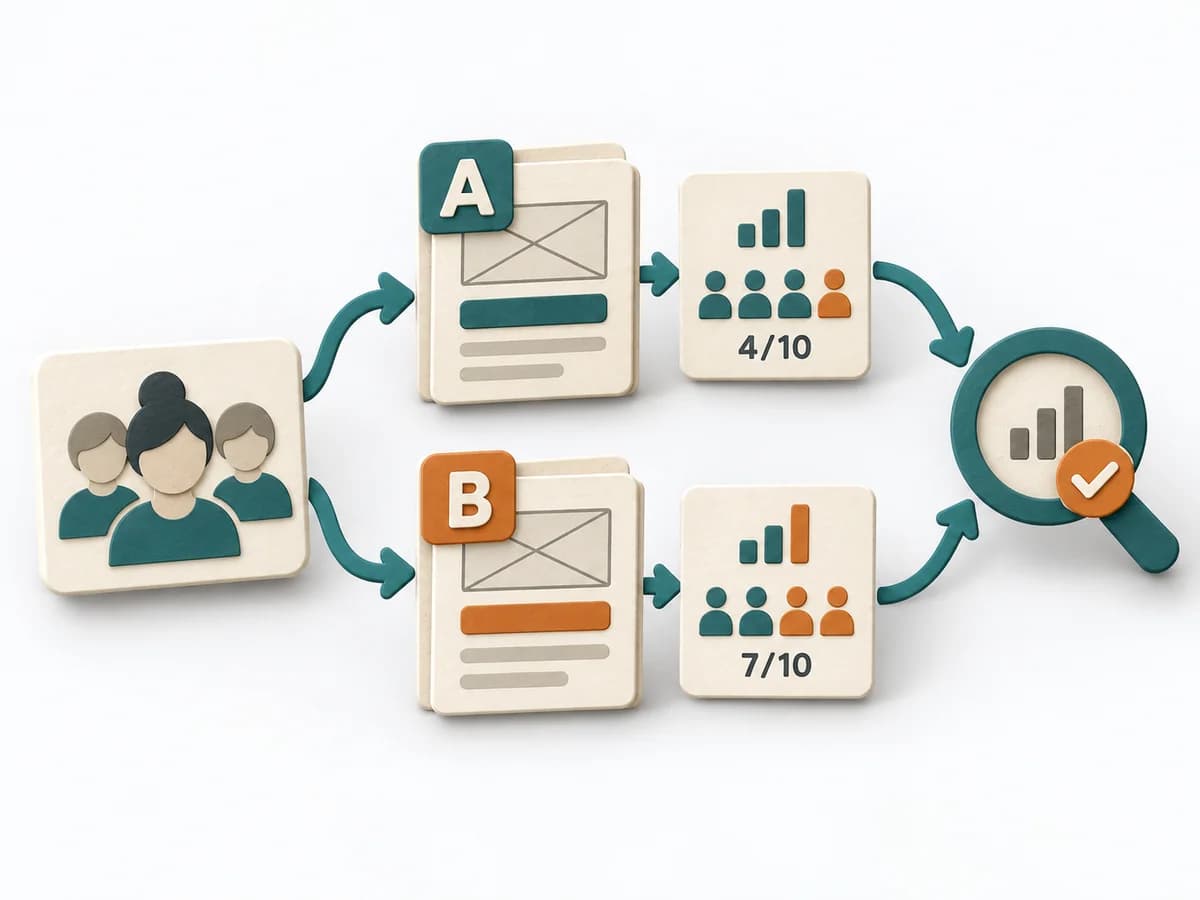 Growth A/B Testing |  Decision Making Constraint Analysis |  Product Discovery Smoke Test |
|---|---|---|---|---|
Purposedifferent | When work processes are known only from accounts and the real context stays hidden, Contextual Inquiry makes behavior at the workplace visible. Observation and follow-up questions together show how people actually work, get interrupted, and improvise. | When two variants compete, discussions quickly decide by taste rather than effect. A/B Testing checks behavior under controlled conditions and separates real improvement from chance or expectation effects. | When an initiative stalls, the limit often lies not in the idea but in hard or soft boundary conditions. Constraint Analysis separates these limits and shows which of them can actually be shaped. | When demand only needs to be roughly verified, it tests interest with minimal effort. It measures whether people would take a next step at all. |
Complexitydifferent | Medium | High | Low | Low |
Timedifferent | 1-3 Wochen | 1-4 Wochen | 30-90 min | 1-5 Tage |
Participantsdifferent | 4-12 Beobachtungen | 1-6 | 2-8 | Nutzertraffic |
Formatdifferent | Workshop + async | Async | Workshop + async | Async |
Outputdifferent | Field Notes, Workflow Insights, Pain Points | Experiment results, Decision log, Learning summary | Constraint List, Hard/Soft Classification, Option Impact Notes, Decision Boundaries | Interest Metrics, Conversion Signal, Learning Note |
Tagsno overlap | UX researchObservationContext | ExperimentsGrowthAnalyticsValidation | ConstraintsDecisionPlanningOptions | ValidationExperimentsDemandGrowth |