View methods side by side.
Choose up to four methods. Add them using the search and share the comparison by copying its link.
| Criterion | 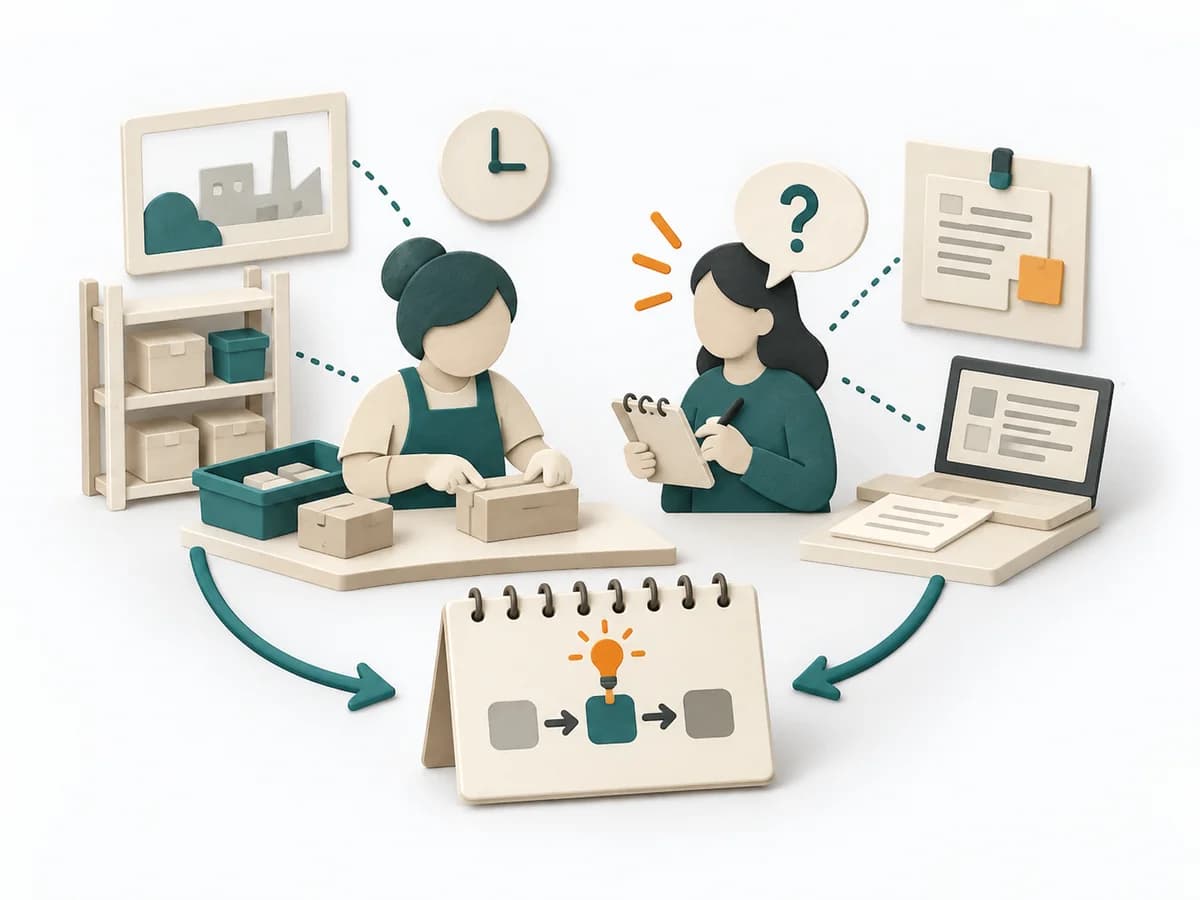 UX Research Contextual Inquiry | 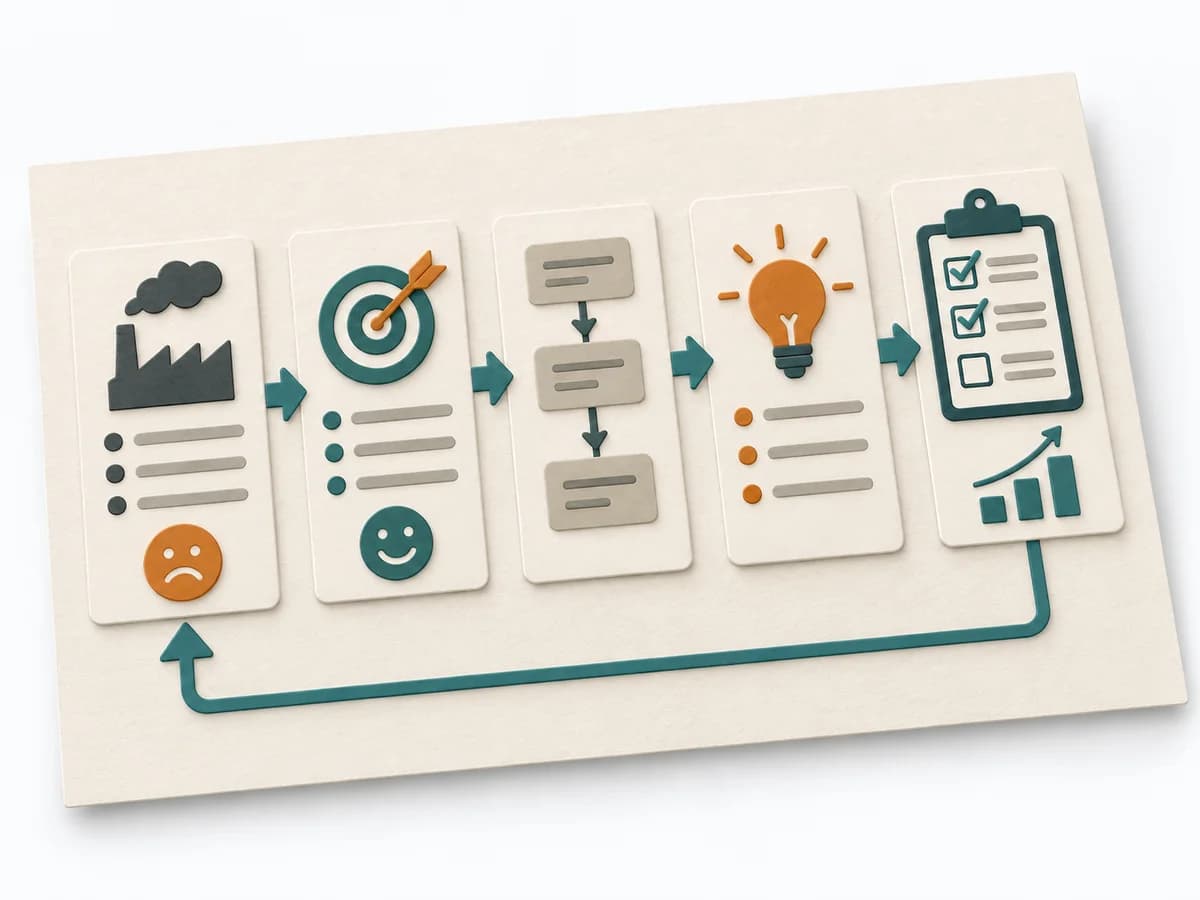 Operations A3 Problem Solving | 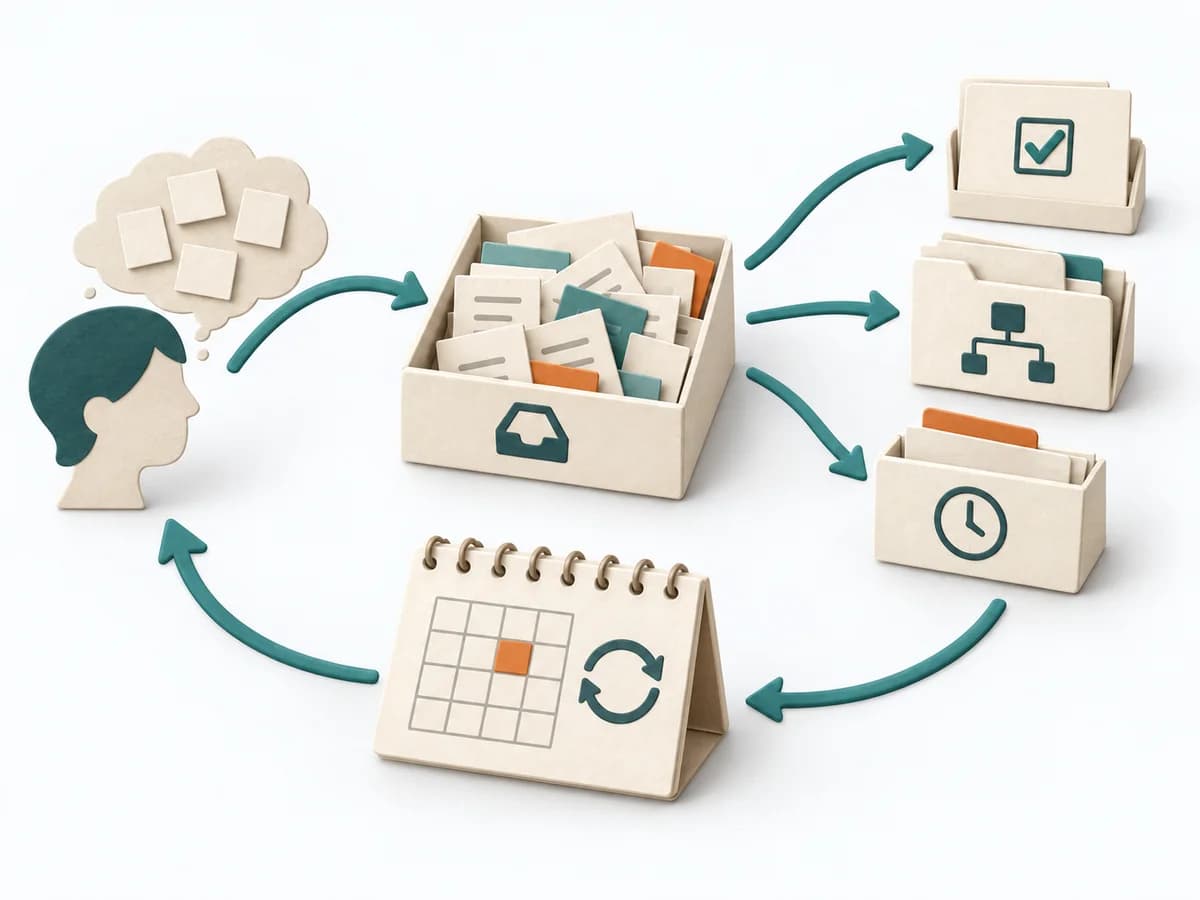 Operations Getting Things Done |  Operations 5 Whys |
|---|---|---|---|---|
Purposedifferent | When work processes are known only from accounts and the real context stays hidden, Contextual Inquiry makes behavior at the workplace visible. Observation and follow-up questions together show how people actually work, get interrupted, and improvise. | For a complex deviation with several people involved, the method bundles problem, analysis, and decision onto one page. It creates a shared working space where causes, countermeasures, and follow-up fit together. | With many open commitments and ideas in daily life, a reliable external storage system emerges. The method relieves the mind so priority and context don't have to compete in memory. | For a single, hard-to-explain deviation, the method exposes the causal chain behind the visible symptom. It keeps the cause open until a controllable condition emerges instead of a mere description. |
Complexitydifferent | Medium | Medium | Medium | Low |
Timedifferent | 1-3 Wochen | 45-90 min | 1-2 h Setup, laufend | 15-30 min |
Participantsdifferent | 4-12 Beobachtungen | 2-5 | 1 | 2-6 |
Formatdifferent | Workshop + async | Workshop + async | Async | Workshop |
Outputdifferent | Field Notes, Workflow Insights, Pain Points | A3 Report, Action Plan, Root Cause Analysis | Action Lists, Project List, Review Routine | Root cause notes, Countermeasures |
Tagsno overlap | UX researchObservationContext | LeanProblem solvingCoachingOperations | ProductivityPlanningTasksExecution | Root causeIncidentLeanProblem solving |