View methods side by side.
Choose up to four methods. Add them using the search and share the comparison by copying its link.
| Criterion |  Domain Modeling Context Map | 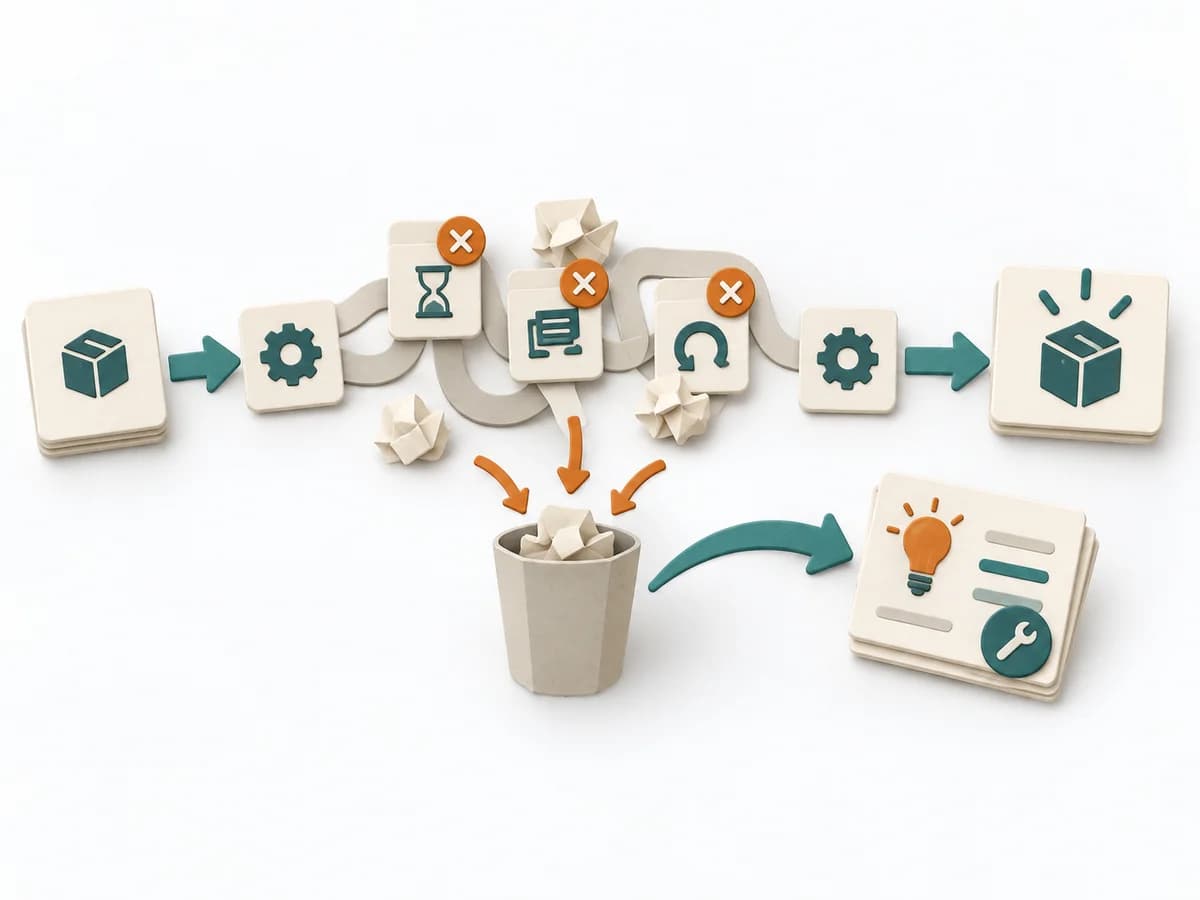 Operations Waste Analysis | 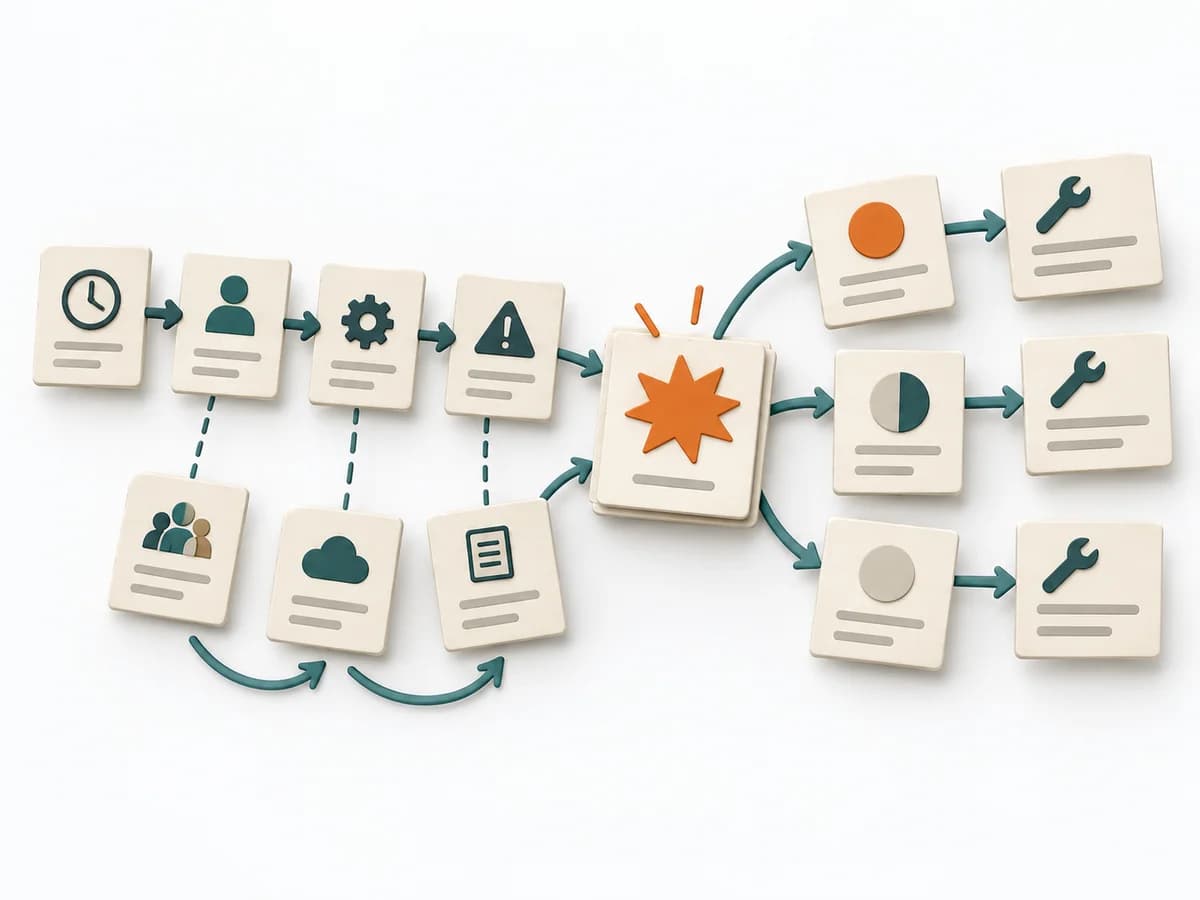 Operations Causal Factor Analysis |  Domain Modeling Bounded Context Canvas |
|---|---|---|---|---|
Purposedifferent | When several contexts need to talk to each other, it makes their relationships and dependencies legible. It helps sort integration pressure and responsibilities across system boundaries. | For a process that keeps people busy but creates little value, the method exposes waste. It directs attention to unnecessary movement, waiting times, rework, and overdelivery. | For an event with a complicated course, the method breaks down the contributing factors along the timeline. It shows how conditions, decisions, and reactions together produce a course of events. | When a business context is still loosely outlined, it shapes language, responsibility, and integration space. It clarifies what belongs together and where a boundary needs to hold. |
Complexitydifferent | Medium | Low | High | Medium |
Timedifferent | 1-3 h | 45-120 min | 2-6 h | 1-3 h |
Participantsdifferent | 2-8 | 2-8 | 3-10 | 3-8 |
Formatdifferent | Workshop + async | Workshop | Workshop + async | Workshop + async |
Outputdifferent | Context Map, Integration Patterns, Boundary Notes | Waste Map, Prioritized Waste, Improvement Backlog | Event Timeline, Causal Factor Chart, Cause List, Corrective Actions | Context Canvas, Glossary, Integration Notes |
Tagsno overlap | Domain-Driven DesignBoundariesStrategy | WasteLeanProcess improvement | CausalityIncidentRoot causeTimeline | Domain-Driven DesignBoundariesModeling |