View methods side by side.
Choose up to four methods. Add them using the search and share the comparison by copying its link.
| Criterion |  Domain Modeling Context Map |  DevOps Blameless Postmortem |  DevOps Incident Command | 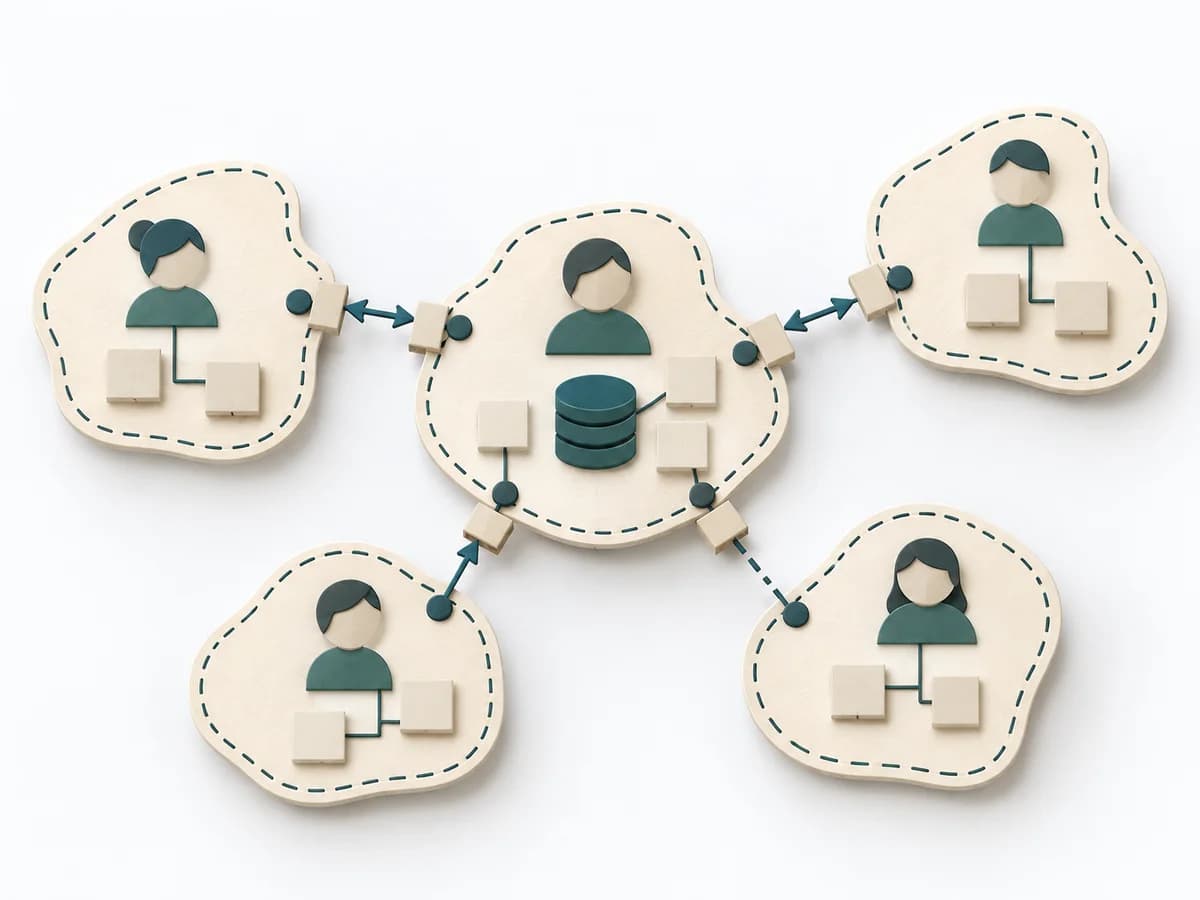 Domain Modeling Domain Context Map |
|---|---|---|---|---|
Purposedifferent | When several contexts need to talk to each other, it makes their relationships and dependencies legible. It helps sort integration pressure and responsibilities across system boundaries. | After an incident with damage or a near miss, the method creates a sober field for learning without assigning blame. It directs attention to the course of events, conditions, and effective countermeasures. | During an acute incident with several people involved, the method creates a clear leadership and communication structure. It reduces chaos when fast coordination and clean situational awareness are both needed at once. | When a domain model and its associated contexts need to be thought through together, it creates a shared overview. It connects the business view and organizational boundary into a readable whole. |
Complexitysame | Medium | Medium | Medium | Medium |
Timedifferent | 1-3 h | 30-90 min | As needed | 1-3 h |
Participantsdifferent | 2-8 | 3-12 | 4-15 | 3-10 |
Formatdifferent | Workshop + async | Workshop + async | Workshop + async | Workshop |
Outputdifferent | Context Map, Integration Patterns, Boundary Notes | Postmortem Doc, Action Items, Timeline | Incident Log, Action Tracker, Stakeholder Updates | Domain Context Map, Boundary Notes, Ownership Map |
Tagsno overlap | Domain-Driven DesignBoundariesStrategy | Site Reliability EngineeringIncidentLearningReliability | IncidentOperationsReliability | Domain-Driven DesignContextBoundaries |