View methods side by side.
Choose up to four methods. Add them using the search and share the comparison by copying its link.
| Criterion |  Domain Modeling Context Map |  Facilitation Alignment Mapping | 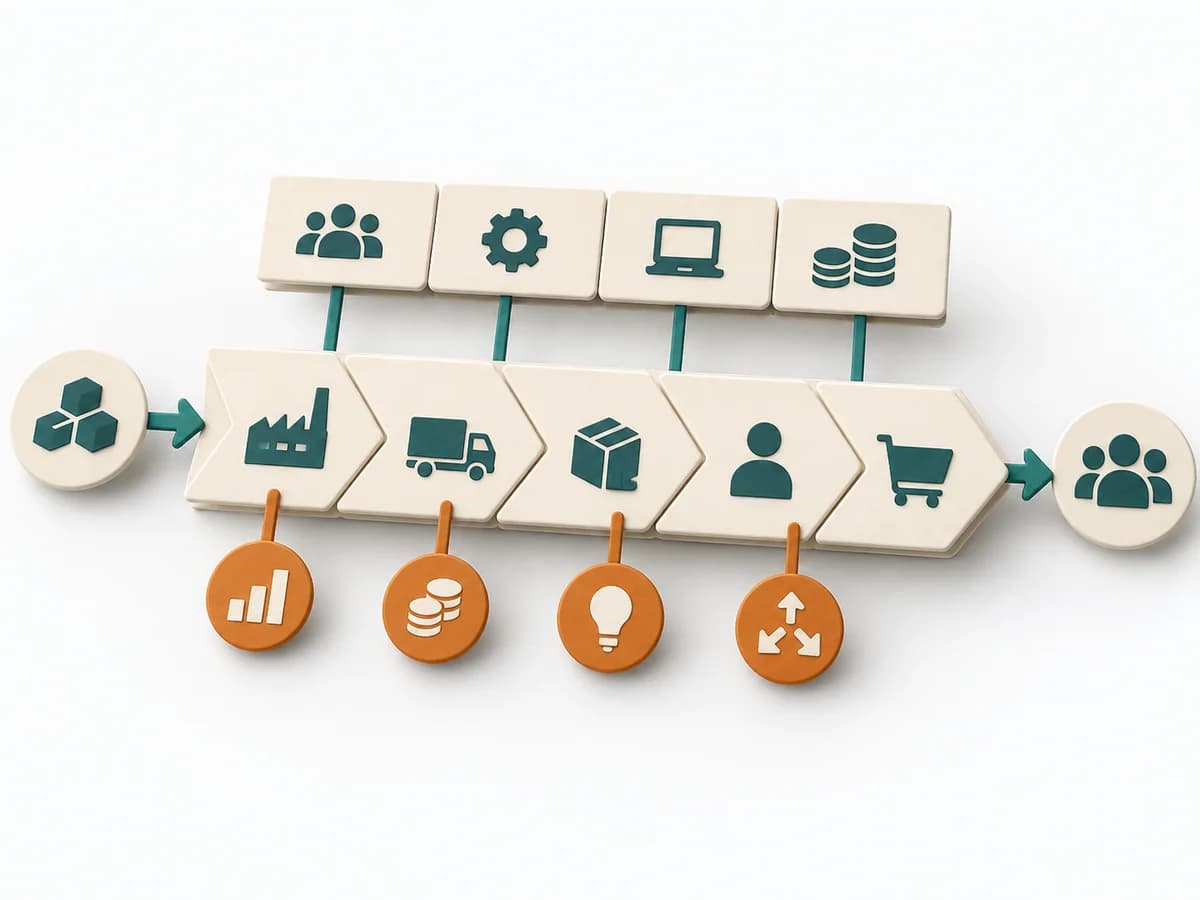 Business Strategy Value Chain Analysis |  Facilitation Power Interest Grid |
|---|---|---|---|---|
Purposedifferent | When several contexts need to talk to each other, it makes their relationships and dependencies legible. It helps sort integration pressure and responsibilities across system boundaries. | When several people work toward one goal but hold different mental maps, Alignment Mapping makes the discrepancies visible. It arranges goals, assumptions, and priorities so shared direction becomes verifiable. | Value Chain Analysis shows where value is created, costs accrue, and differentiation becomes possible along the process. It compares strengths, risks, market logic, and courses of action. The result is captured as a value-chain map and lever list. | When many stakeholders compete for attention at once, the Power Interest Grid sorts them by influence and stake. It turns individual contributions into a visible selection. The result is captured as a Power Interest Grid and a stakeholder-specific strategy. |
Complexitydifferent | Medium | Medium | High | Low |
Timedifferent | 1-3 h | 1-2 h | Half day | 30-60 min |
Participantsdifferent | 2-8 | 4-12 | 3-8 | 2-8 |
Formatdifferent | Workshop + async | Workshop | Workshop | Workshop |
Outputdifferent | Context Map, Integration Patterns, Boundary Notes | Alignment Map, Open Issues, Decision Questions | Value Chain Map, Lever List | Power Interest Grid, Strategy per Stakeholder |
Tagsno overlap | Domain-Driven DesignBoundariesStrategy | AlignmentStakeholdersStrategyFacilitation | StrategyBusiness modelDiagnosisAnalysis | StakeholdersFacilitationAlignmentPlanning |