View methods side by side.
Choose up to four methods. Add them using the search and share the comparison by copying its link.
| Criterion |  Domain Modeling Context Map |  Operations After-Action Review |  Domain Modeling Bounded Context Canvas | 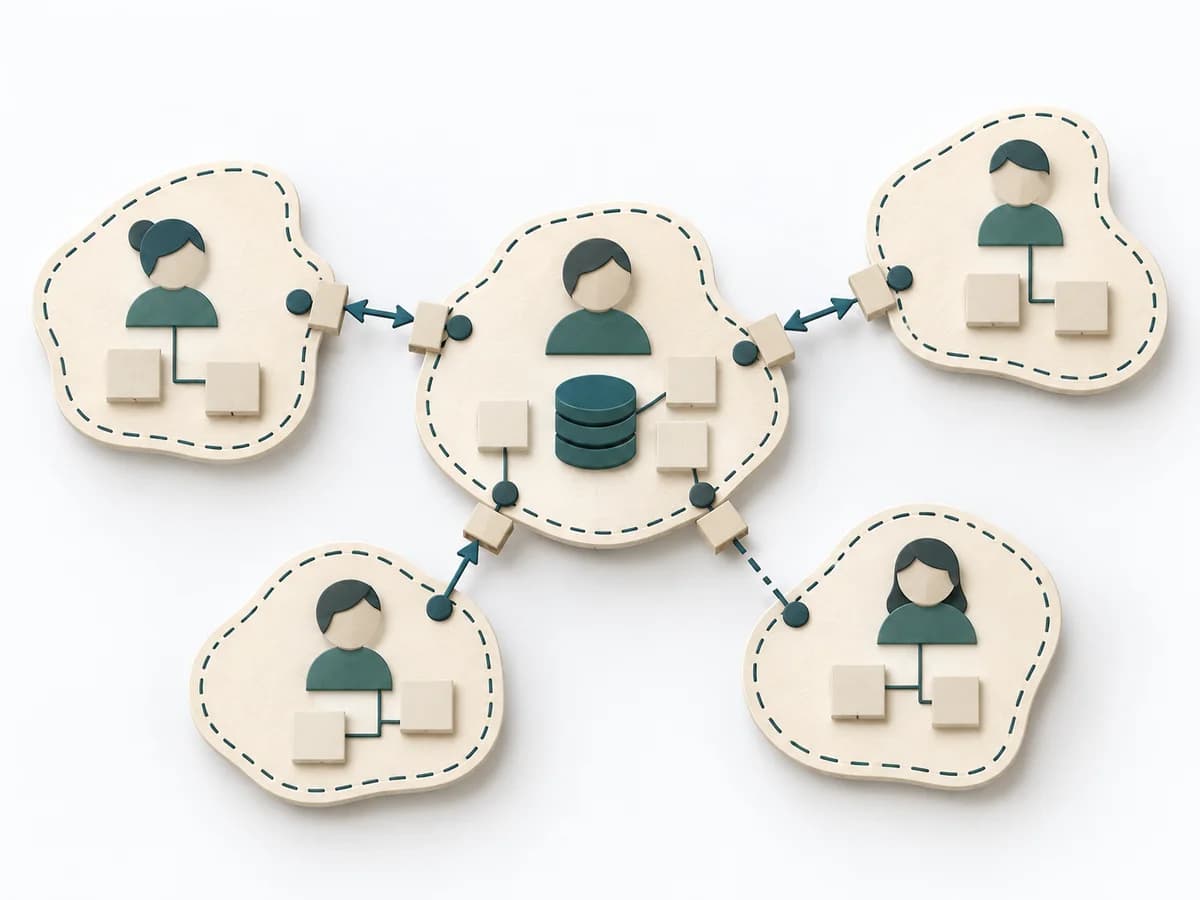 Domain Modeling Domain Context Map |
|---|---|---|---|---|
Purposedifferent | When several contexts need to talk to each other, it makes their relationships and dependencies legible. It helps sort integration pressure and responsibilities across system boundaries. | After missions or project phases with unclear outcomes, the method makes visible what actually happened and what can be learned from it. It separates course, effect, and causes so experience turns into solid improvement. | When a business context is still loosely outlined, it shapes language, responsibility, and integration space. It clarifies what belongs together and where a boundary needs to hold. | When a domain model and its associated contexts need to be thought through together, it creates a shared overview. It connects the business view and organizational boundary into a readable whole. |
Complexitydifferent | Medium | Low | Medium | Medium |
Timedifferent | 1-3 h | 20-45 min | 1-3 h | 1-3 h |
Participantsdifferent | 2-8 | 3-12 | 3-8 | 3-10 |
Formatdifferent | Workshop + async | Workshop + async | Workshop + async | Workshop |
Outputdifferent | Context Map, Integration Patterns, Boundary Notes | Lessons learned, Action items, Event summary | Context Canvas, Glossary, Integration Notes | Domain Context Map, Boundary Notes, Ownership Map |
Tagsno overlap | Domain-Driven DesignBoundariesStrategy | LearningOperationsImprovement | Domain-Driven DesignBoundariesModeling | Domain-Driven DesignContextBoundaries |