View methods side by side.
Choose up to four methods. Add them using the search and share the comparison by copying its link.
| Criterion | 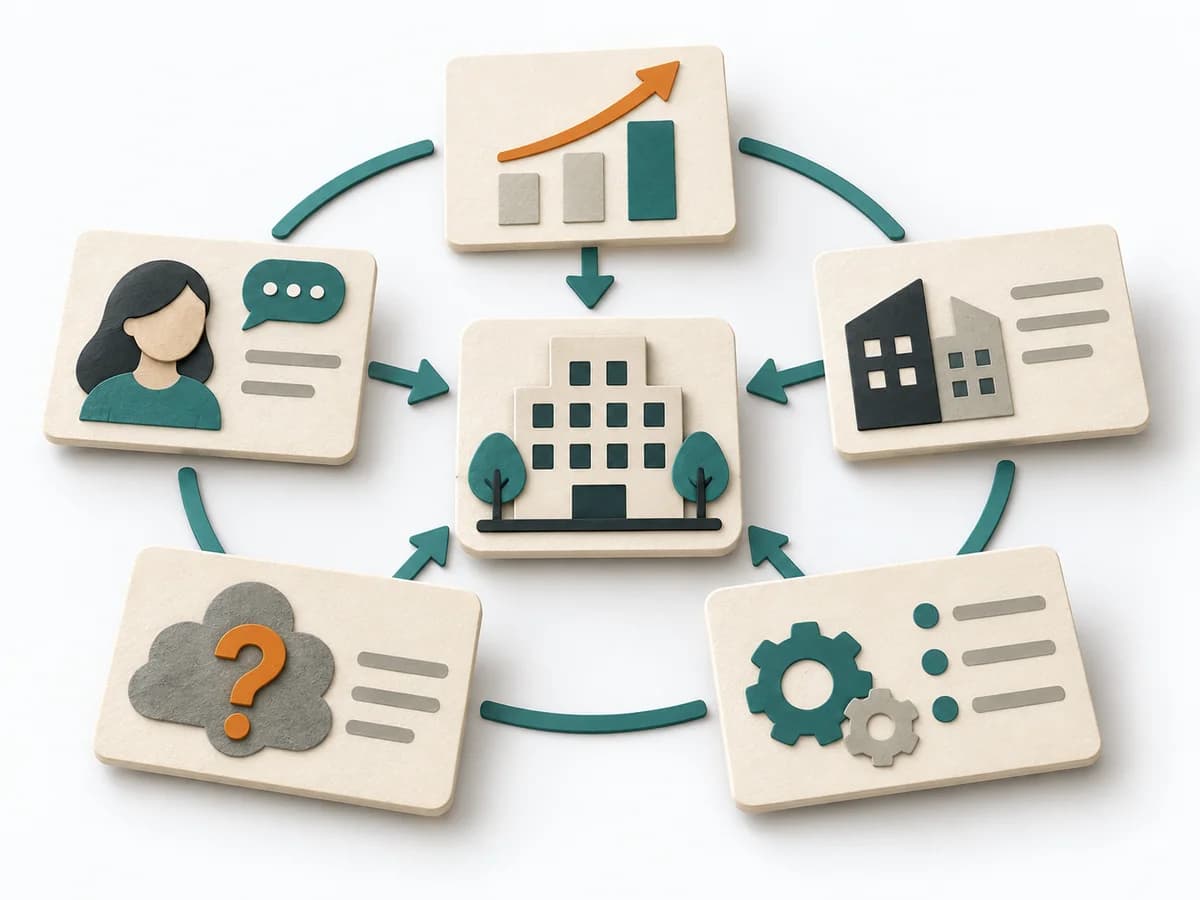 Product Discovery Context Canvas | 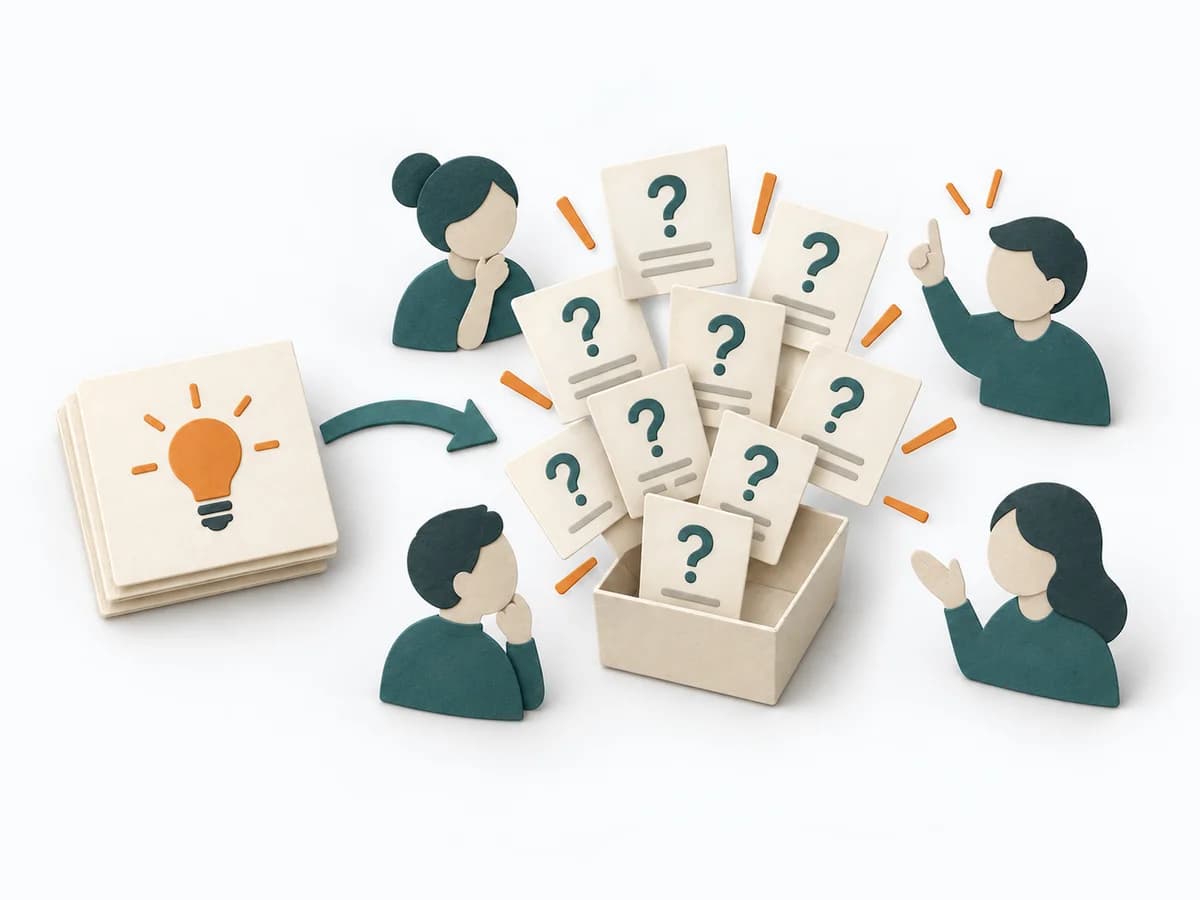 Facilitation Question Burst |  Facilitation Mind Mapping | 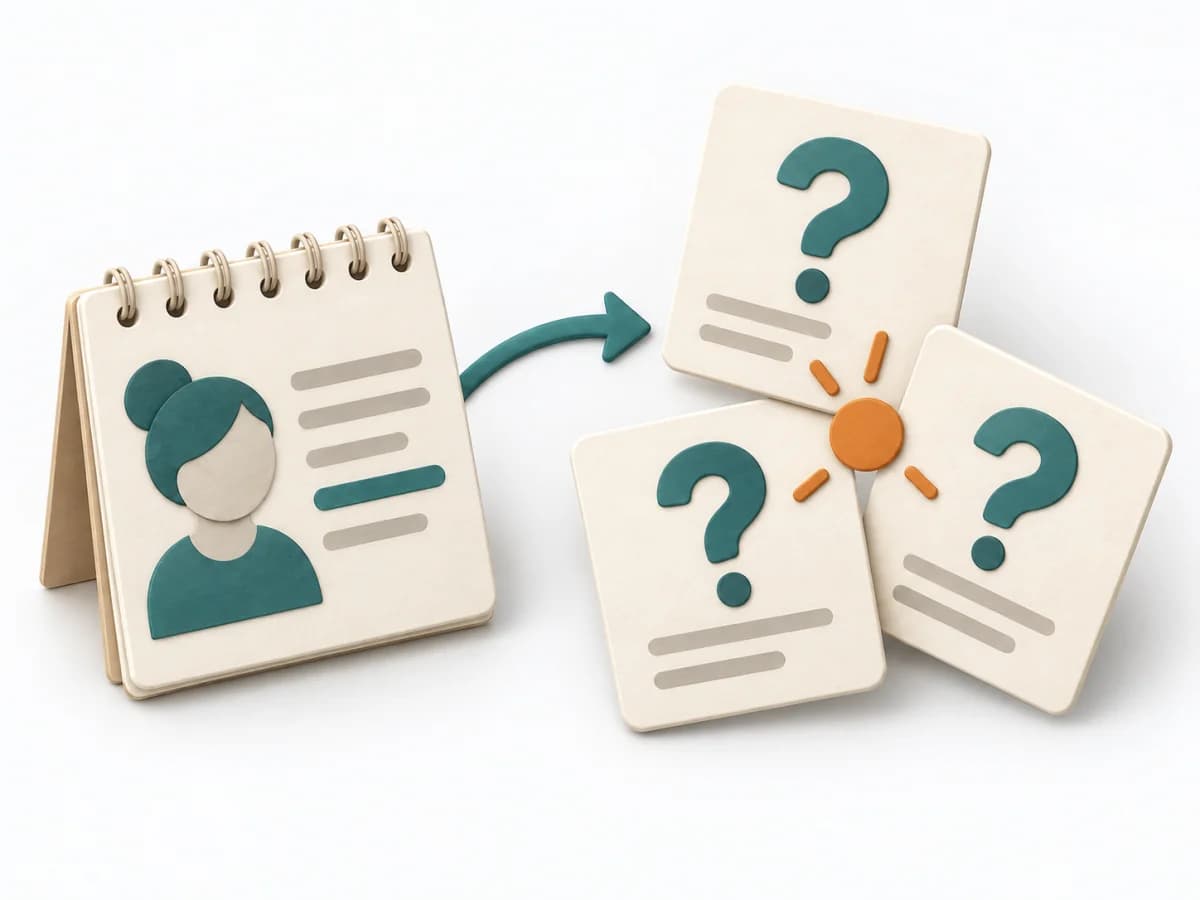 Innovation How Might We |
|---|---|---|---|---|
Purposedifferent | When an environment of users, systems, and constraints is hard to grasp, it puts the context compactly on the table. It creates a clear reading of influence, boundary, and dependency. | When a problem gets covered up too quickly with answers, Question Burst puts the better question at the center. The format opens the thinking space before the group commits to an interpretation. | When a topic is still unclear and too many thoughts surface at once, Mind Mapping creates an open surface for ordering them. It makes connections, subtopics, and starting points visible without fixing them too early. | With a stuck problem carrying many implicit assumptions, the method translates observations into open, workable questions. It sharpens the problem frame without pre-thinking the solution, turning frustration or fuzziness into a search space with clear direction. |
Complexitysame | Low | Low | Low | Low |
Timedifferent | 45-90 min | 15-30 min | 15-45 min | 30–45 min |
Participantsdifferent | 3-10 | 2-8 | 1-10 | 1-10 |
Formatdifferent | Workshop | Workshop | Workshop + async | Workshop + async |
Outputdifferent | Context canvas, Open questions, Shared context notes | Question List, Reframed Challenge, Learning Prompts | Mind Map, Topic Clusters, Open Questions | HMW Questions, Challenge Framing, Idea Prompts |
Tagsno overlap | ContextFramingRequirementsCanvas | QuestionsReframingFacilitationSensemaking | BrainstormingIdeasMappingStructureFacilitation | FramingOpportunityIdeationQuestions |