View methods side by side.
Choose up to four methods. Add them using the search and share the comparison by copying its link.
| Criterion |  Product Discovery Context Canvas | 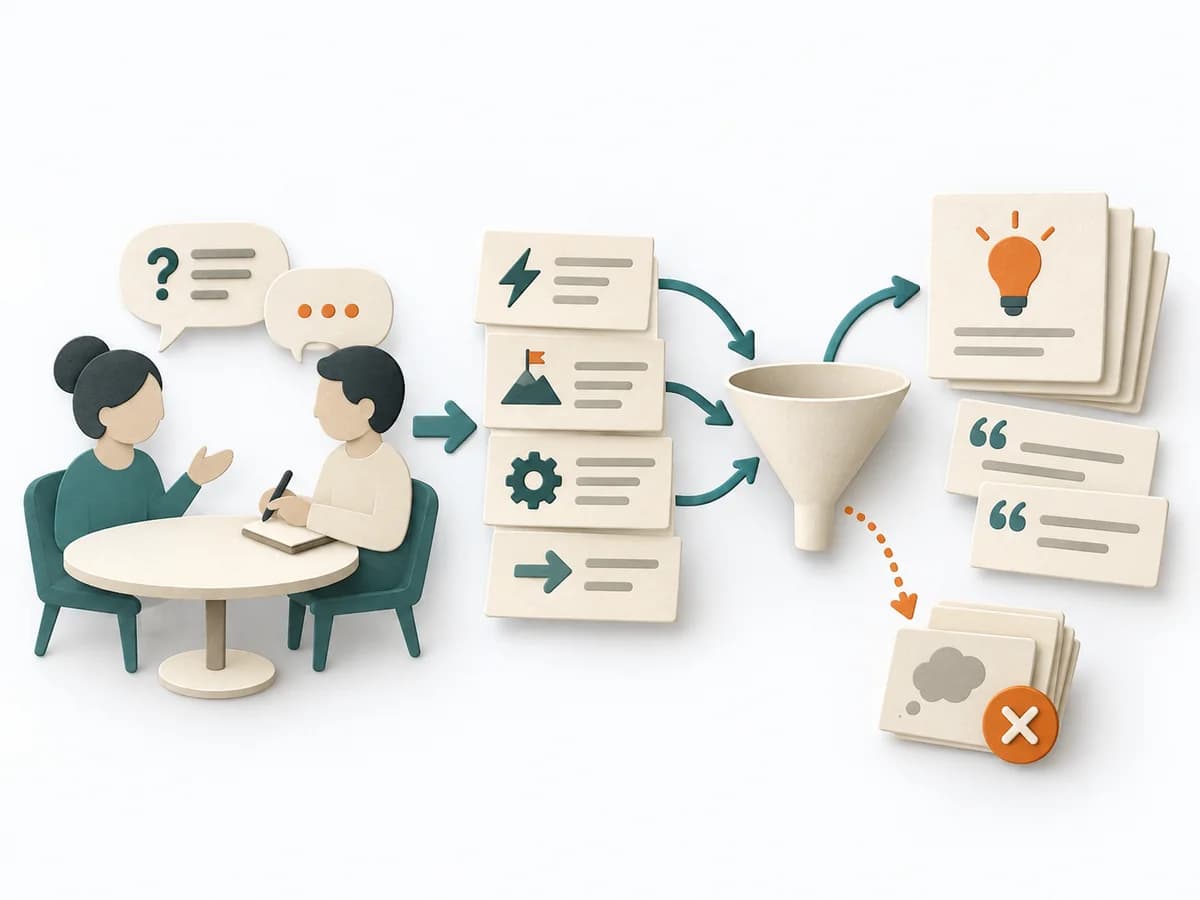 Product Discovery Opportunity Interview | 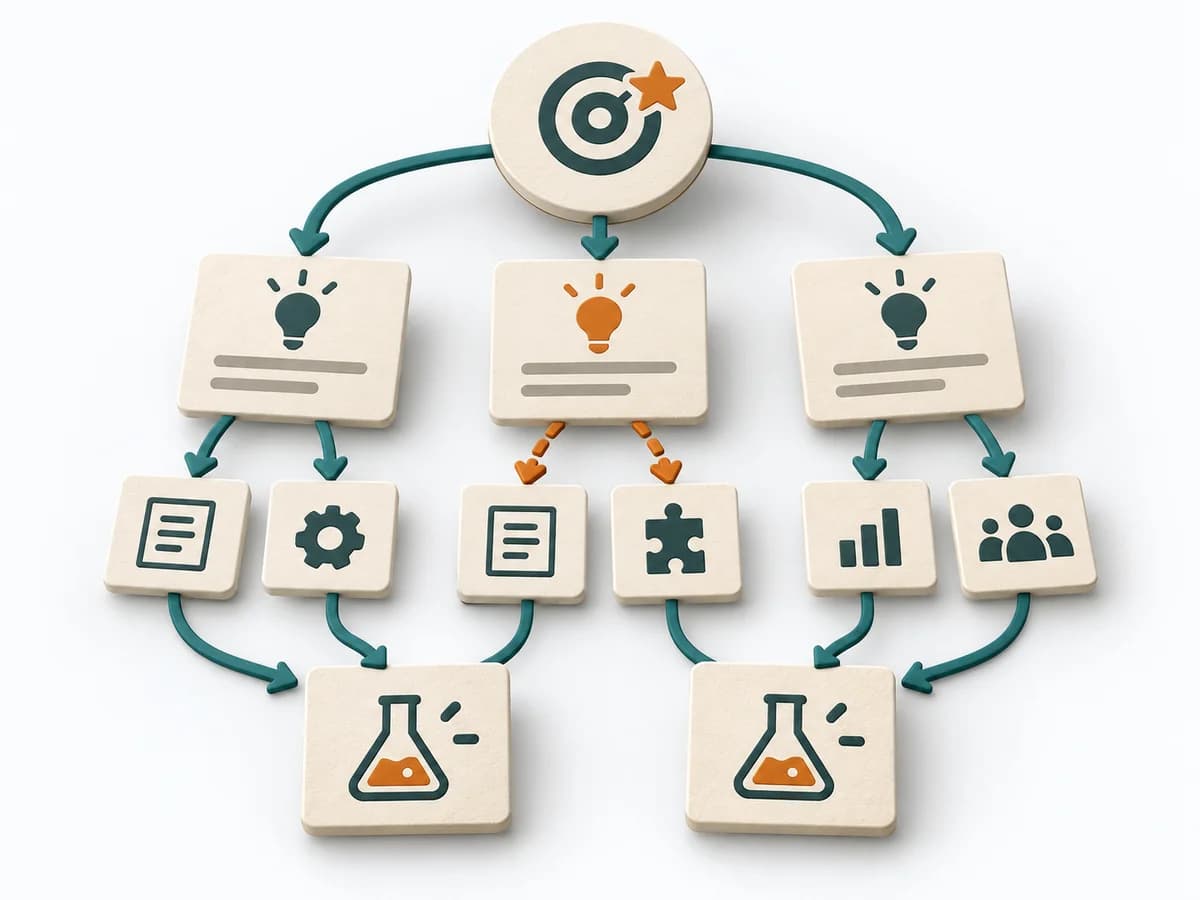 Product Discovery Opportunity Solution Tree |  Product Discovery Fake Door Test |
|---|---|---|---|---|
Purposedifferent | When an environment of users, systems, and constraints is hard to grasp, it puts the context compactly on the table. It creates a clear reading of influence, boundary, and dependency. | When opportunities are still hidden behind signals of need, it structures conversations around needs and obstacles. It looks for patterns that lead to new product opportunities. | When discovery keeps swinging between goals, ideas, and learning loops, it creates clear steering logic. It connects the desired outcome, opportunities, and experiments into a legible structure. | When demand is still unclear, it measures interest in a feature before it is built. It separates real behavior from polite agreement and deliberately keeps build effort small. |
Complexitydifferent | Low | Medium | Medium | Medium |
Timedifferent | 45-90 min | 30-60 min je Interview | 1-2 h Setup, laufend | 1-5 Tage |
Participantsdifferent | 3-10 | 5-12 Interviews | 2-6 | Nutzertraffic |
Formatdifferent | Workshop | Workshop + async | Workshop + async | Async |
Outputdifferent | Context canvas, Open questions, Shared context notes | Interview Notes, Opportunity Themes, Customer Quotes | Opportunity Solution Tree, Experiment Backlog, Learning Log | Click Data, Interest Signal, Learning Decision |
Tagsno overlap | ContextFramingRequirementsCanvas | DiscoveryInterviewsOpportunityCustomer | DiscoveryOutcomesExperimentsOpportunity | ValidationExperimentsDemandDiscovery |