View methods side by side.
Choose up to four methods. Add them using the search and share the comparison by copying its link.
| Criterion |  Product Discovery Context Canvas |  Systems Thinking Leverage Points |  Decision Making Force Field Analysis | 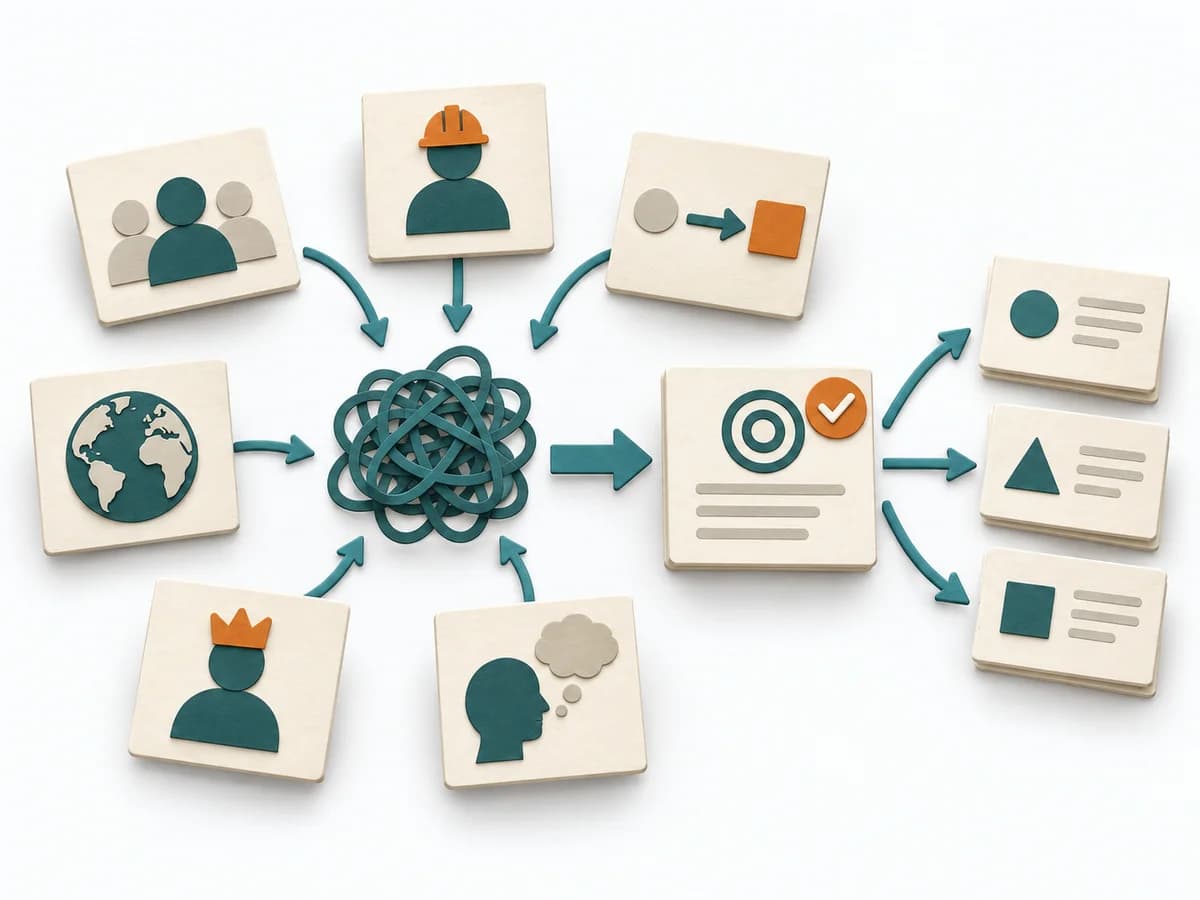 Systems Thinking CATWOE Analysis |
|---|---|---|---|---|
Purposedifferent | When an environment of users, systems, and constraints is hard to grasp, it puts the context compactly on the table. It creates a clear reading of influence, boundary, and dependency. | Leverage Points show exactly where interventions in a system produce a disproportionate effect. It draws relationships, patterns, and feedback loops. The result is captured as a leverage map and action strategy. | In change initiatives, supporting and restraining forces sit at the table at the same time. Force Field Analysis makes these tensions explicit and shows where change can be pushed forward by strengthening or relieving. | CATWOE structures a problem from six viewpoints and prevents too narrow a view of the situation. Different experiences of the system become comparably discussable this way. |
Complexitydifferent | Low | High | Low | Medium |
Timedifferent | 45-90 min | Half day | 45-90 min | 45-90 min |
Participantsdifferent | 3-10 | 3-12 | 3-12 | 3-8 |
Formatdifferent | Workshop | Workshop | Workshop | Workshop + async |
Outputdifferent | Context canvas, Open questions, Shared context notes | Leverage Map, Action Strategy | Force Field Map, Change Levers, Risk Notes | CATWOE Canvas, Root Definition, Stakeholder Perspectives, Constraints |
Tagsno overlap | ContextFramingRequirementsCanvas | Systems thinkingChangeStrategy | ChangeDecisionStrategy | Systems thinkingFramingStakeholders |