View methods side by side.
Choose up to four methods. Add them using the search and share the comparison by copying its link.
| Criterion | 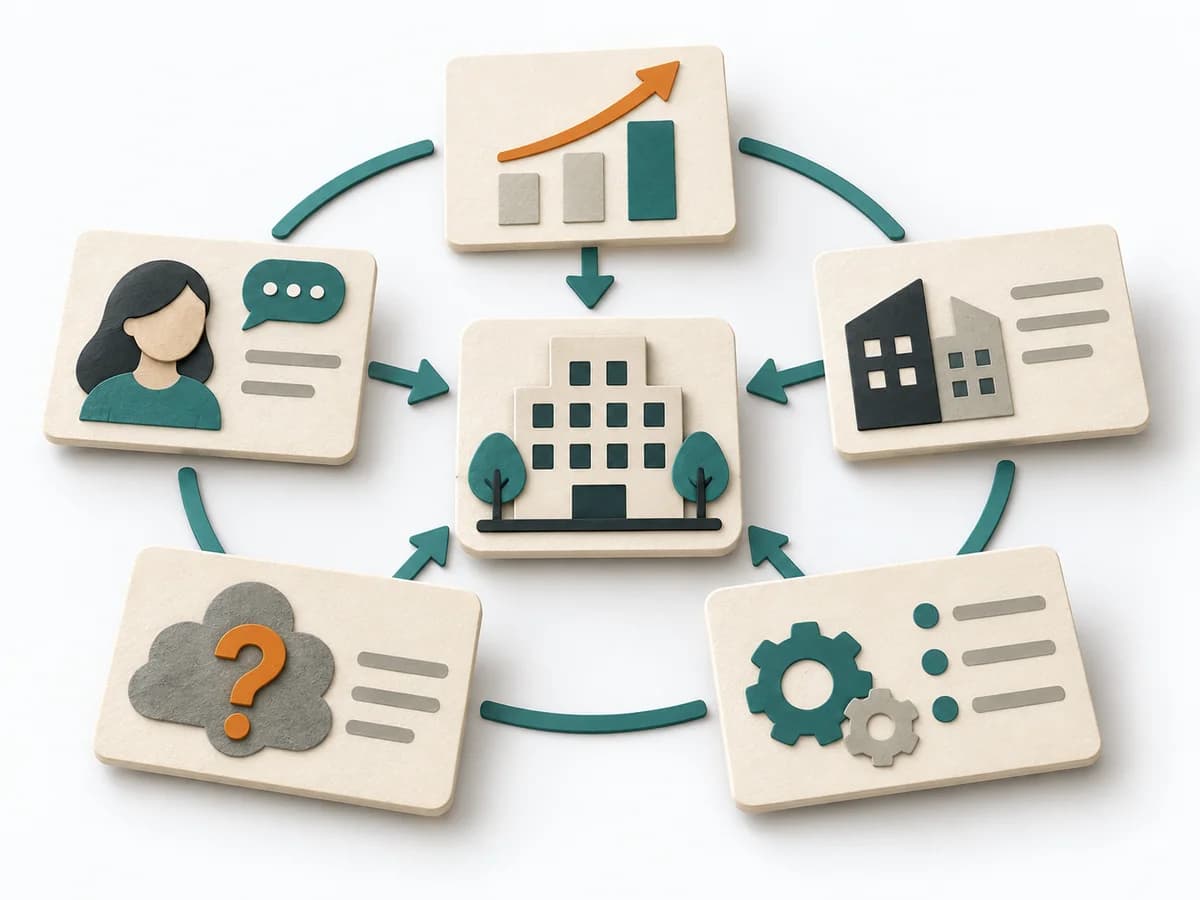 Product Discovery Context Canvas | 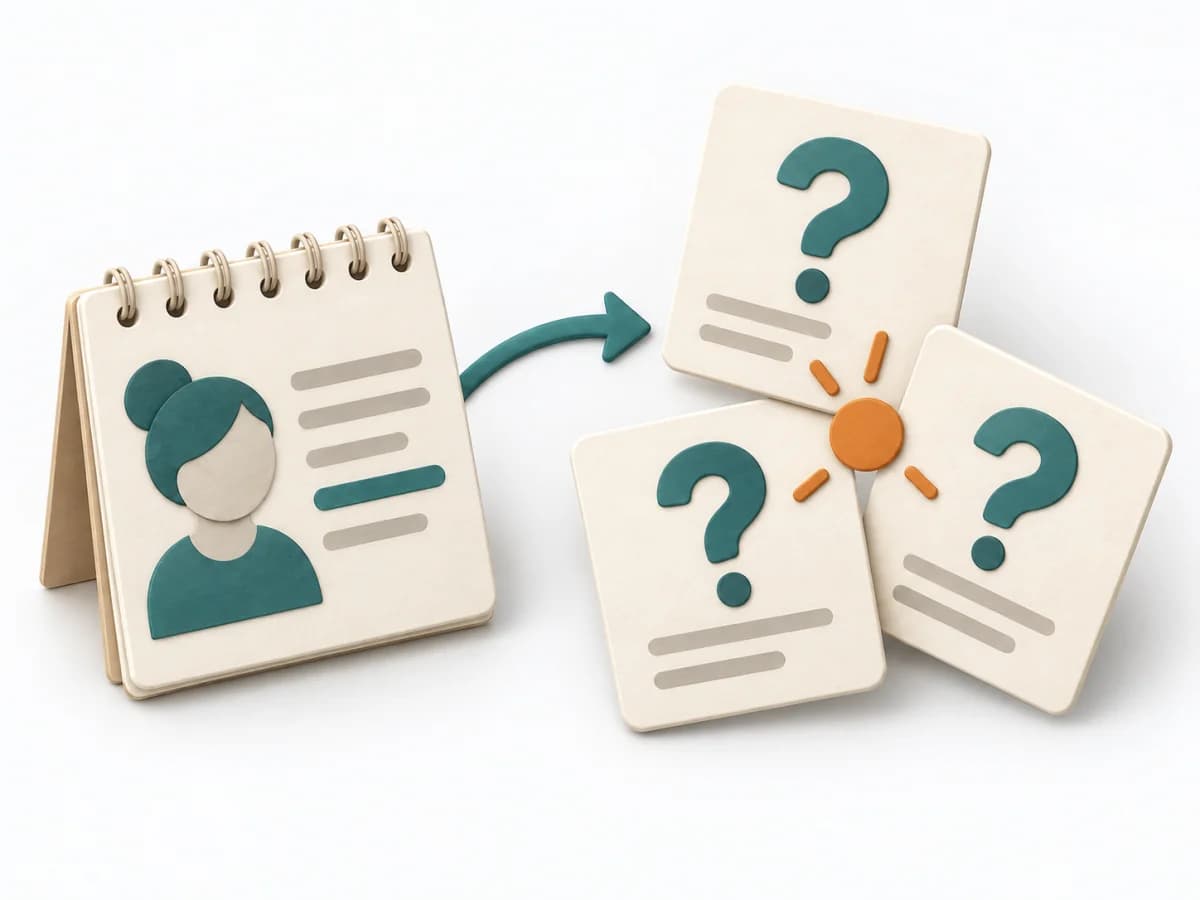 Innovation How Might We | 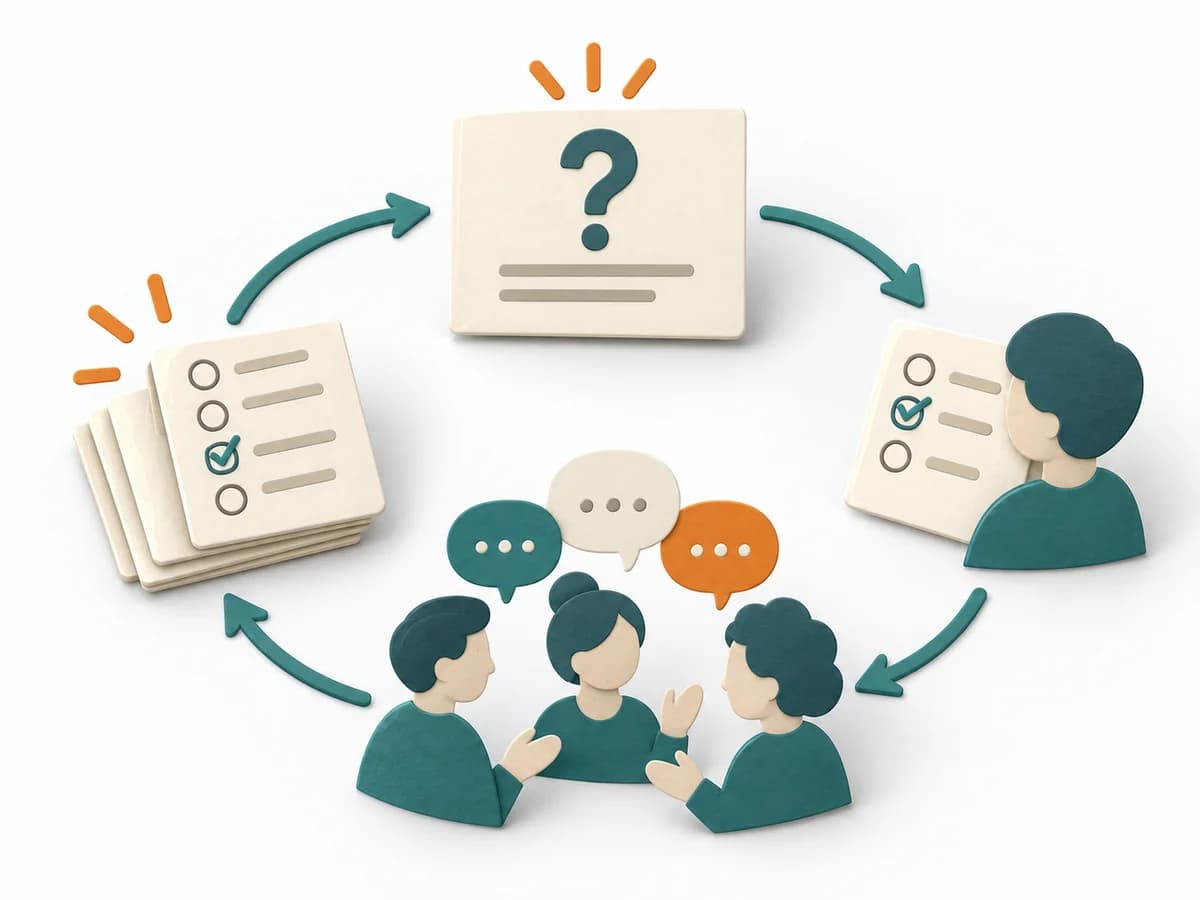 Knowledge Modeling Peer Instruction | 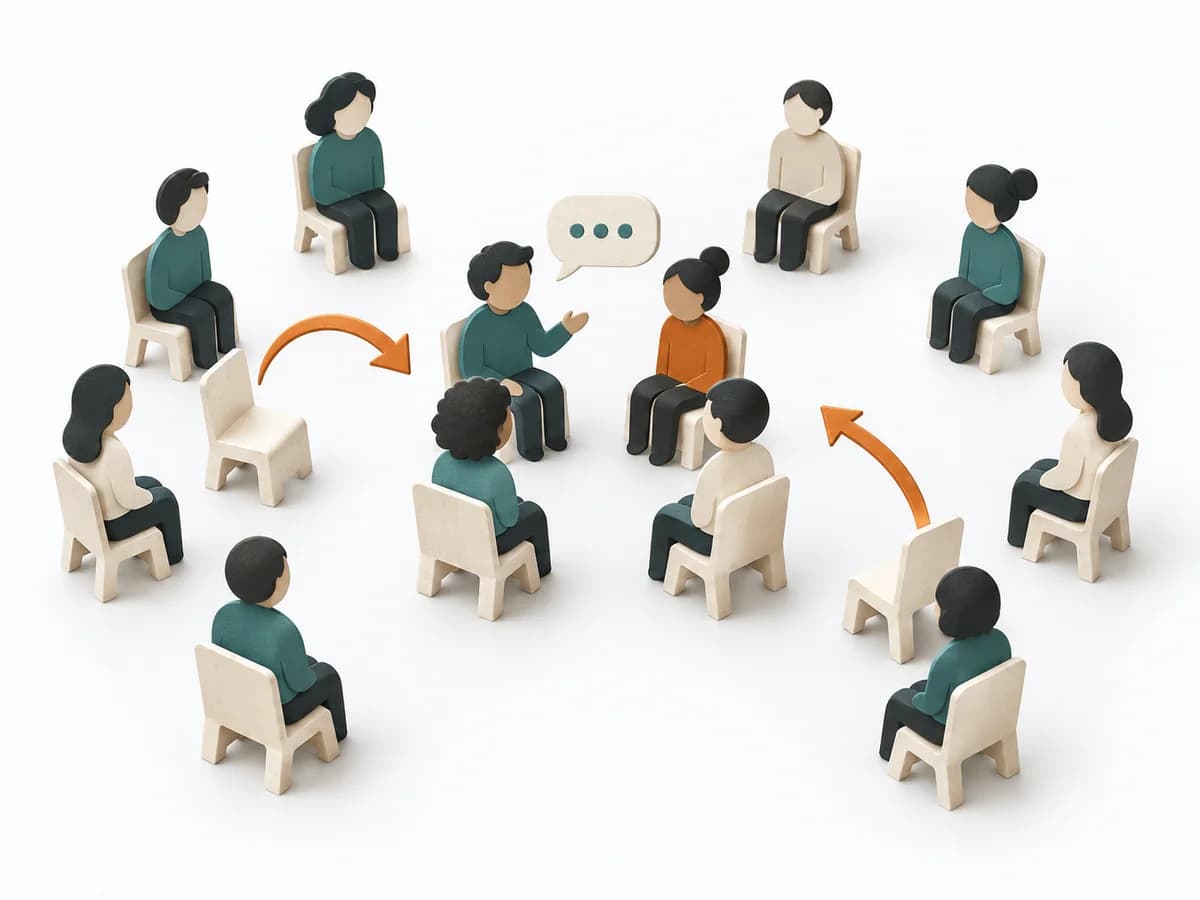 Facilitation Fishbowl Discussion |
|---|---|---|---|---|
Purposedifferent | When an environment of users, systems, and constraints is hard to grasp, it puts the context compactly on the table. It creates a clear reading of influence, boundary, and dependency. | With a stuck problem carrying many implicit assumptions, the method translates observations into open, workable questions. It sharpens the problem frame without pre-thinking the solution, turning frustration or fuzziness into a search space with clear direction. | Peer Instruction uses group thinking to clarify difficult terms or concepts faster. The method combines individual reflection with social correction and shared precision. | When a controversial topic needs depth and discipline at the same time, Fishbowl Discussion makes the structure of the conversation transparent. The format keeps the core small enough for real dialogue and open enough for controlled turnover. |
Complexitydifferent | Low | Low | Medium | Medium |
Timedifferent | 45-90 min | 30–45 min | 10-20 min je Frage | 45-90 min |
Participantsdifferent | 3-10 | 1-10 | 6-50 | 8-80 |
Formatdifferent | Workshop | Workshop + async | Workshop | Workshop |
Outputdifferent | Context canvas, Open questions, Shared context notes | HMW Questions, Challenge Framing, Idea Prompts | Concept Questions, Vote Results, Learning Notes | Discussion Insights, Observed Tensions, Follow-up Questions |
Tagsno overlap | ContextFramingRequirementsCanvas | FramingOpportunityIdeationQuestions | LearningDialogueFacilitation | FacilitationDialogueLarge group |