View methods side by side.
Choose up to four methods. Add them using the search and share the comparison by copying its link.
| Criterion |  Product Discovery Context Canvas |  Business Strategy GAP Analysis | 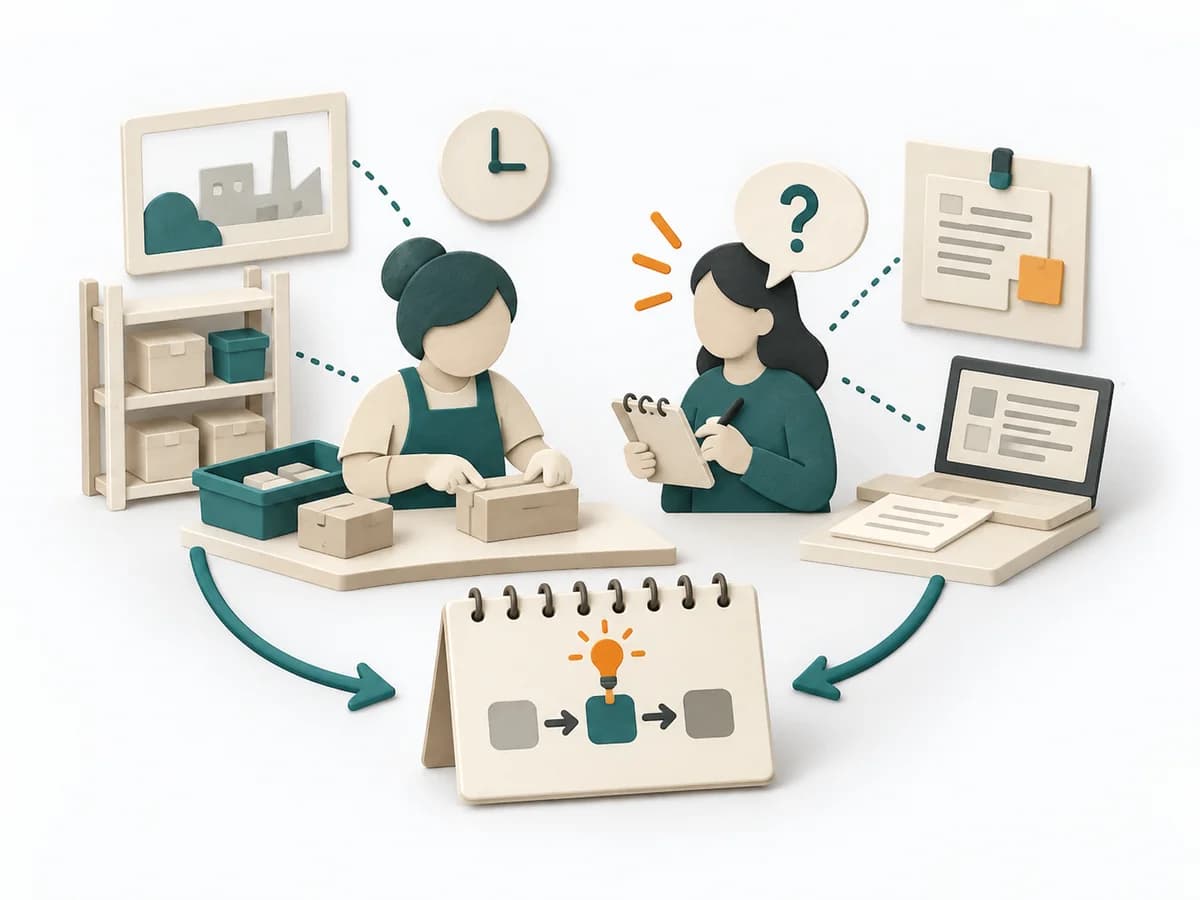 UX Research Contextual Inquiry | 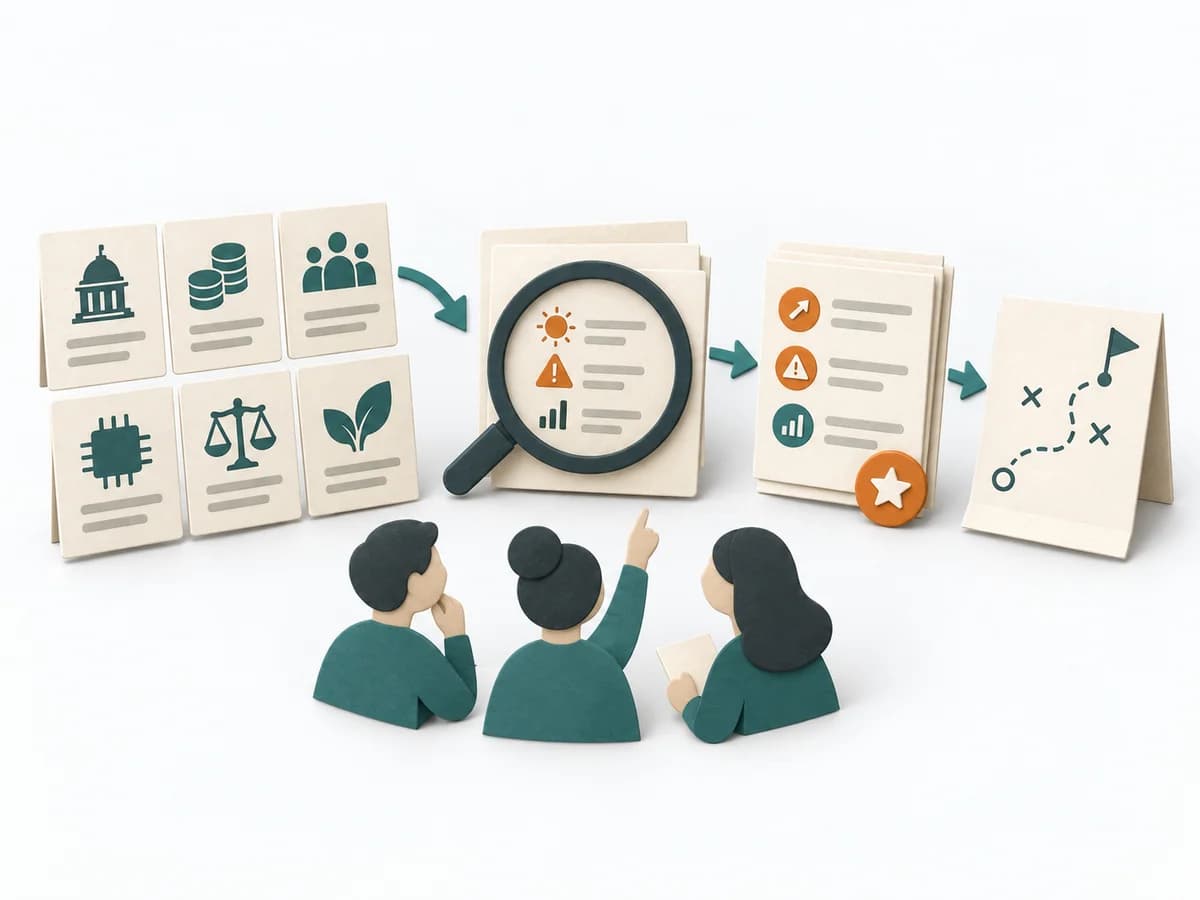 Business Strategy PESTLE Analysis |
|---|---|---|---|---|
Purposedifferent | When an environment of users, systems, and constraints is hard to grasp, it puts the context compactly on the table. It creates a clear reading of influence, boundary, and dependency. | GAP Analysis compares the current state with a target picture and makes the distance manageable. It becomes useful when, ahead of new initiatives, it must become clear which capabilities, processes, or resources are missing. | When work processes are known only from accounts and the real context stays hidden, Contextual Inquiry makes behavior at the workplace visible. Observation and follow-up questions together show how people actually work, get interrupted, and improvise. | PESTLE Analysis makes political, economic, social, technological, legal, and environmental influences visible. The environment of an initiative is thereby read systematically instead of through isolated trends. |
Complexitydifferent | Low | Medium | Medium | Medium |
Timedifferent | 45-90 min | 1-3 h | 1-3 Wochen | 1-3 h |
Participantsdifferent | 3-10 | 2-8 | 4-12 Beobachtungen | 2-10 |
Formatdifferent | Workshop | Workshop + async | Workshop + async | Workshop + async |
Outputdifferent | Context canvas, Open questions, Shared context notes | Gap Matrix, Action Plan, Risk Notes | Field Notes, Workflow Insights, Pain Points | PESTLE Map, External Risks, Strategic Questions |
Tagsno overlap | ContextFramingRequirementsCanvas | StrategyAnalysisPlanning | UX researchObservationContext | StrategyMarketAnalysis |