View methods side by side.
Choose up to four methods. Add them using the search and share the comparison by copying its link.
| Criterion | 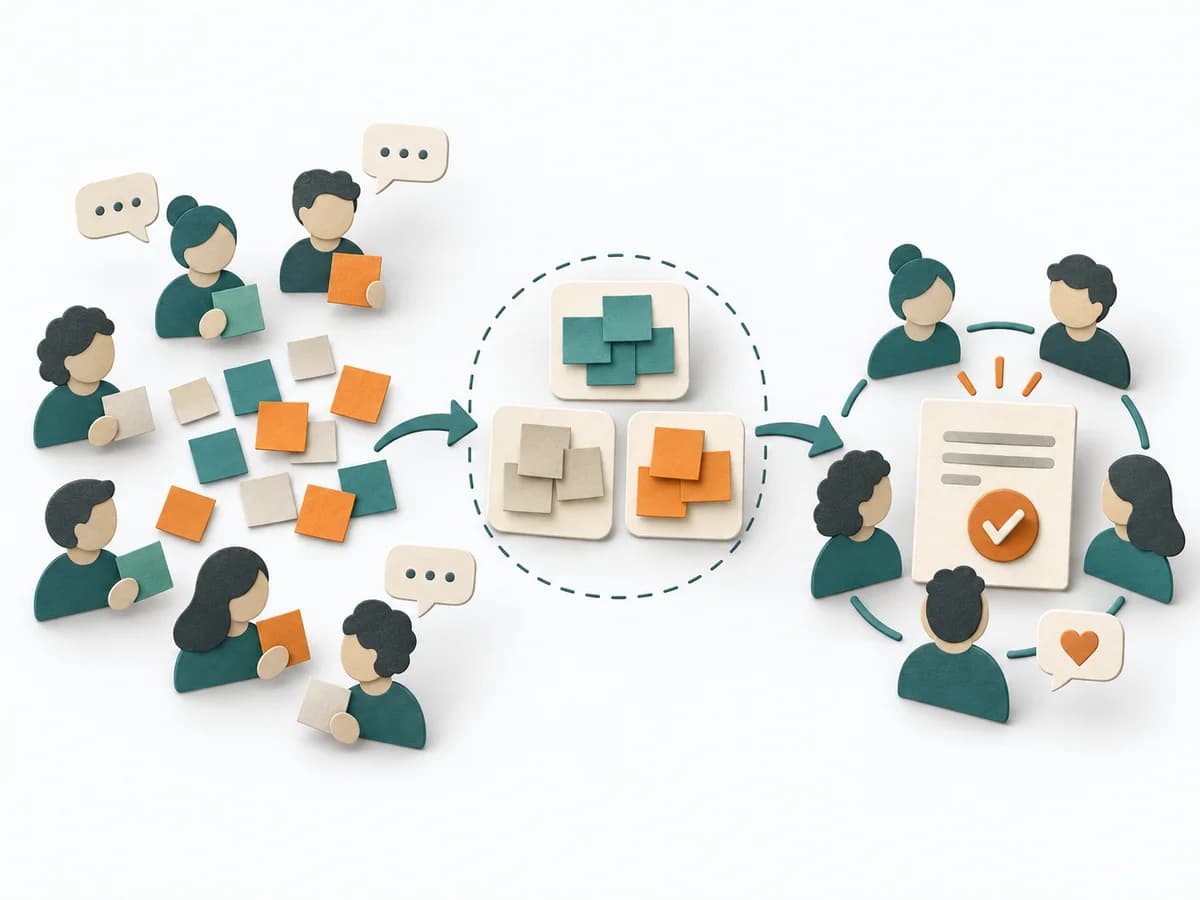 Facilitation Consensus Workshop |  Systems Thinking Leverage Points |  Facilitation Stakeholder Salience Model |  Business Strategy McKinsey 7S |
|---|---|---|---|---|
Purposedifferent | When a group needs a solid decision without outvoting individual factions, a Consensus Workshop creates a negotiable common ground. It makes agreement, reservations, and open tensions discussable at the same time. | Leverage Points show exactly where interventions in a system produce a disproportionate effect. It draws relationships, patterns, and feedback loops. The result is captured as a leverage map and action strategy. | When stakeholders appear to matter very differently, the Stakeholder Salience Model rates their actual priority through power, legitimacy, and urgency. It turns individual contributions into a visible selection. The result is captured as a Salience diagram and a class-based strategy. | McKinsey 7S checks whether Strategy, Structure, Systems, Shared Values, Skills, Style, and Staff fit together. Organizational misalignments become visible across multiple levers as a result. |
Complexitydifferent | Medium | High | Medium | Medium |
Timedifferent | 1-3 h | Half day | 60-90 min | 2-4 h |
Participantsdifferent | 5-30 | 3-12 | 3-6 | 3-12 |
Formatsame | Workshop | Workshop | Workshop | Workshop |
Outputdifferent | Consensus Clusters, Theme Titles, Priority Areas | Leverage Map, Action Strategy | Salience Diagram, Strategy per Class | 7S Assessment, Alignment Gaps, Change Actions |
Tagsno overlap | FacilitationConsensusWorkshopAlignment | Systems thinkingChangeStrategy | StakeholdersFacilitationAlignmentGovernance | OrganizationStrategyAlignmentChange |