View methods side by side.
Choose up to four methods. Add them using the search and share the comparison by copying its link.
| Criterion | 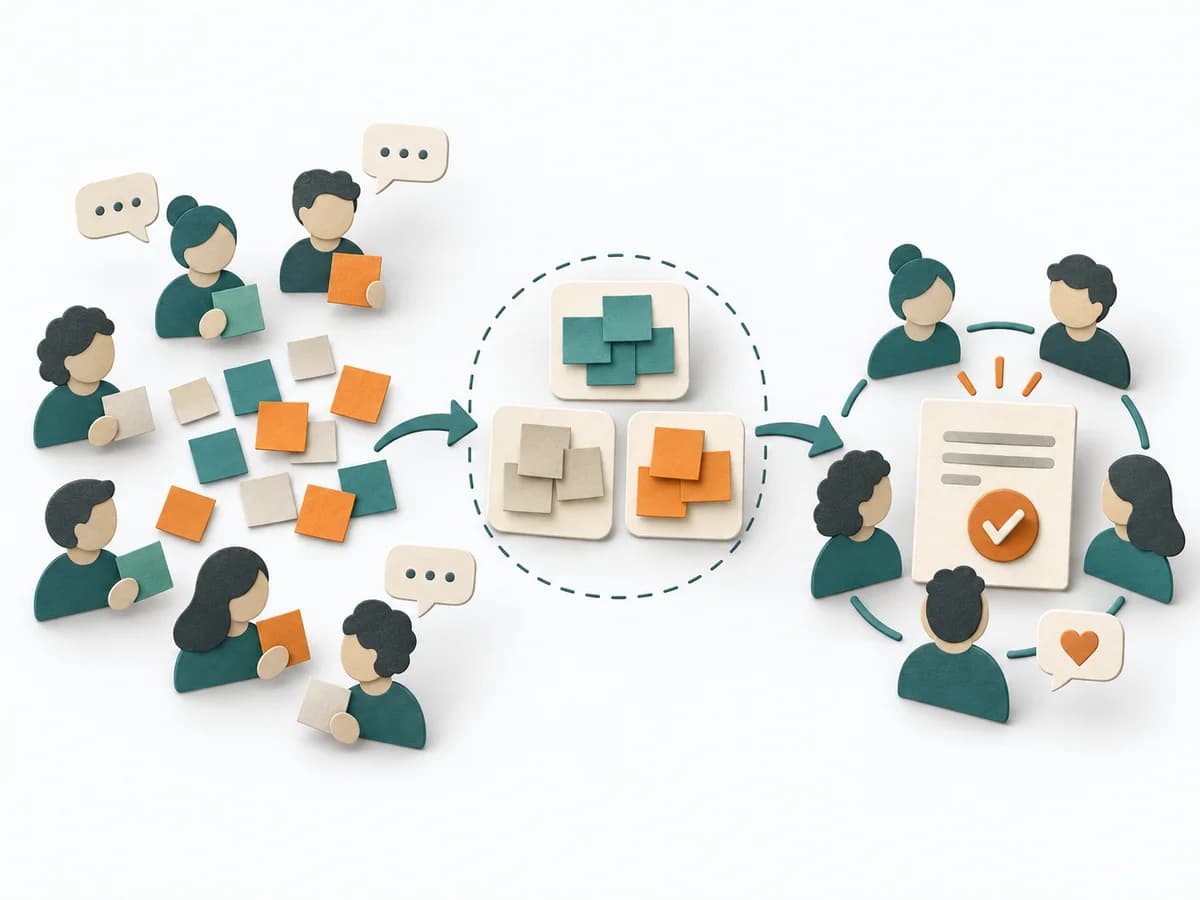 Facilitation Consensus Workshop |  Product Discovery Learning Card | 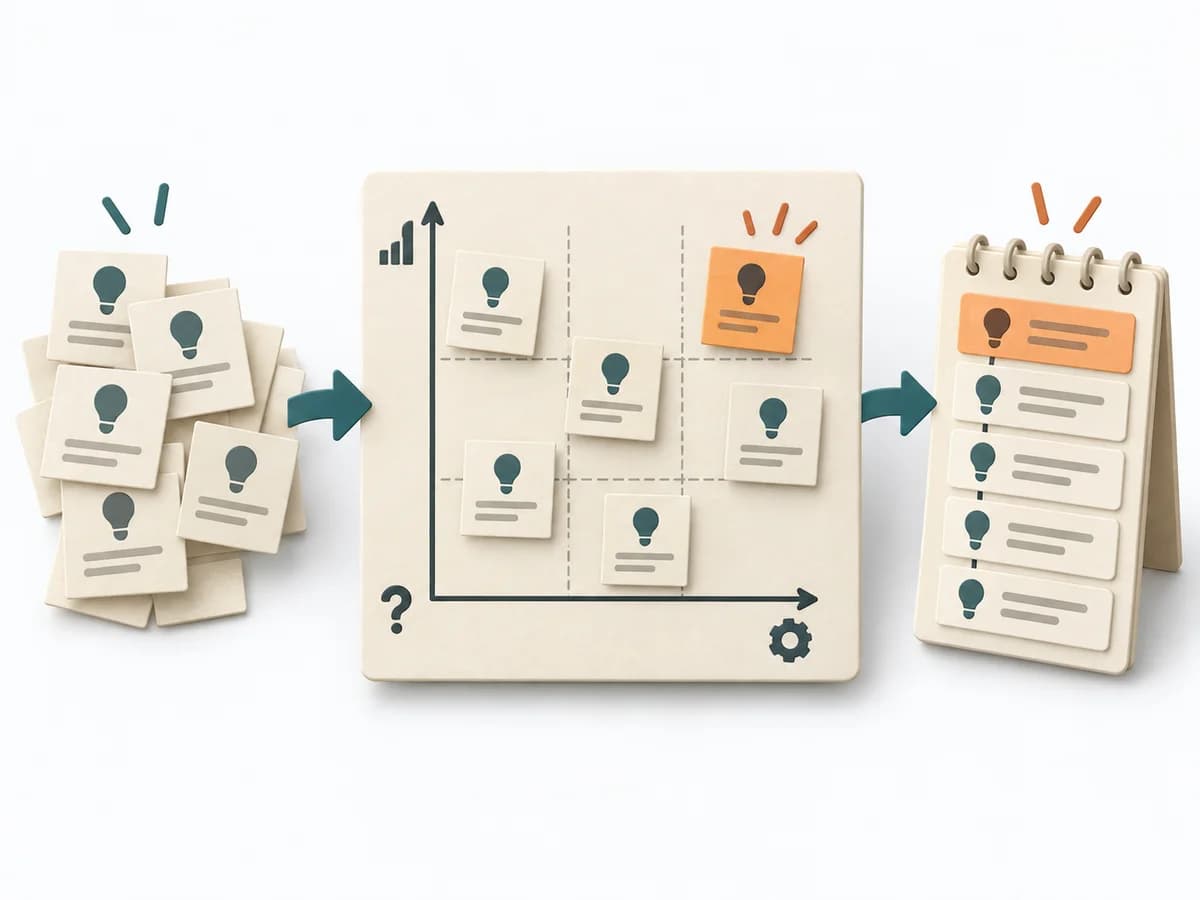 Product Discovery Hypothesis Prioritization Canvas |  Facilitation Dot Voting |
|---|---|---|---|---|
Purposedifferent | When a group needs a solid decision without outvoting individual factions, a Consensus Workshop creates a negotiable common ground. It makes agreement, reservations, and open tensions discussable at the same time. | The Learning Card connects traceable test results to a reasoned next action while keeping the limits of the insight visible. | When many hypotheses compete for attention, it brings order to their learning sequence and importance. It separates problem, assumption, solution, and evidence. The result is captured as a prioritization canvas and a hypothesis backlog. | When a workshop has produced too many options and the group needs to condense quickly, dot voting makes preferences visible in a short time. It bundles individual votes into a solid signal for the next selection. |
Complexitydifferent | Medium | Low | Medium | Low |
Timedifferent | 1-3 h | 25-40 min | 60-90 min | 5-15 min |
Participantsdifferent | 5-30 | 1-5 | 3-8 | 3-20 |
Formatdifferent | Workshop | Workshop + async | Workshop | Workshop |
Outputdifferent | Consensus Clusters, Theme Titles, Priority Areas | Learning Card with evidence and next action | Prioritization Canvas, Hypothesis Backlog | Ranked list, Consensus signal, Shortlist |
Tagsno overlap | FacilitationConsensusWorkshopAlignment | ExperimentsValidationDiscoveryLearning | ExperimentsPrioritizationDiscoveryHypothesis | FacilitationVotingConsensusPrioritization |