View methods side by side.
Choose up to four methods. Add them using the search and share the comparison by copying its link.
| Criterion | 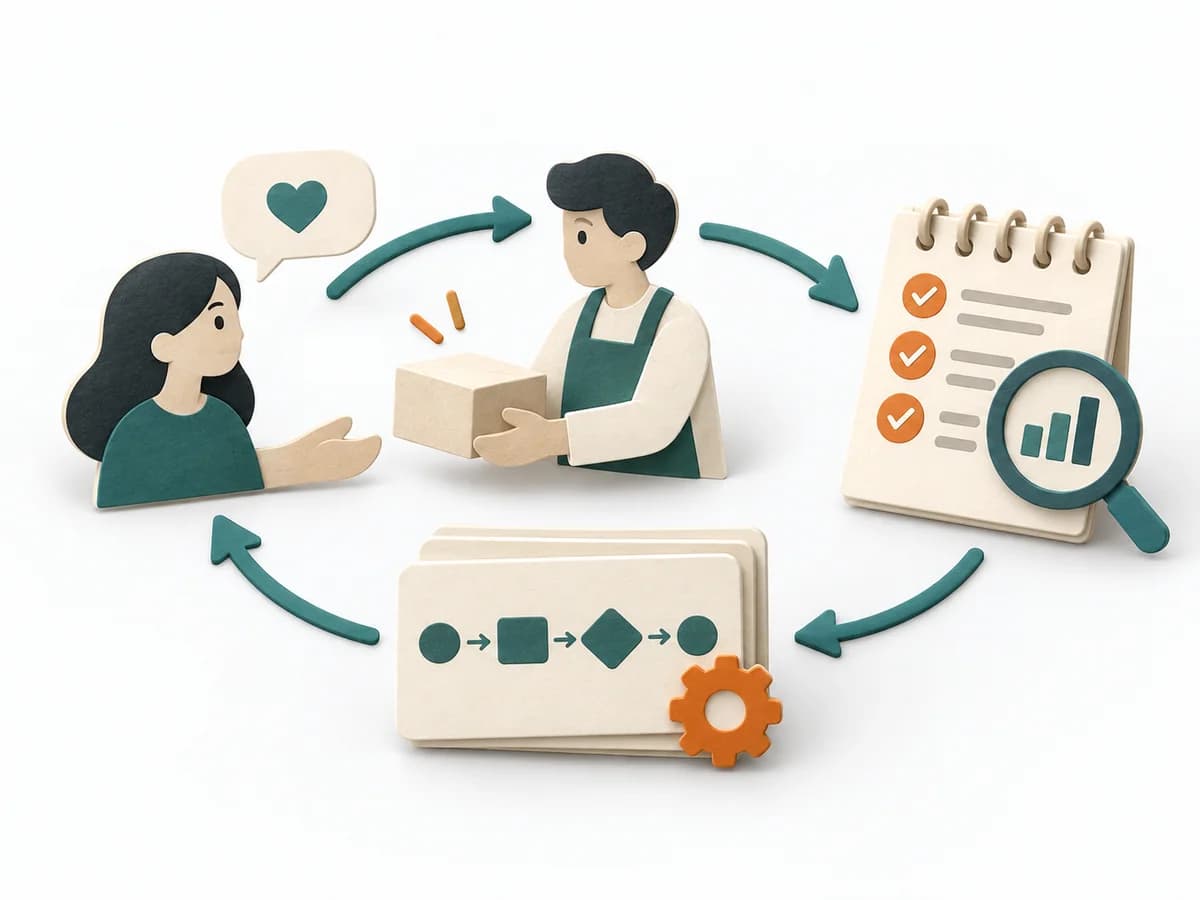 Product Discovery Concierge MVP |  Domain Modeling EventStorming |  Operations Root Cause Analysis | 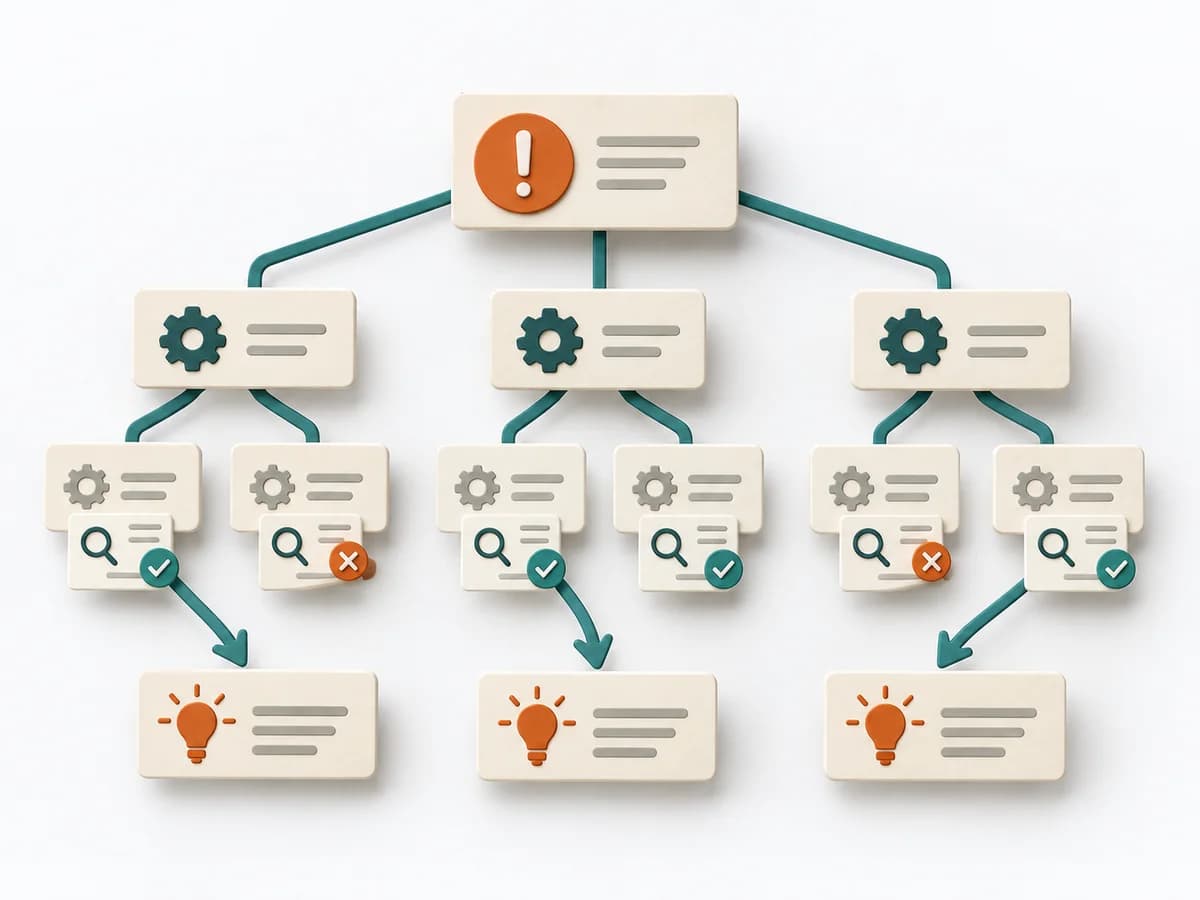 Operations Root Cause Tree Analysis |
|---|---|---|---|---|
Purposedifferent | When an idea can first fail or grow through genuine hands-on support, it relies on manual work instead of automation. It shows whether user value holds up even under manual execution. | When a domain consists of many events, rules, and states, it creates a shared modeling space for the team. It bundles language, flows, and boundaries before domain knowledge fragments into siloed views. | When a problem keeps recurring and the cause stays unclear, the method exposes the underlying mechanism. It separates symptom, guess, and robust explanation from one another. | For a problem with several suspected causes, the method builds a causal structure instead of a mere list. It makes visible how causes connect and where the strongest points of leverage lie. |
Complexitysame | Medium | Medium | Medium | Medium |
Timedifferent | 1-4 Wochen | 2-8 h | 1-4 h | 1-3 h |
Participantsdifferent | 3-10 Kunden | 5-12 | 3-8 | 2-8 |
Formatdifferent | Workshop + async | Workshop | Workshop + async | Workshop |
Outputdifferent | Concierge Learnings, Service Blueprint, MVP Risks | Event Timeline, Ubiquitous Language, Boundaries, Open Questions | Problem Statement, Cause Hypotheses, Confirmed Causes, Action Plan | Cause Tree, Evidence Notes, Countermeasures |
Tagsno overlap | MVPValidationServiceDiscovery | Domain-Driven DesignEventsDiscoveryWorkshop | Root causeProblem solvingQualityIncident | Root causeTreeIncidentQuality |