View methods side by side.
Choose up to four methods. Add them using the search and share the comparison by copying its link.
| Criterion |  Knowledge Modeling Concept Mapping |  UX Research User Interviews | 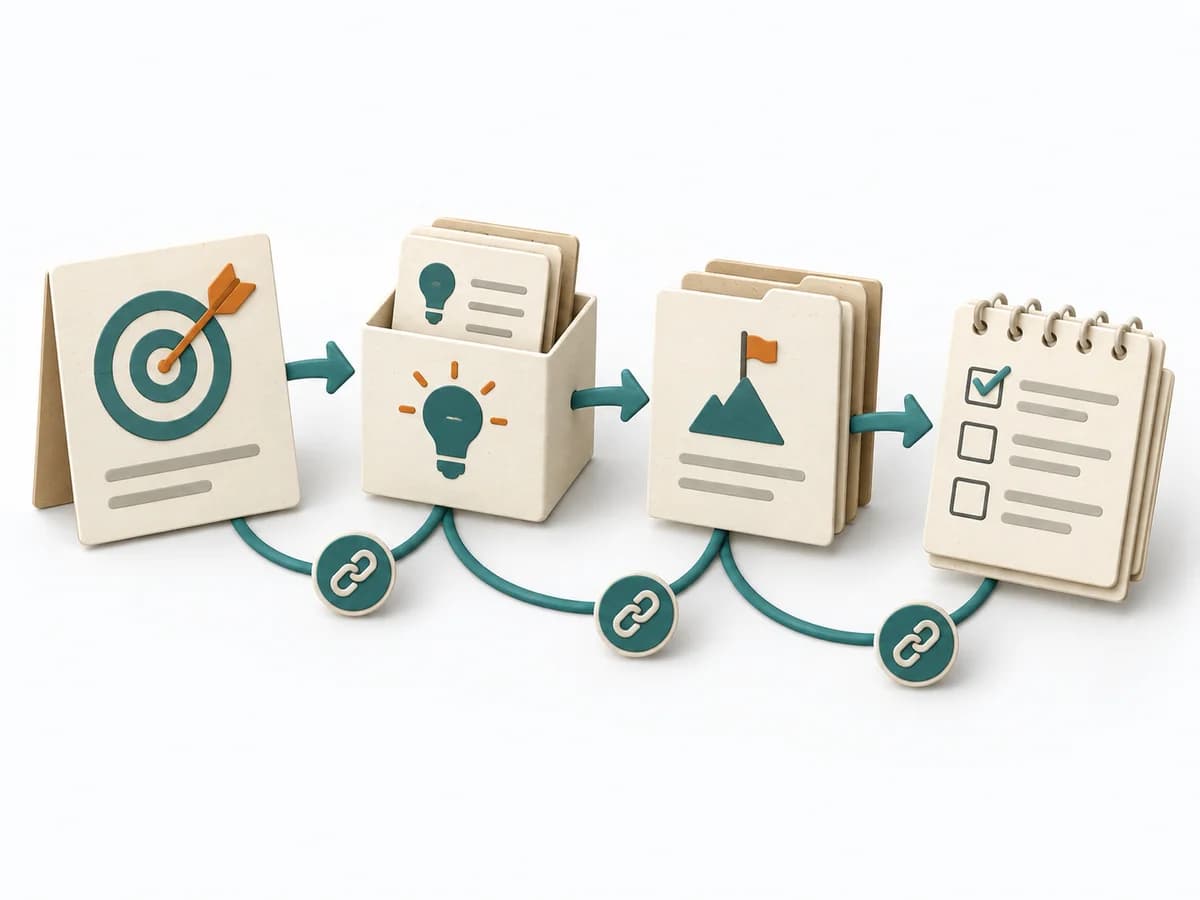 Product Strategy GIST Planning | 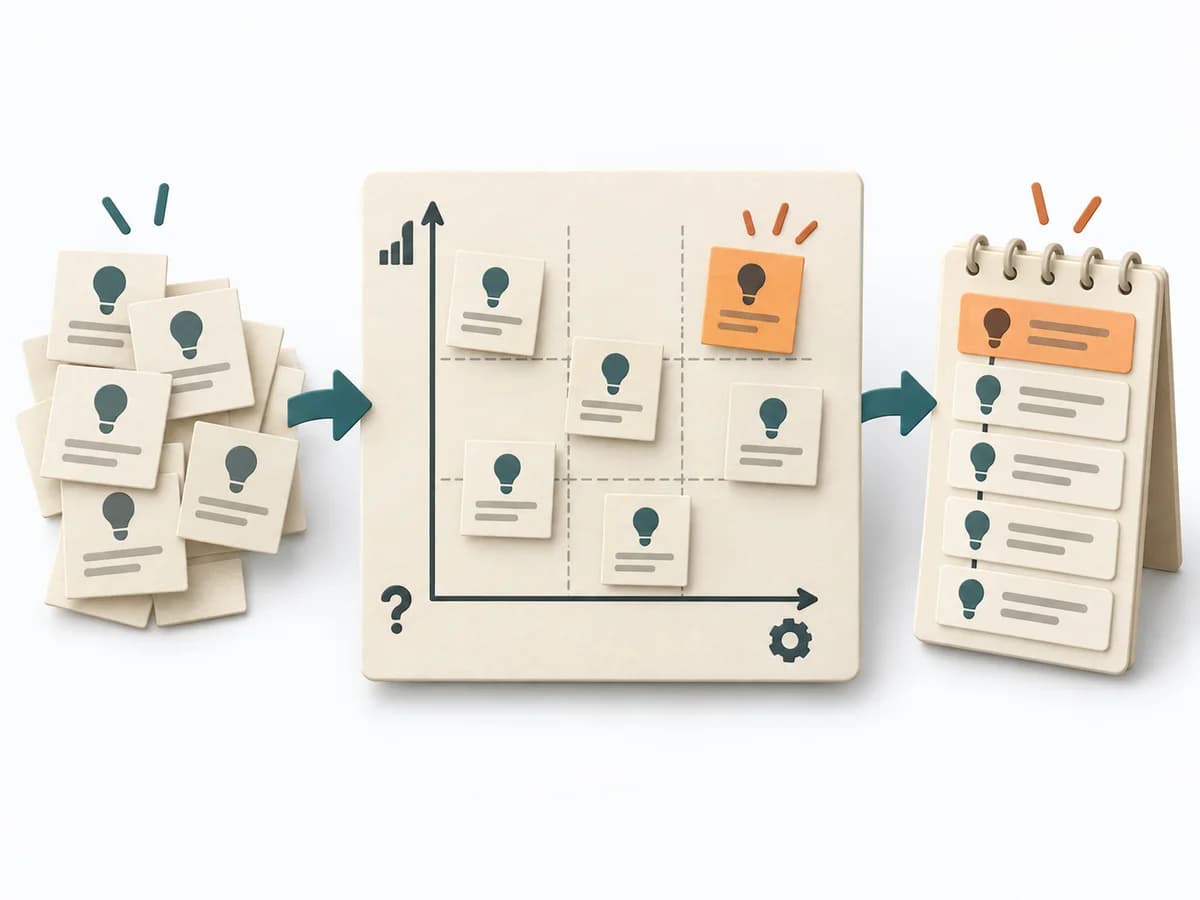 Product Discovery Hypothesis Prioritization Canvas |
|---|---|---|---|---|
Purposedifferent | Concept Mapping arranges terms and relationships in a network that makes subject-matter connections tangible. It fits when a topic needs to be understood structurally rather than linearly. | When teams derive needs only from assumptions and real motives are missing, user interviews give direct access to behavior and meaning. Conversations from the target group's everyday life make patterns, tensions, and open questions solidly visible. | GIST Planning helps clarify target groups, value, goals, and priorities. It links customer value, product logic, and decision priorities, and captures the result as goals, an idea bank, and a step-project list. | When many hypotheses compete for attention, it brings order to their learning sequence and importance. It separates problem, assumption, solution, and evidence. The result is captured as a prioritization canvas and a hypothesis backlog. |
Complexitydifferent | Medium | Low | Medium | Medium |
Timedifferent | 1-2 h | 30–60 min per interview | Wochen bis Monate je Goal | 60-90 min |
Participantsdifferent | 1-8 | 1 participant per interview | 3-10 | 3-8 |
Formatdifferent | Workshop + async | Workshop + async | Workshop + async | Workshop |
Outputdifferent | Concept Map, Relationship Labels, Knowledge Gaps | Interview Notes, Themes, Insight Summary | Goals, Idea bank, Step-project list, Tasks, Learning reports | Prioritization Canvas, Hypothesis Backlog |
Tagsno overlap | KnowledgeConceptsMappingSensemaking | QualitativeResearchCustomerDiscovery | RoadmapOutcomesPlanningExperiments | ExperimentsPrioritizationDiscoveryHypothesis |