View methods side by side.
Choose up to four methods. Add them using the search and share the comparison by copying its link.
| Criterion |  Knowledge Modeling Concept Mapping | 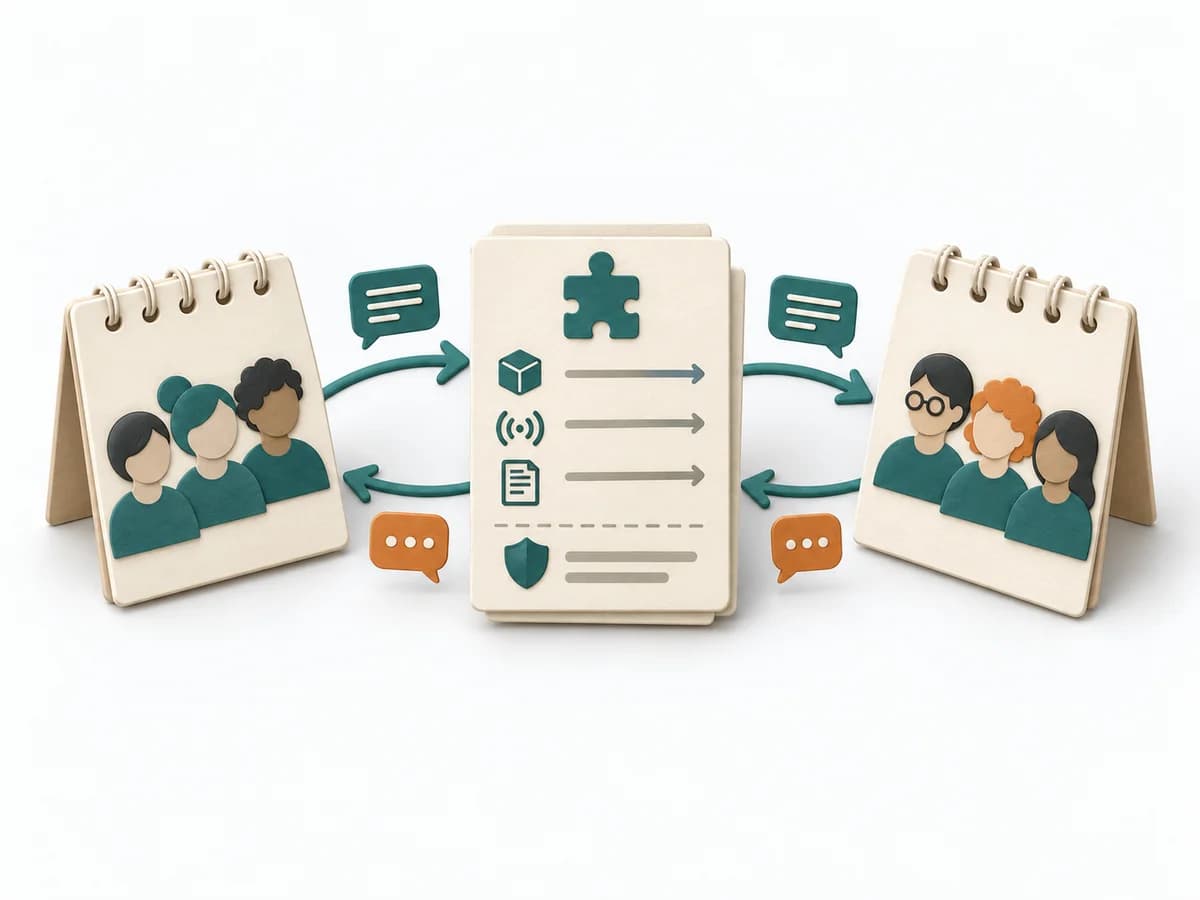 Team Design Team API |  Facilitation Alignment Mapping |  Facilitation Expectation Mapping |
|---|---|---|---|---|
Purposedifferent | Concept Mapping arranges terms and relationships in a network that makes subject-matter connections tangible. It fits when a topic needs to be understood structurally rather than linearly. | When expectations between teams stay fuzzy, it describes how a team can be reached, used, and held accountable. It clarifies responsibility, interaction, and load between teams. The result is captured as a Team API document. | When several people work toward one goal but hold different mental maps, Alignment Mapping makes the discrepancies visible. It arranges goals, assumptions, and priorities so shared direction becomes verifiable. | When roles, interfaces, or projects fail because of differing expectations, Expectation Mapping surfaces these differences. It shows what each side takes for granted and where the pictures diverge. |
Complexitydifferent | Medium | Low | Medium | Low |
Timedifferent | 1-2 h | Half day initial, dann laufend | 1-2 h | 45-90 min |
Participantsdifferent | 1-8 | Ein Team plus Stakeholder | 4-12 | 3-12 |
Formatdifferent | Workshop + async | Workshop + async | Workshop | Workshop |
Outputdifferent | Concept Map, Relationship Labels, Knowledge Gaps | Team API Document | Alignment Map, Open Issues, Decision Questions | Expectation Map, Alignment Notes, Agreements |
Tagsno overlap | KnowledgeConceptsMappingSensemaking | TeamAlignmentCommunicationService | AlignmentStakeholdersStrategyFacilitation | AlignmentStakeholdersTeam |