View methods side by side.
Choose up to four methods. Add them using the search and share the comparison by copying its link.
| Criterion |  Knowledge Modeling Concept Mapping | 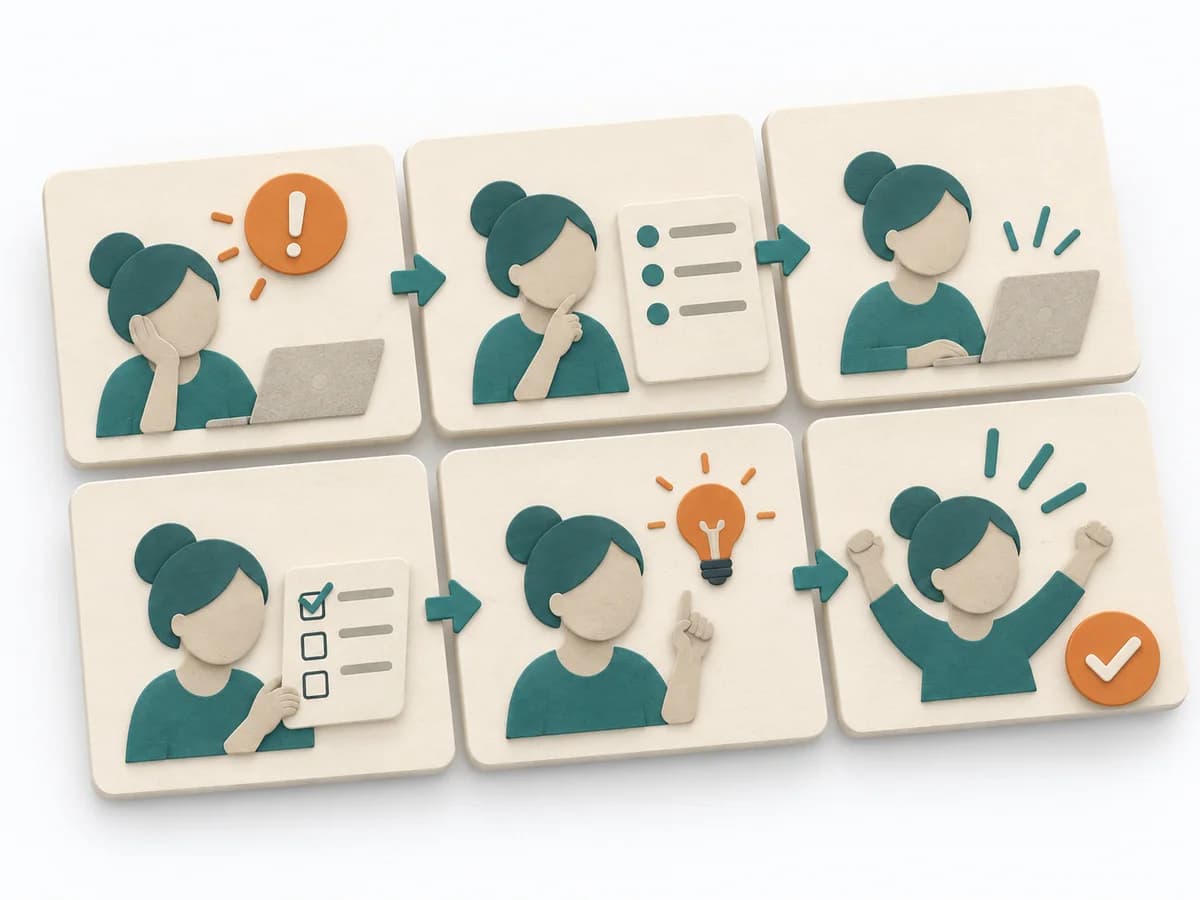 UX Design Storyboarding | 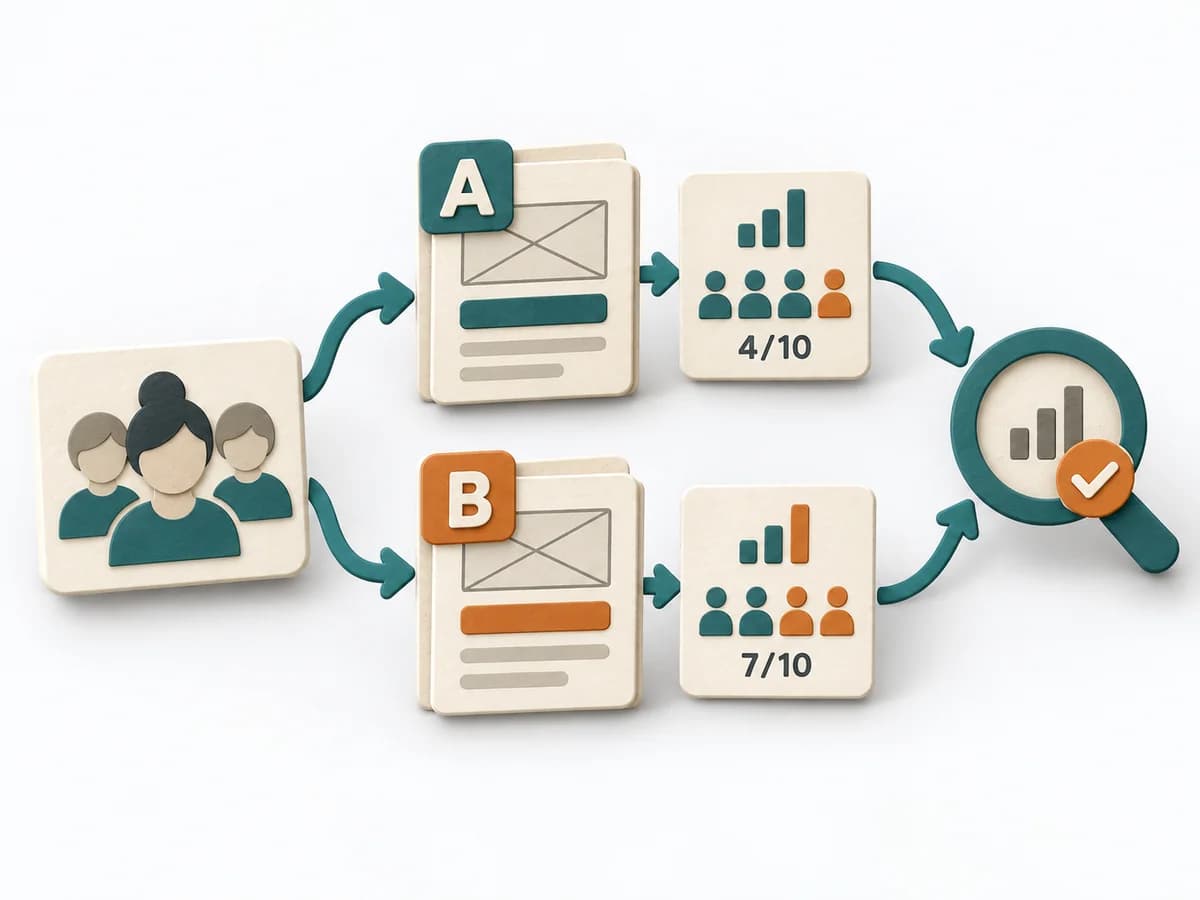 Growth A/B Testing | 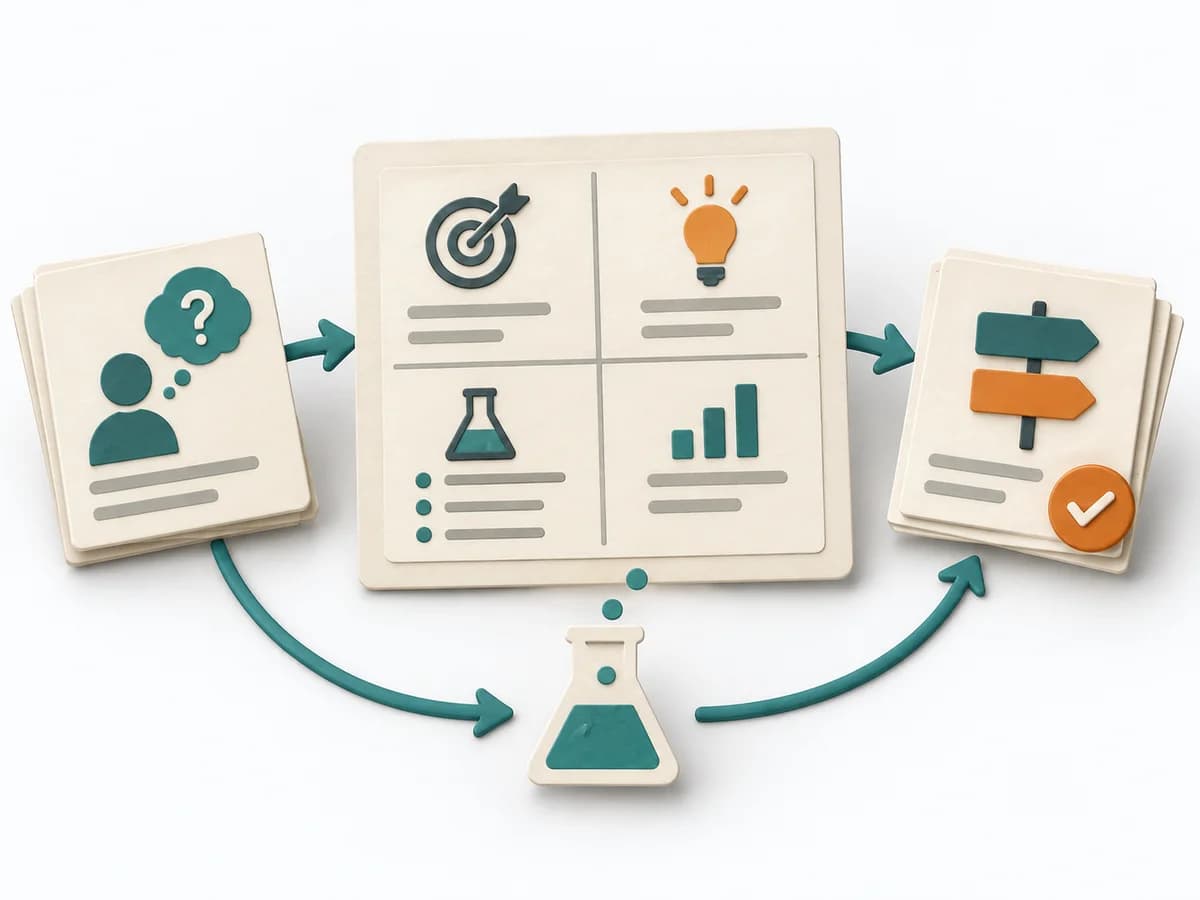 Product Discovery Experiment Canvas |
|---|---|---|---|---|
Purposedifferent | Concept Mapping arranges terms and relationships in a network that makes subject-matter connections tangible. It fits when a topic needs to be understood structurally rather than linearly. | When a usage scenario needs to become understandable early, it condenses situations, context, and flow into a legible sequence. It helps check concept ideas before anything gets built. | When two variants compete, discussions quickly decide by taste rather than effect. A/B Testing checks behavior under controlled conditions and separates real improvement from chance or expectation effects. | When experiments become unreadable after the fact, it arranges hypothesis, signal, and learning goal on a single canvas. It separates problem, assumption, solution, and evidence. The result is captured as a Completed Experiment Canvas and a Success Metric. |
Complexitydifferent | Medium | Medium | High | Low |
Timedifferent | 1-2 h | 30-90 min | 1-4 Wochen | 30-60 min |
Participantsdifferent | 1-8 | 1-8 | 1-6 | 1-5 |
Formatdifferent | Workshop + async | Workshop + async | Async | Workshop + async |
Outputdifferent | Concept Map, Relationship Labels, Knowledge Gaps | Storyboard, Concept Narrative, Testable Assumptions | Experiment results, Decision log, Learning summary | Completed Experiment Canvas, Success Metric |
Tagsno overlap | KnowledgeConceptsMappingSensemaking | VisualizationConceptsSequencePrototype | ExperimentsGrowthAnalyticsValidation | ExperimentsValidationDiscoveryHypothesis |