View methods side by side.
Choose up to four methods. Add them using the search and share the comparison by copying its link.
| Criterion |  Knowledge Modeling Concept Mapping |  Facilitation Stakeholder Mapping | 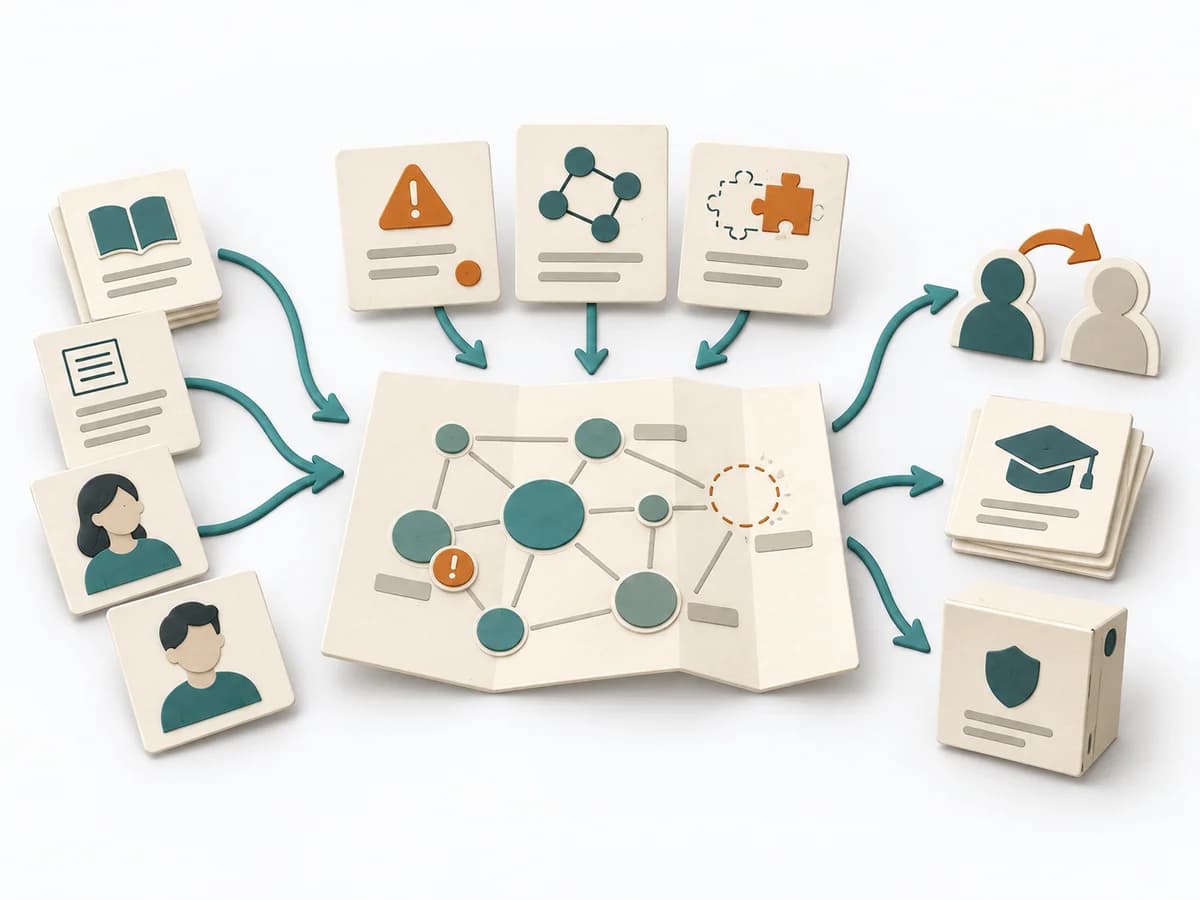 Knowledge Modeling Knowledge Mapping |  Facilitation Power Interest Grid |
|---|---|---|---|---|
Purposedifferent | Concept Mapping arranges terms and relationships in a network that makes subject-matter connections tangible. It fits when a topic needs to be understood structurally rather than linearly. | When an initiative depends on many people, interests, and power dynamics, Stakeholder Mapping systematically orders the environment. It shows who influences, who is affected, and where relationship management or safeguarding matters first. | Knowledge Mapping makes knowledge, gaps, and transfer paths visible across a field. It fits when expertise should not just exist but also be findable and transferable. | When many stakeholders compete for attention at once, the Power Interest Grid sorts them by influence and stake. It turns individual contributions into a visible selection. The result is captured as a Power Interest Grid and a stakeholder-specific strategy. |
Complexitydifferent | Medium | Low | Medium | Low |
Timedifferent | 1-2 h | 60–90 min | 1-3 h | 30-60 min |
Participantsdifferent | 1-8 | 2-8 | 3-12 | 2-8 |
Formatdifferent | Workshop + async | Workshop + async | Workshop | Workshop |
Outputdifferent | Concept Map, Relationship Labels, Knowledge Gaps | Stakeholder Map, Engagement Plan, Risk Notes | Knowledge Map, Critical Knowledge Areas, Transfer Plan | Power Interest Grid, Strategy per Stakeholder |
Tagsno overlap | KnowledgeConceptsMappingSensemaking | StakeholdersAlignmentFacilitationChange | KnowledgeMappingRisk | StakeholdersFacilitationAlignmentPlanning |