View methods side by side.
Choose up to four methods. Add them using the search and share the comparison by copying its link.
| Criterion | 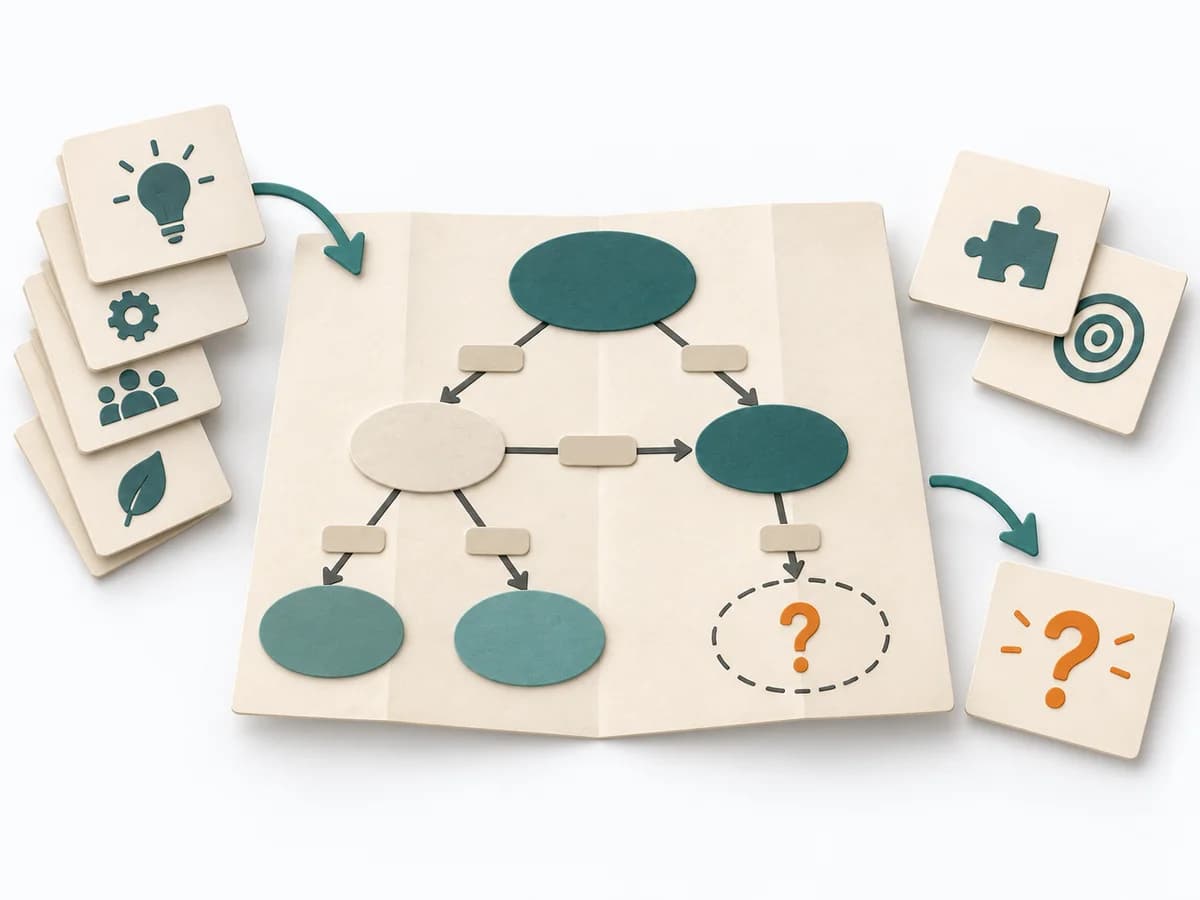 Knowledge Modeling Concept Mapping | 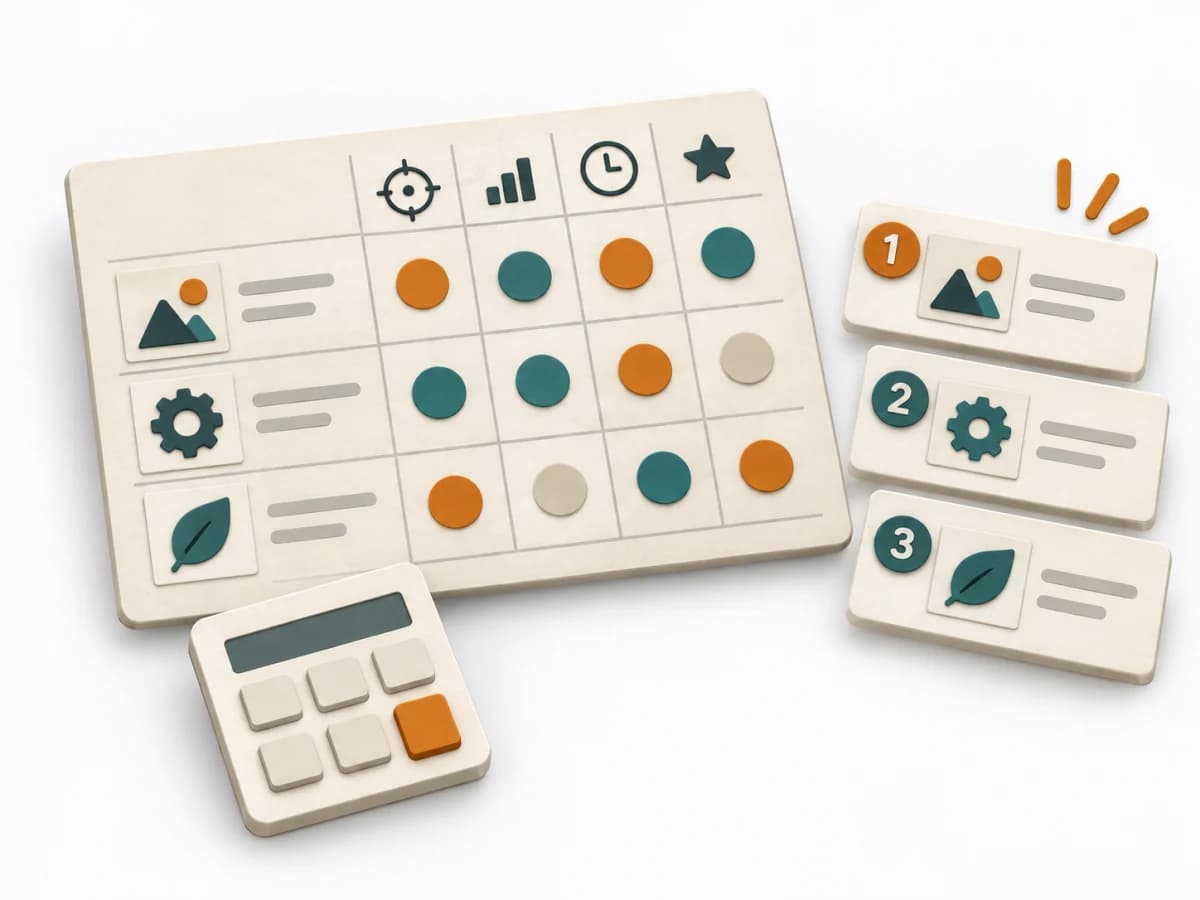 Product Strategy RICE Scoring | 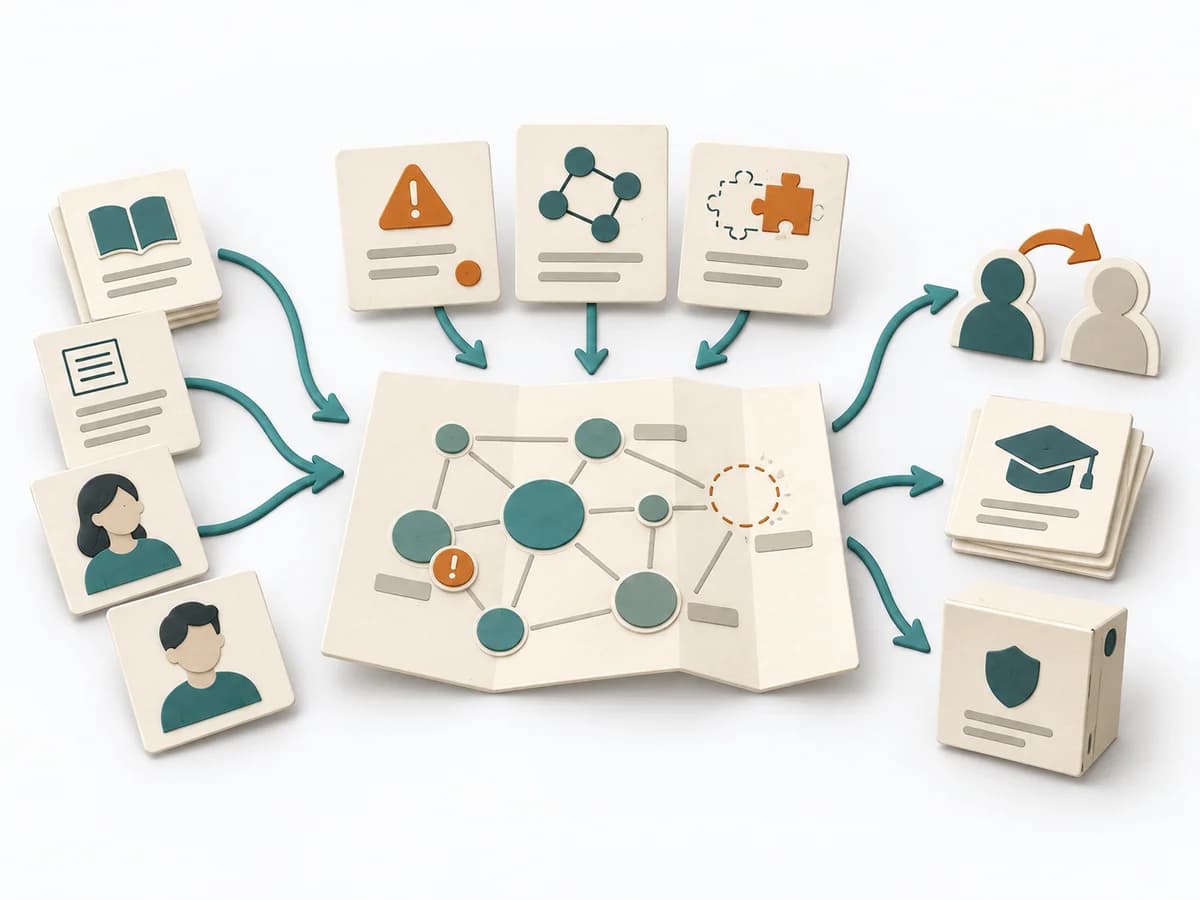 Knowledge Modeling Knowledge Mapping | 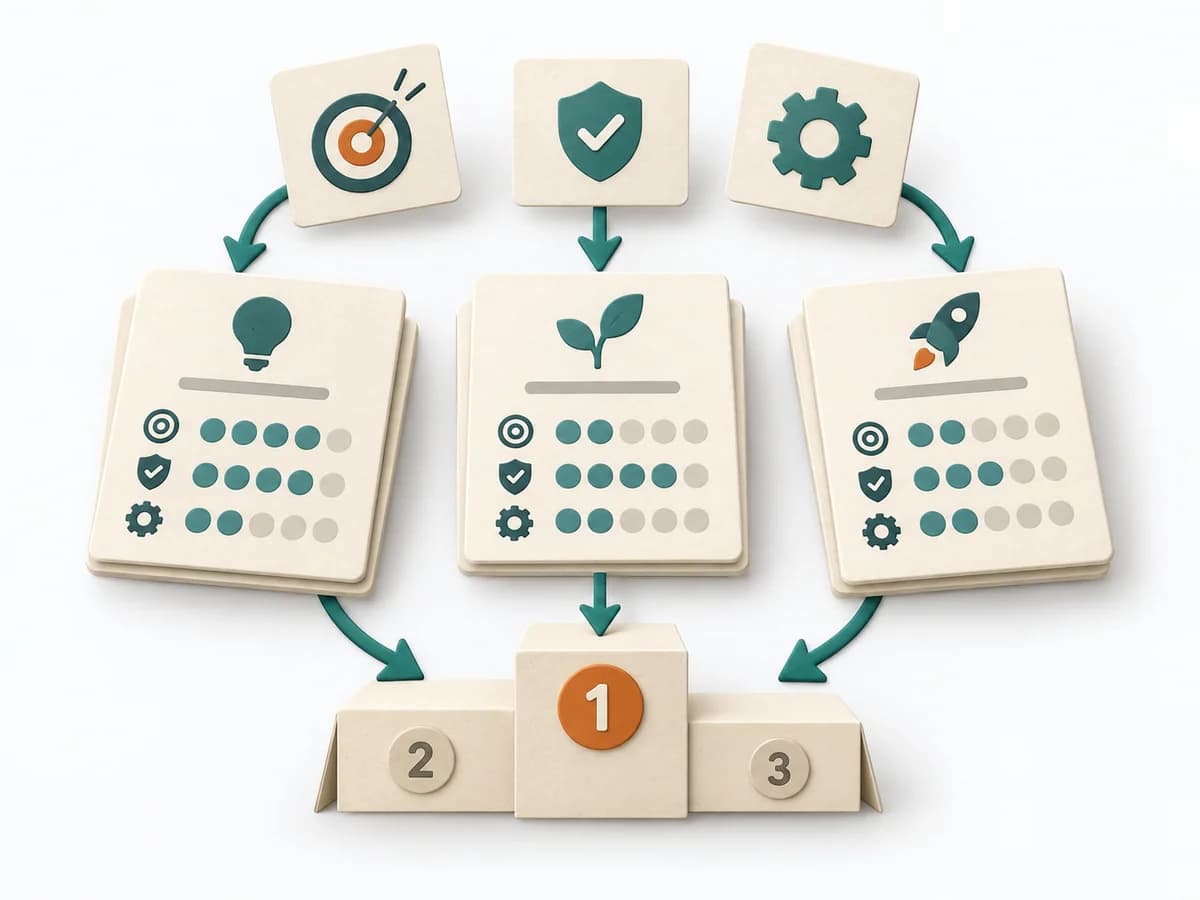 Product Strategy ICE Scoring |
|---|---|---|---|---|
Purposedifferent | Concept Mapping arranges terms and relationships in a network that makes subject-matter connections tangible. It fits when a topic needs to be understood structurally rather than linearly. | When many initiatives compete for the same resources, it brings reach, impact, confidence, and effort into one shared ranking. It makes prioritization economically connectable. | Knowledge Mapping makes knowledge, gaps, and transfer paths visible across a field. It fits when expertise should not just exist but also be findable and transferable. | When ideas need sorting quickly, it condenses impact, confidence, and effort into one compact score. It connects customer value, product logic, and decision priorities. The result is captured as an ICE table and top-ideas list. |
Complexitydifferent | Medium | Medium | Medium | Low |
Timedifferent | 1-2 h | 60-90 min | 1-3 h | 30-60 min |
Participantsdifferent | 1-8 | 2-10 | 3-12 | 2-8 |
Formatdifferent | Workshop + async | Workshop + async | Workshop | Workshop + async |
Outputdifferent | Concept Map, Relationship Labels, Knowledge Gaps | RICE Scores, Ranked List, Assumption Log | Knowledge Map, Critical Knowledge Areas, Transfer Plan | ICE Table, Top Idea List |
Tagsno overlap | KnowledgeConceptsMappingSensemaking | PrioritizationScoringRoadmapTradeoffs | KnowledgeMappingRisk | PrioritizationScoringGrowthDecision |