View methods side by side.
Choose up to four methods. Add them using the search and share the comparison by copying its link.
| Criterion | 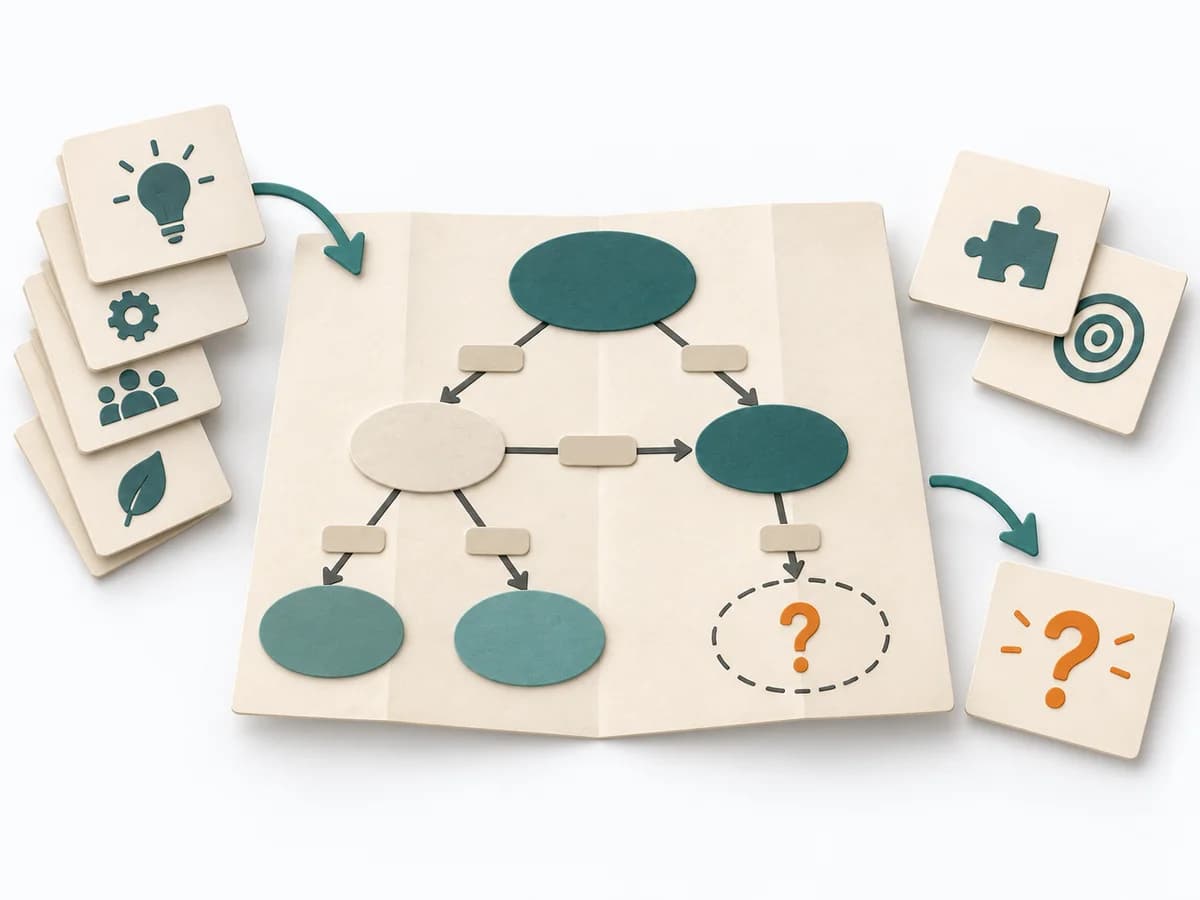 Knowledge Modeling Concept Mapping | 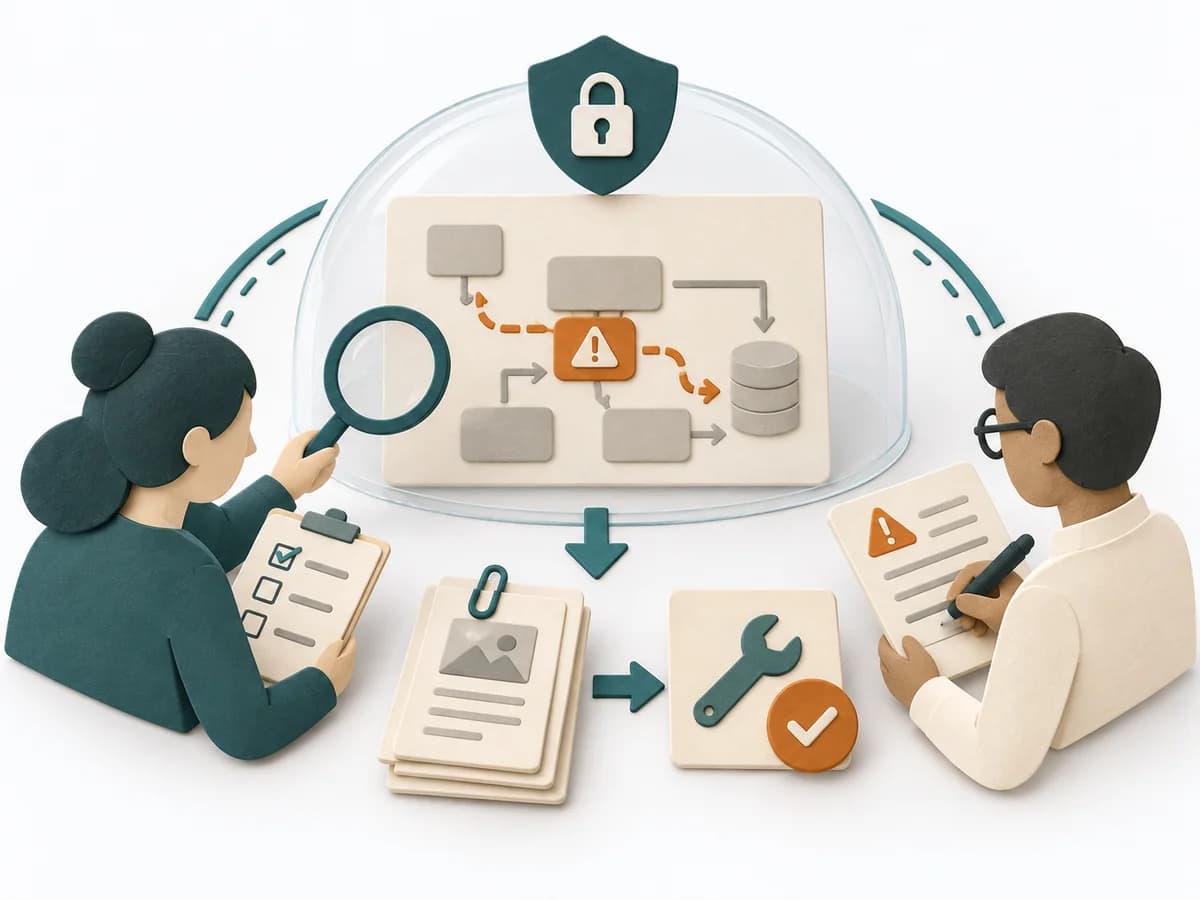 Decision Making Red Teaming |  Knowledge Modeling IBIS |  Decision Making Assumption Surfacing |
|---|---|---|---|---|
Purposedifferent | Concept Mapping arranges terms and relationships in a network that makes subject-matter connections tangible. It fits when a topic needs to be understood structurally rather than linearly. | For strategic decisions with high reach, agreement and gut feeling are often not enough. Red teaming brings deliberate opposition into the situation and tests where a plan breaks under real counterarguments. | IBIS structures thinking about complex questions as a sequence of issues, ideas, and arguments. The method keeps discussions open without forcing them into premature consensus. | Plans often contain assumptions that were never openly stated and remain dangerous precisely because of that. Assumption Surfacing makes these silent premises visible and prioritizes which of them carry the initiative or could sink it. |
Complexitydifferent | Medium | High | Medium | Low |
Timedifferent | 1-2 h | 1-4 h | 1-3 h | 45-90 min |
Participantsdifferent | 1-8 | 3-8 | 2-8 | 2-8 |
Formatdifferent | Workshop + async | Workshop | Workshop + async | Workshop + async |
Outputdifferent | Concept Map, Relationship Labels, Knowledge Gaps | Challenge Findings, Risk Register, Mitigation Plan | Issue Map, Positions, Argument Notes | Assumption List, Critical Assumptions, Learning Plan |
Tagsno overlap | KnowledgeConceptsMappingSensemaking | RiskDecisionSensemaking | RationaleKnowledgeDecision | AssumptionsRiskDecisionDiscovery |