View methods side by side.
Choose up to four methods. Add them using the search and share the comparison by copying its link.
| Criterion |  Knowledge Modeling Concept Mapping | 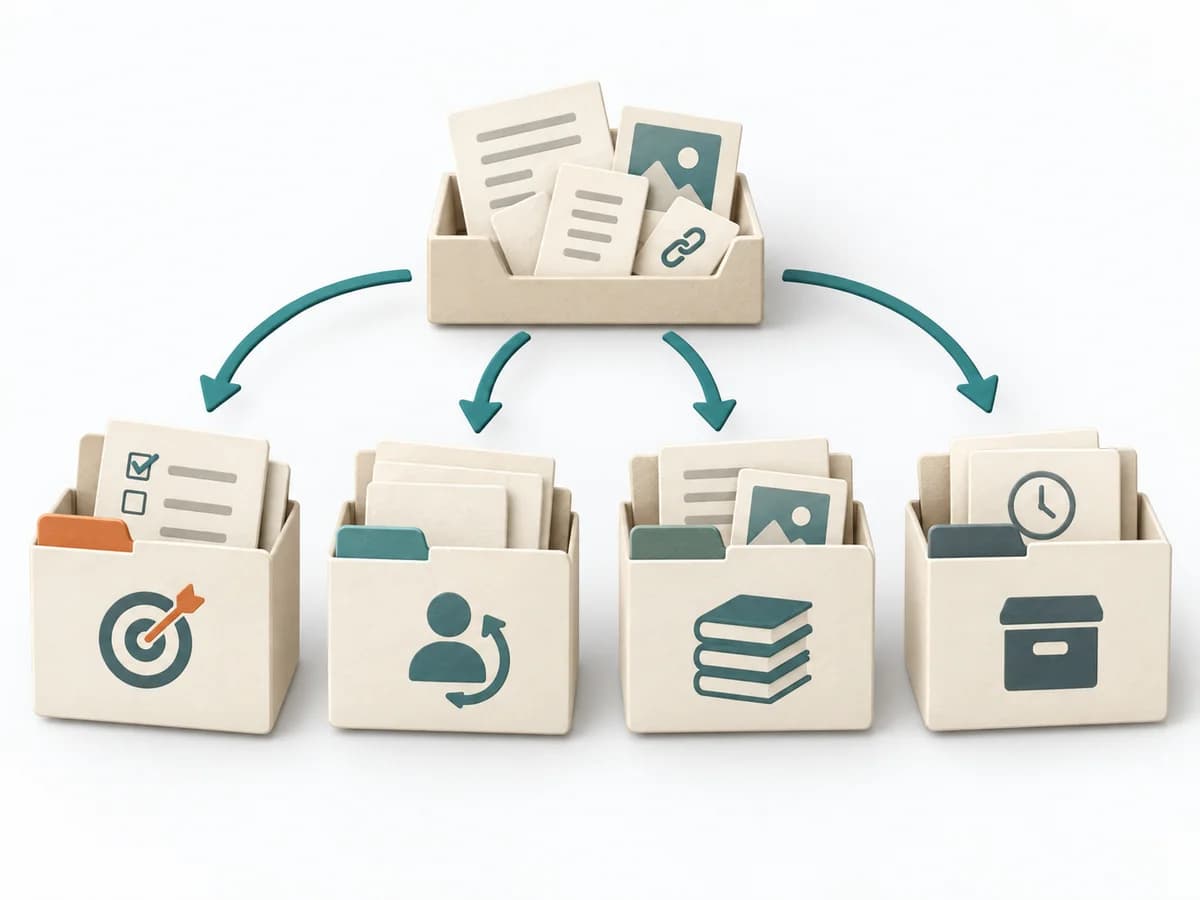 Knowledge Modeling PARA Method |  Operations Time Blocking | 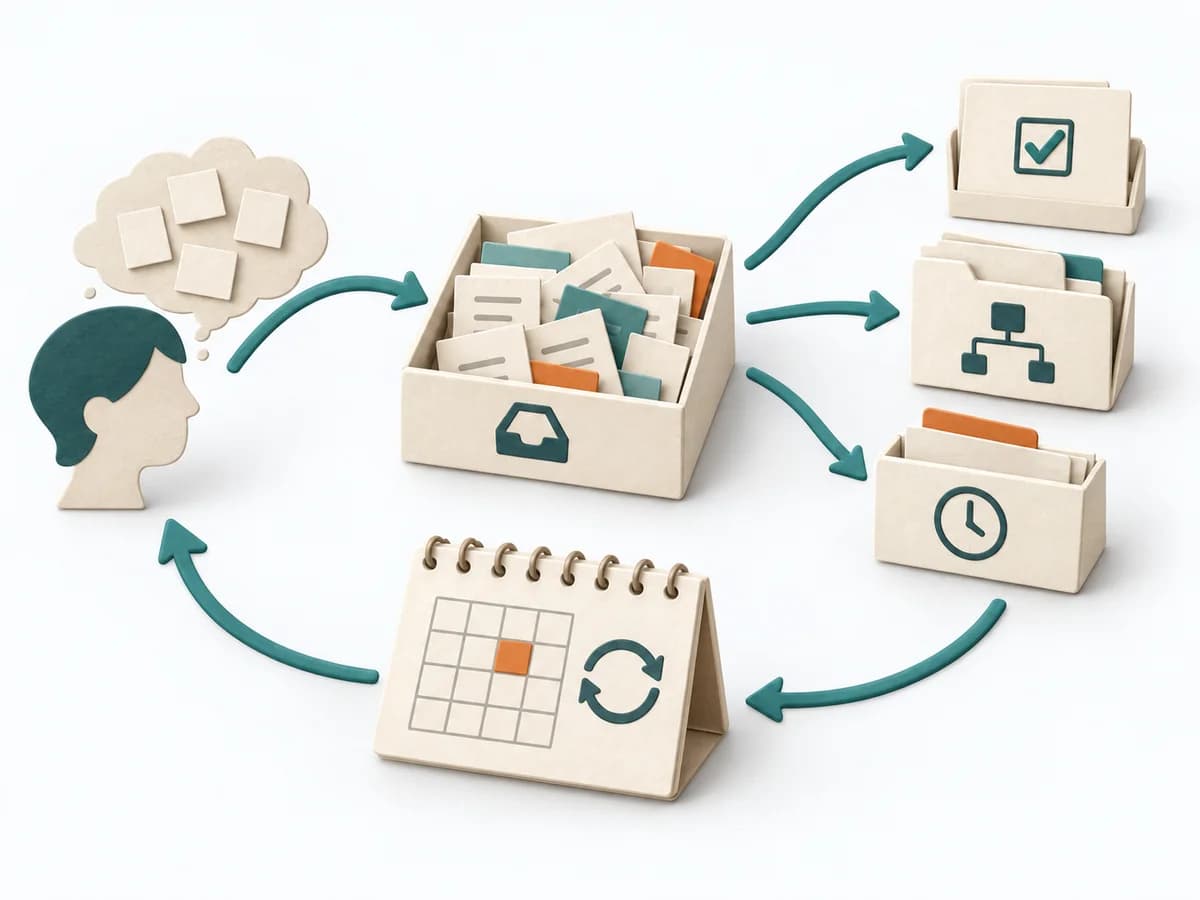 Operations Getting Things Done |
|---|---|---|---|---|
Purposedifferent | Concept Mapping arranges terms and relationships in a network that makes subject-matter connections tangible. It fits when a topic needs to be understood structurally rather than linearly. | The PARA Method organizes knowledge into Projects, Areas, Resources, and Archives. It creates order when digital notes, files, and tasks no longer cleanly fit current work. | With a calendar that grows on request, the method makes available time explicit again. It combines appointments, focus work, and buffer into a more realistic day structure. | With many open commitments and ideas in daily life, a reliable external storage system emerges. The method relieves the mind so priority and context don't have to compete in memory. |
Complexitydifferent | Medium | Medium | Low | Medium |
Timedifferent | 1-2 h | 1-3 h Setup, laufend | 15-30 min Planung, laufend | 1-2 h Setup, laufend |
Participantsdifferent | 1-8 | 1 | 1 | 1 |
Formatdifferent | Workshop + async | Async | Async | Async |
Outputdifferent | Concept Map, Relationship Labels, Knowledge Gaps | PARA Structure, Project Notes, Knowledge Archive | Blocked Calendar, Capacity View, Focus Plan | Action Lists, Project List, Review Routine |
Tagsno overlap | KnowledgeConceptsMappingSensemaking | KnowledgeProductivityOrganization | PlanningTime managementFocus | ProductivityPlanningTasksExecution |