View methods side by side.
Choose up to four methods. Add them using the search and share the comparison by copying its link.
| Criterion |  Knowledge Modeling Concept Mapping | 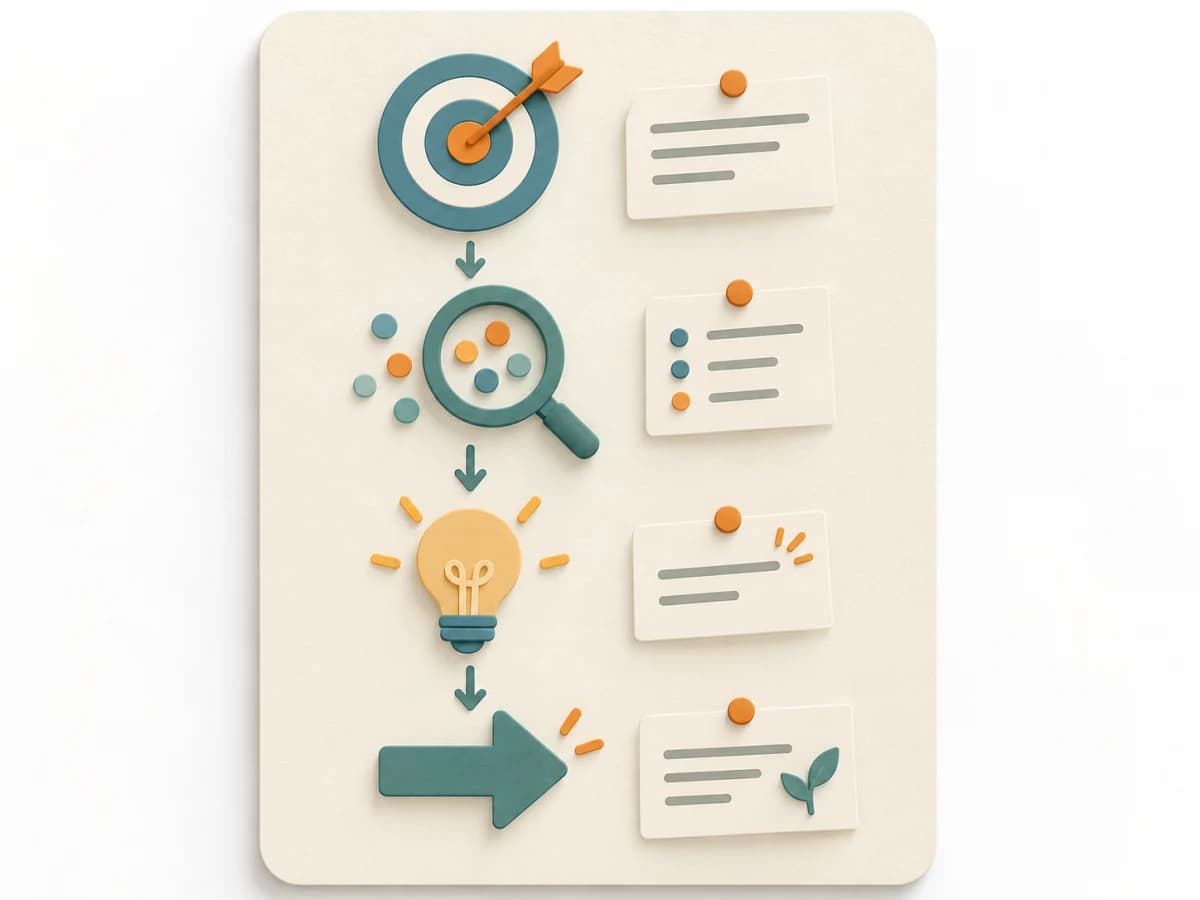 Product Discovery Learning Card |  Product Discovery Experiment Canvas | 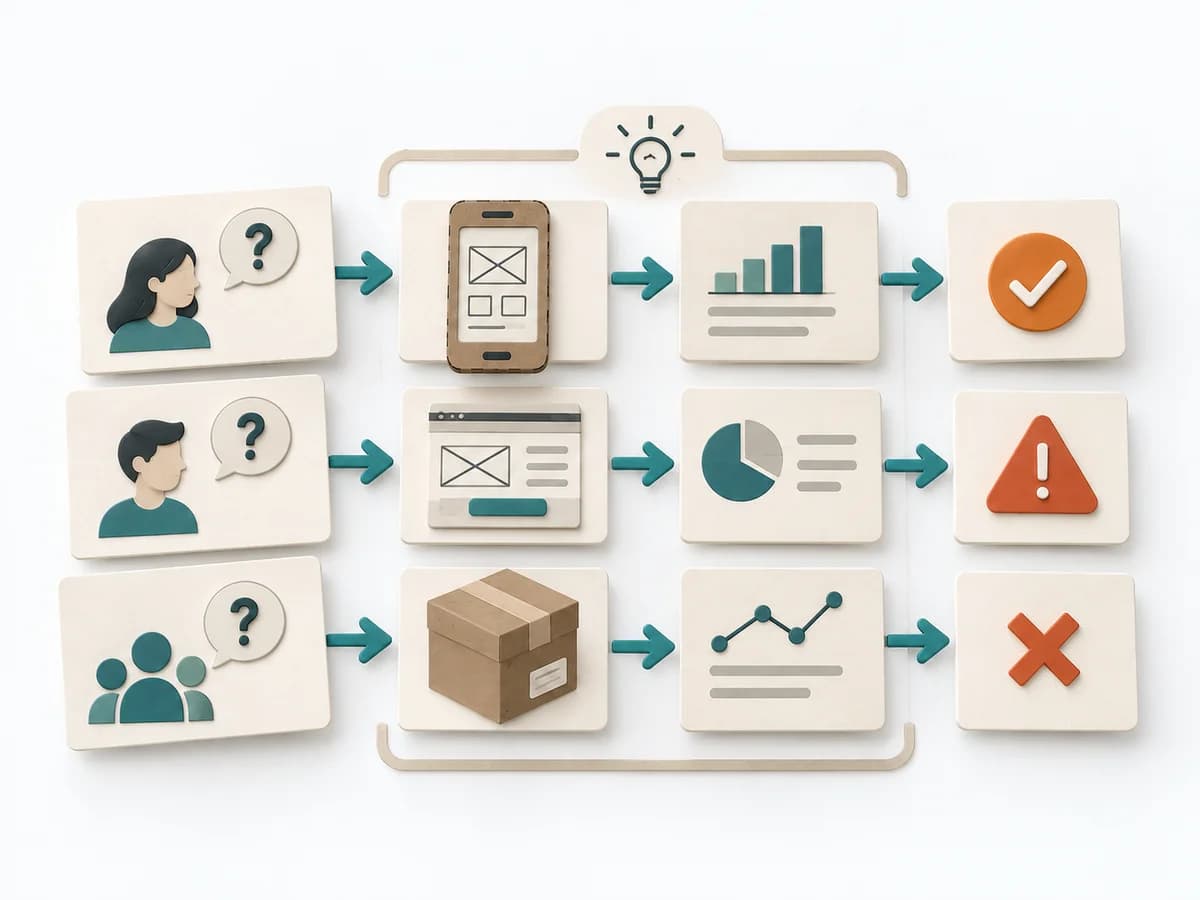 Product Discovery MVP Test Matrix |
|---|---|---|---|---|
Purposedifferent | Concept Mapping arranges terms and relationships in a network that makes subject-matter connections tangible. It fits when a topic needs to be understood structurally rather than linearly. | The Learning Card connects traceable test results to a reasoned next action while keeping the limits of the insight visible. | When experiments become unreadable after the fact, it arranges hypothesis, signal, and learning goal on a single canvas. It separates problem, assumption, solution, and evidence. The result is captured as a Completed Experiment Canvas and a Success Metric. | When several minimal variants compete to answer the same question, it makes comparing and choosing between them cleaner. It separates problem, assumption, solution, and evidence. The result is captured as a Test Matrix and a Test Plan. |
Complexitydifferent | Medium | Low | Low | Medium |
Timedifferent | 1-2 h | 25-40 min | 30-60 min | 45-75 min |
Participantsdifferent | 1-8 | 1-5 | 1-5 | 2-8 |
Formatdifferent | Workshop + async | Workshop + async | Workshop + async | Workshop |
Outputdifferent | Concept Map, Relationship Labels, Knowledge Gaps | Learning Card with evidence and next action | Completed Experiment Canvas, Success Metric | Test Matrix, Test Plan |
Tagsno overlap | KnowledgeConceptsMappingSensemaking | ExperimentsValidationDiscoveryLearning | ExperimentsValidationDiscoveryHypothesis | ExperimentsValidationDiscoveryOptions |