View methods side by side.
Choose up to four methods. Add them using the search and share the comparison by copying its link.
| Criterion |  Knowledge Modeling Concept Mapping | 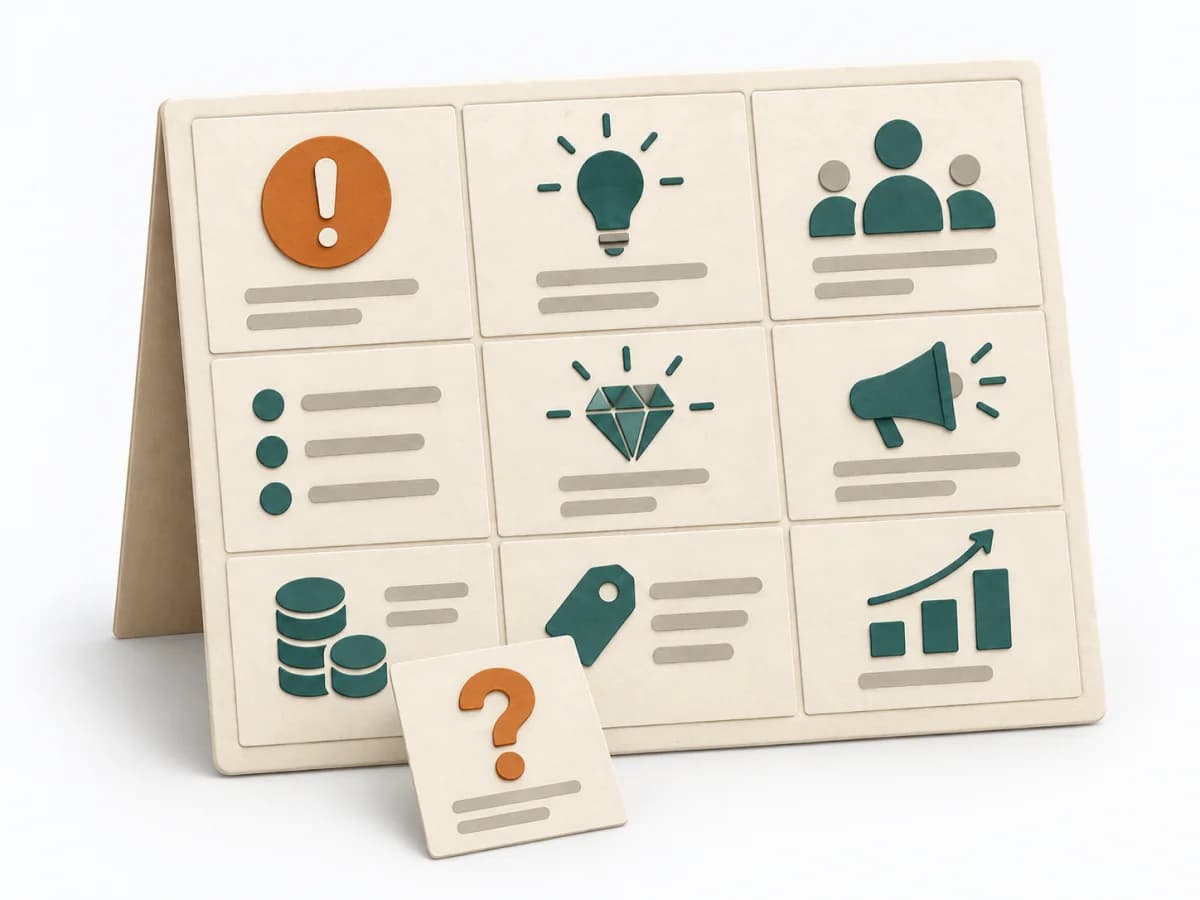 Product Strategy Lean Canvas | 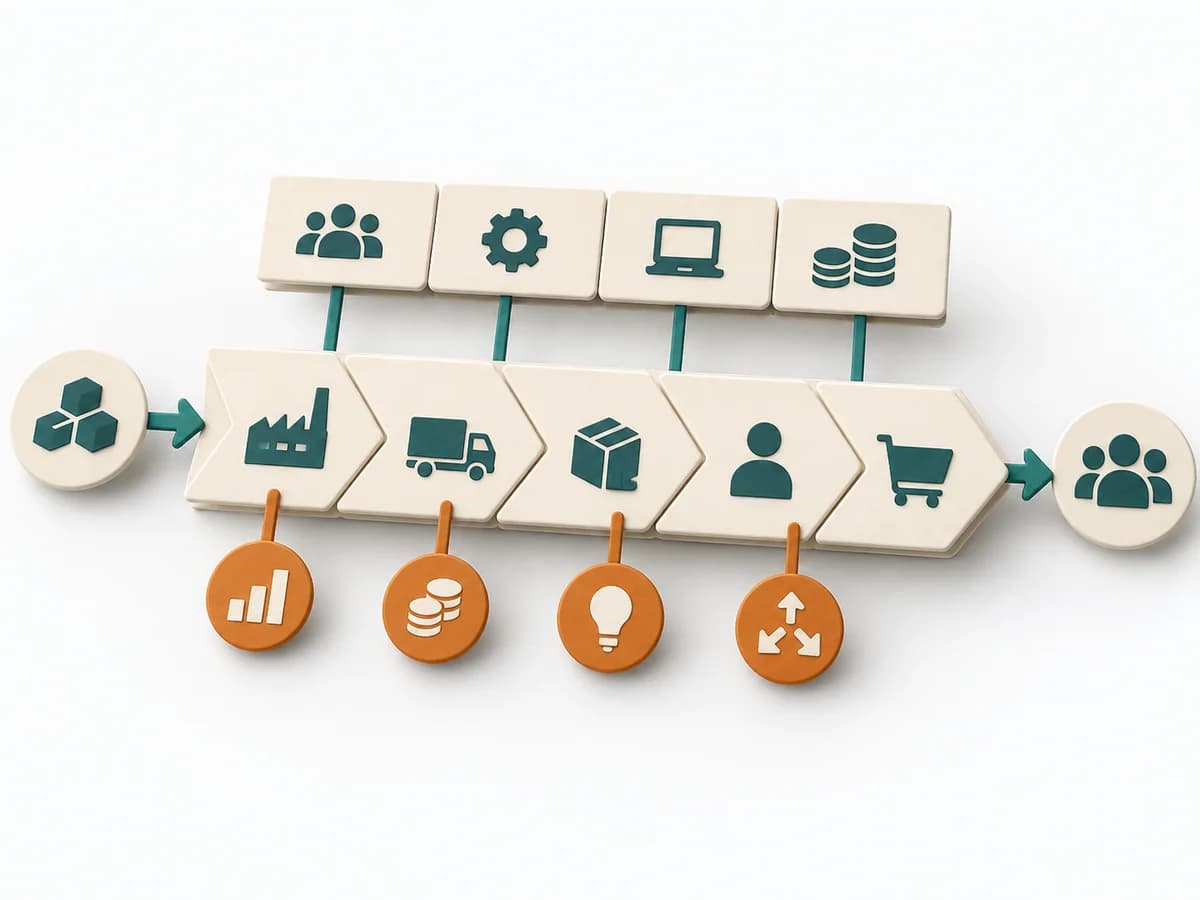 Business Strategy Value Chain Analysis | 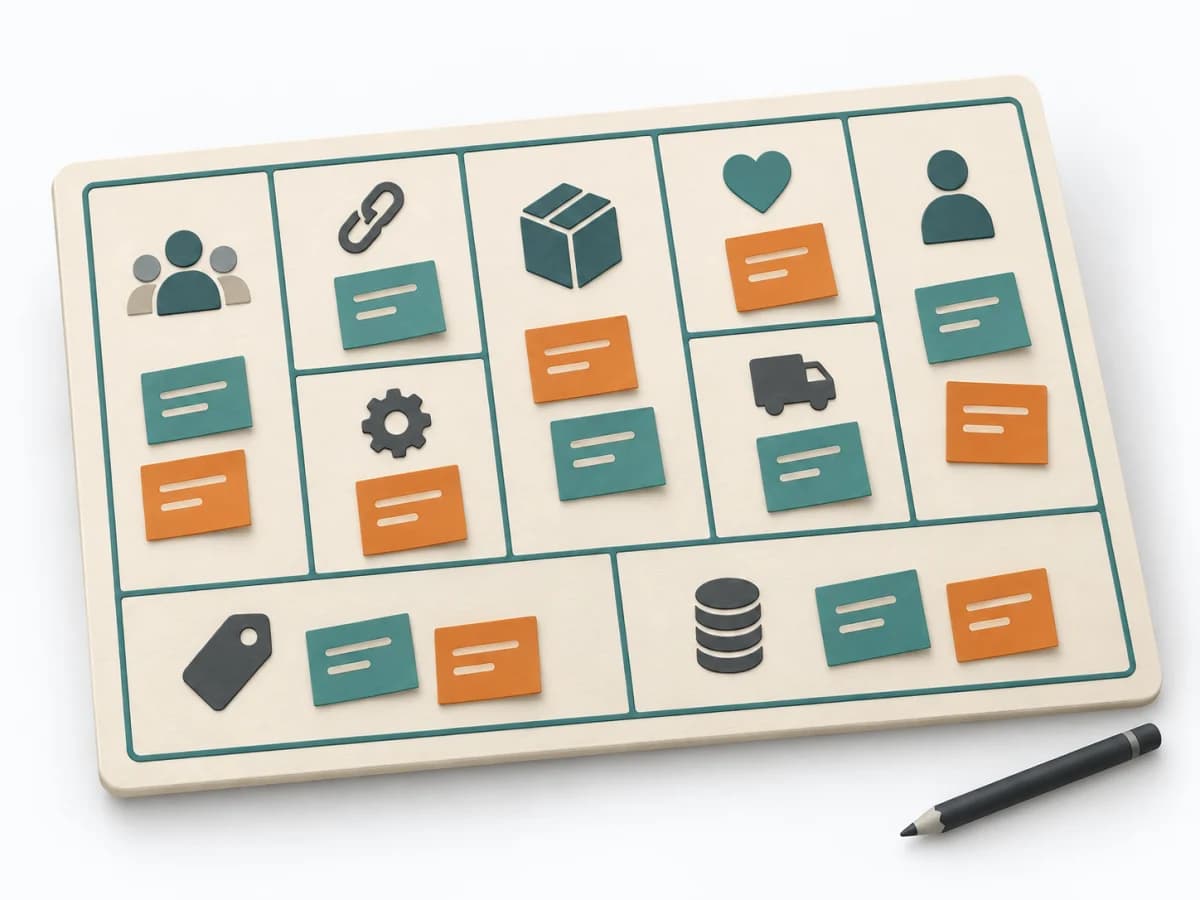 Business Strategy Business Model Canvas |
|---|---|---|---|---|
Purposedifferent | Concept Mapping arranges terms and relationships in a network that makes subject-matter connections tangible. It fits when a topic needs to be understood structurally rather than linearly. | When an early product bet still has too many open points, it brings target group, problem, and assumptions into a single view. It condenses the idea so core risks become nameable. | Value Chain Analysis shows where value is created, costs accrue, and differentiation becomes possible along the process. It compares strengths, risks, market logic, and courses of action. The result is captured as a value-chain map and lever list. | The Business Model Canvas condenses a business model to its key building blocks and assumptions. It makes variants quickly comparable and reveals gaps before validation or implementation begins. |
Complexitydifferent | Medium | Medium | High | Medium |
Timedifferent | 1-2 h | 45-90 min | Half day | 1-2 h |
Participantsdifferent | 1-8 | 1-6 | 3-8 | 2-8 |
Formatdifferent | Workshop + async | Workshop + async | Workshop | Workshop + async |
Outputdifferent | Concept Map, Relationship Labels, Knowledge Gaps | Lean Canvas, Core Assumptions, Experiment Backlog | Value Chain Map, Lever List | Business Model Canvas, Assumption List, Business Hypotheses |
Tagsno overlap | KnowledgeConceptsMappingSensemaking | StartupLeanAssumptionsBusiness model | StrategyBusiness modelDiagnosisAnalysis | Business modelStrategyValueInnovation |