View methods side by side.
Choose up to four methods. Add them using the search and share the comparison by copying its link.
| Criterion |  Knowledge Modeling Concept Mapping | 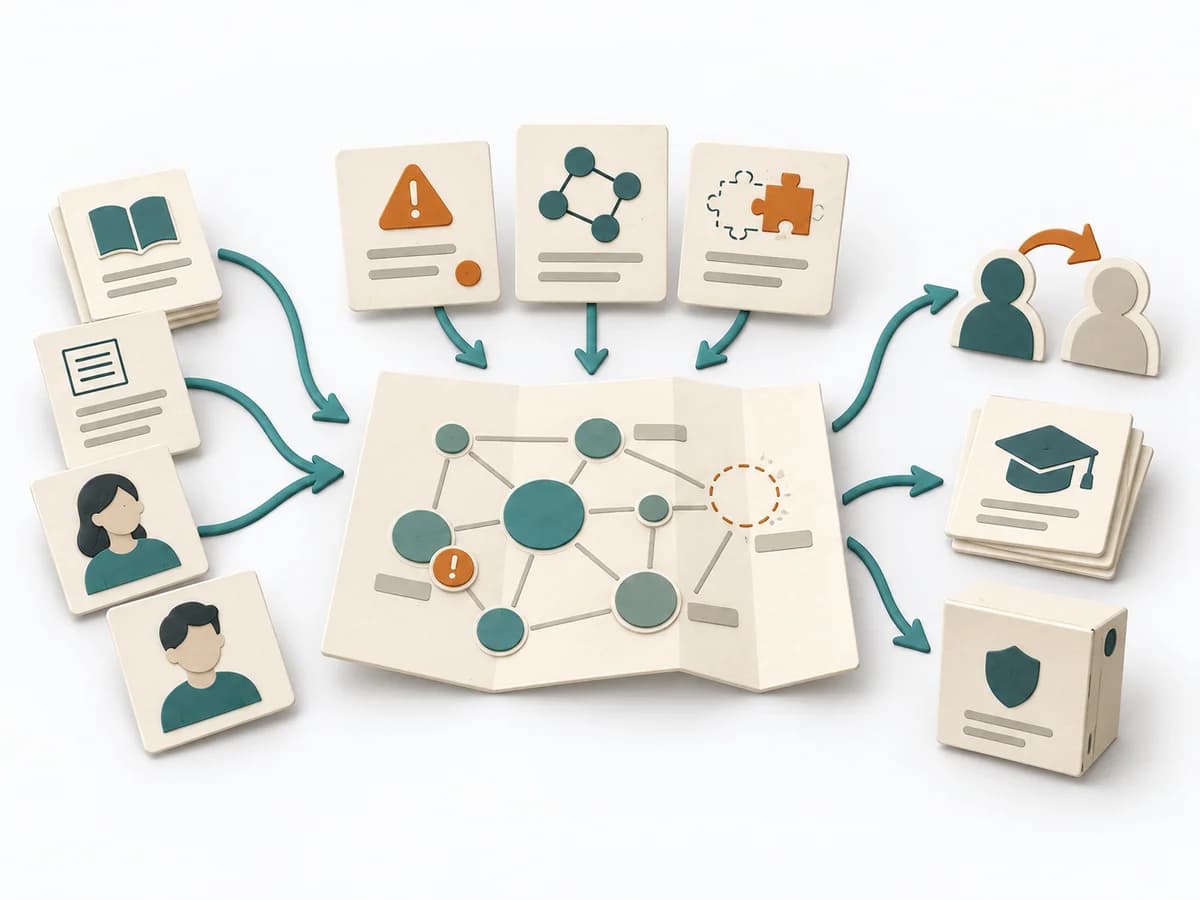 Knowledge Modeling Knowledge Mapping | 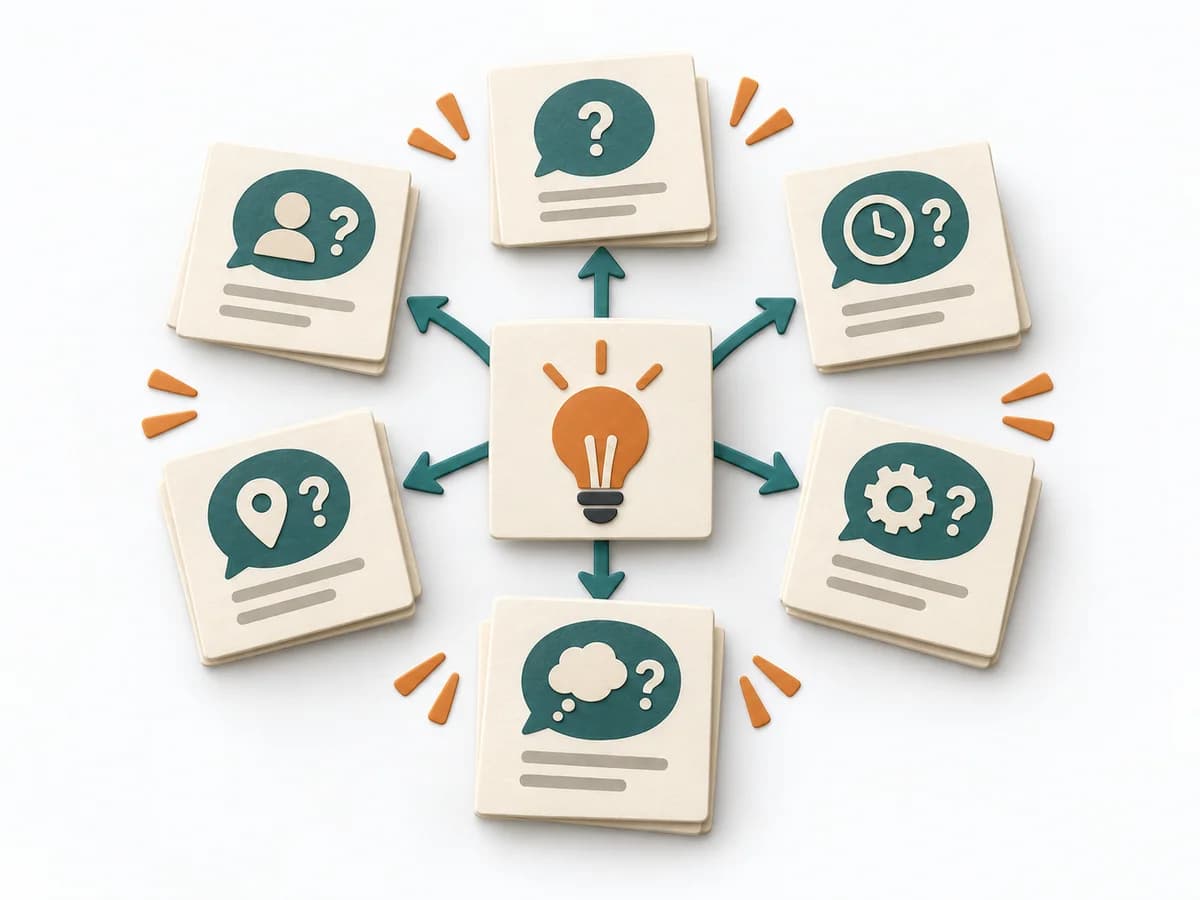 Innovation Starbursting | 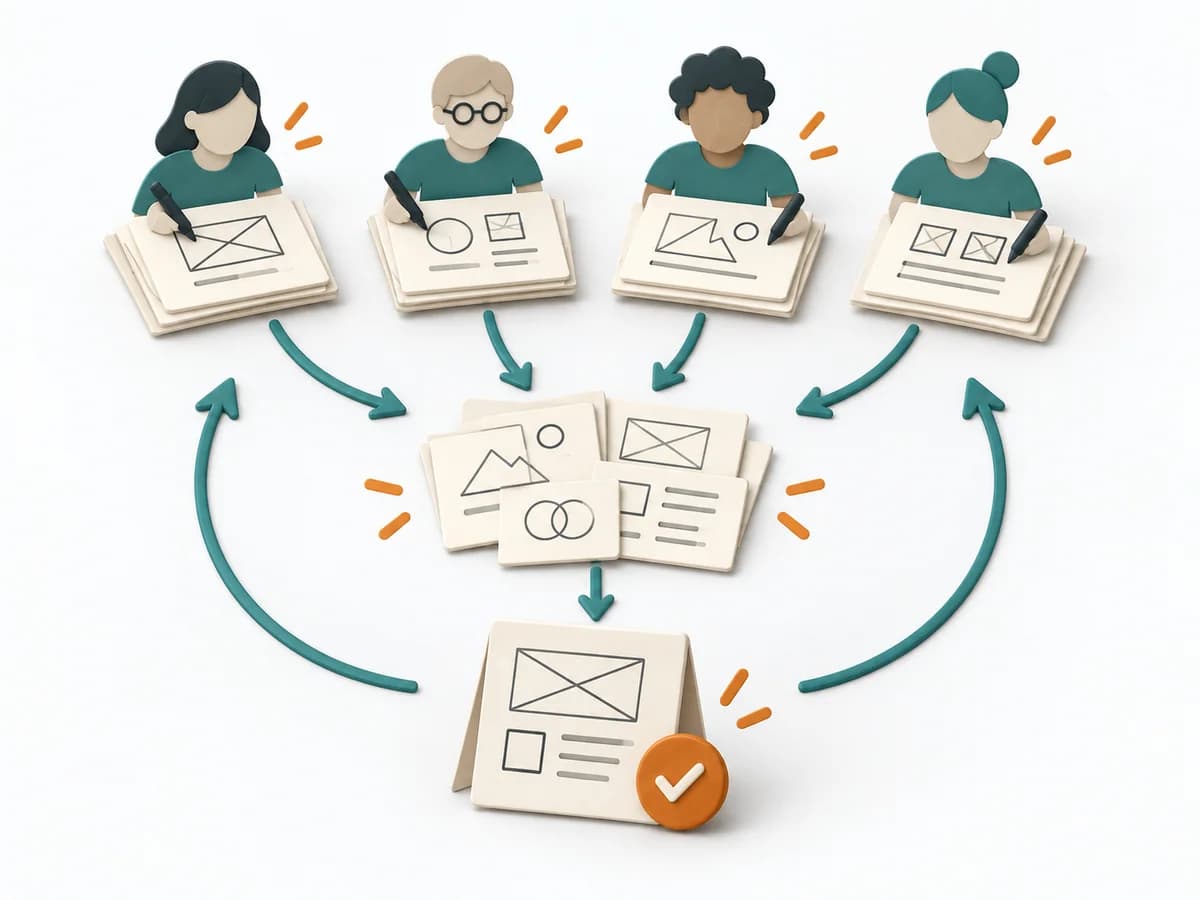 Innovation Design Charrette |
|---|---|---|---|---|
Purposedifferent | Concept Mapping arranges terms and relationships in a network that makes subject-matter connections tangible. It fits when a topic needs to be understood structurally rather than linearly. | Knowledge Mapping makes knowledge, gaps, and transfer paths visible across a field. It fits when expertise should not just exist but also be findable and transferable. | Helps clarify ideas, open questions, and testable next steps in concrete terms. It opens the thinking space, collects ideas, and leads to testable options. The result is captured as a star-shaped question map, question list, and assumption list. | In a tightly timed design process with many participants, the method pools several lines of thinking in a short time. It brings parallel design energy without letting the discussion tip into endless coordination. This quickly produces solid directions for architecture or space. |
Complexitydifferent | Medium | Medium | Low | Medium |
Timedifferent | 1-2 h | 1-3 h | 30-60 min | Halber Tag bis mehrere Tage |
Participantsdifferent | 1-8 | 3-12 | 3-10 | 10-50 |
Formatdifferent | Workshop + async | Workshop | Workshop + async | Workshop |
Outputdifferent | Concept Map, Relationship Labels, Knowledge Gaps | Knowledge Map, Critical Knowledge Areas, Transfer Plan | Star-Shaped Question Map, Question List, Assumption List | Sketches and Concepts, Consolidated Solution Sketch, Prioritized Direction |
Tagsno overlap | KnowledgeConceptsMappingSensemaking | KnowledgeMappingRisk | BrainstormingIdeationWorkshopDiscovery | BrainstormingWorkshopCollaborationIdeation |