View methods side by side.
Choose up to four methods. Add them using the search and share the comparison by copying its link.
| Criterion |  Knowledge Modeling Concept Mapping | 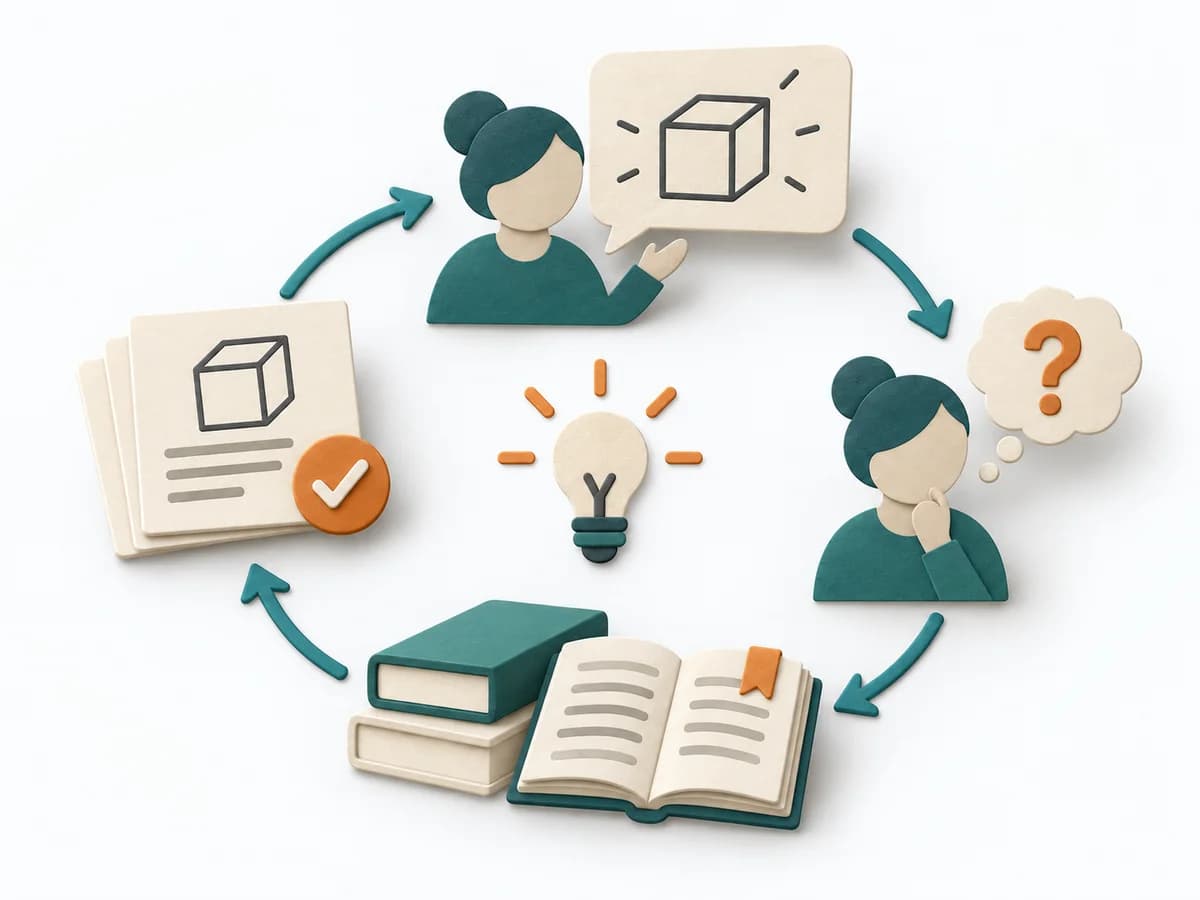 Knowledge Modeling Feynman Technique | 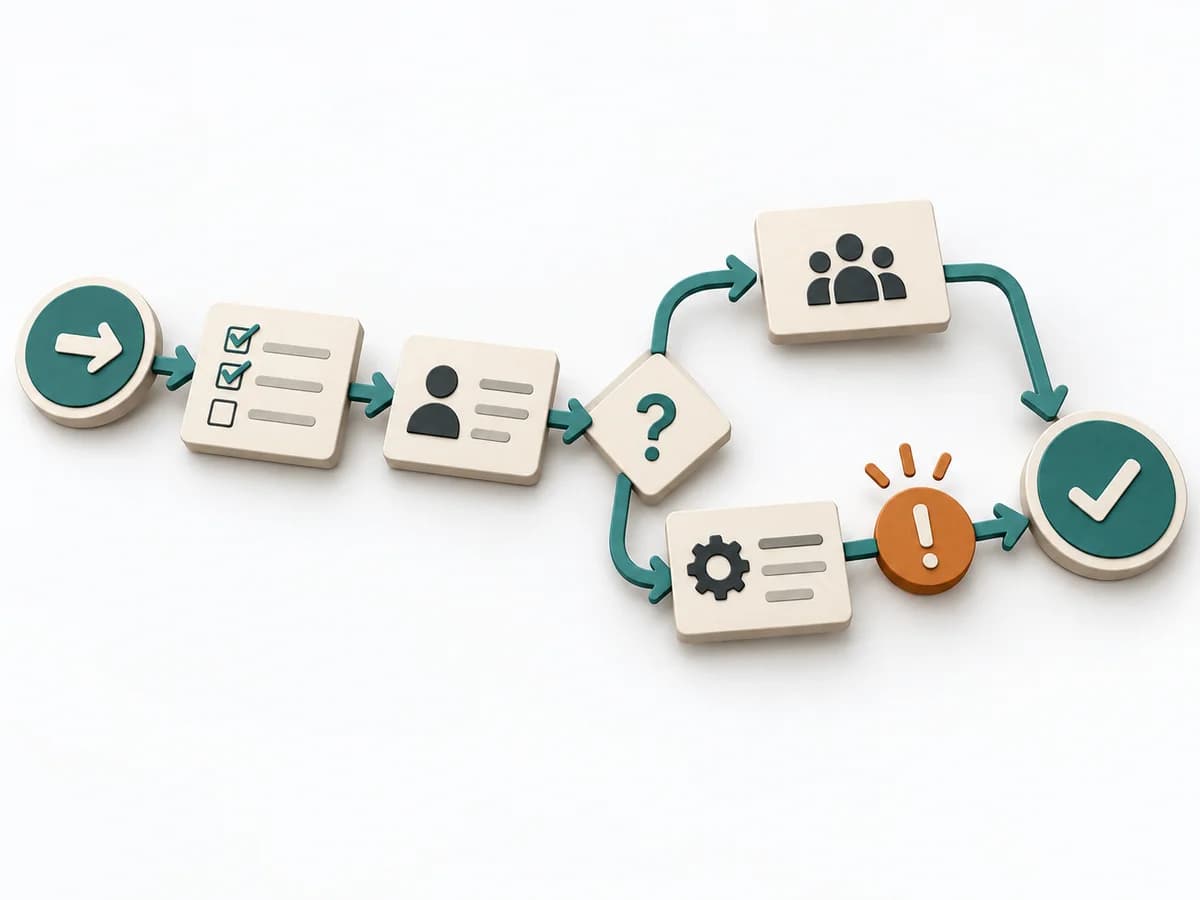 Operations Process Mapping | 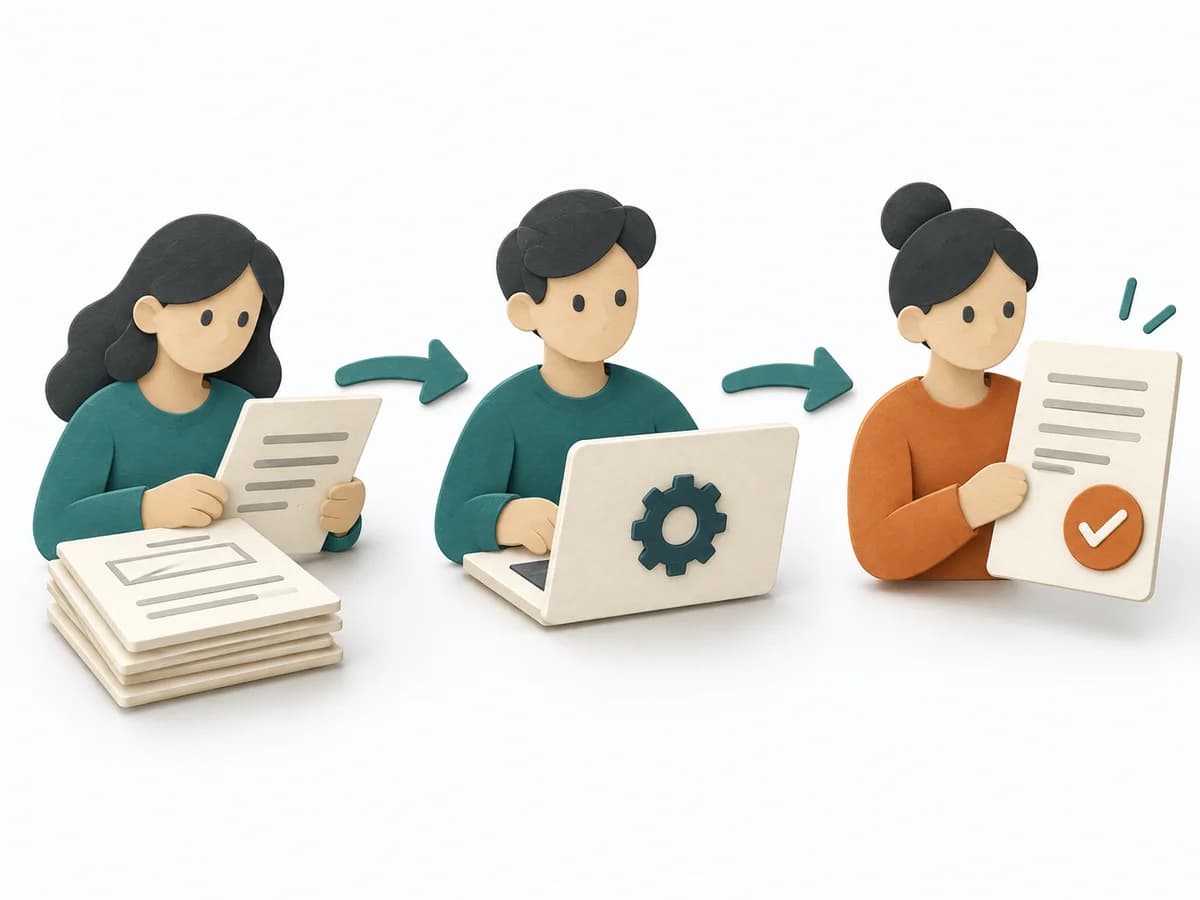 Knowledge Modeling Domain Storytelling |
|---|---|---|---|---|
Purposedifferent | Concept Mapping arranges terms and relationships in a network that makes subject-matter connections tangible. It fits when a topic needs to be understood structurally rather than linearly. | The Feynman Technique checks understanding by explaining a topic so that it stays easy for others to understand. It makes knowledge gaps visible before they become costly in everyday work. | With a confusing workflow that has many handoffs, the method makes the actual process visible. It shows where work is passed on, delayed, or duplicated, so improvement targets the right spots. | Domain Storytelling translates domain knowledge into a shared narrative of actors, objects, and workflows. It is especially useful when language, rules, and process understanding must be tightly connected. |
Complexitydifferent | Medium | Low | Medium | Low |
Timedifferent | 1-2 h | 20-60 min | 1-3 h | 1-2 h |
Participantsdifferent | 1-8 | 1 | 3-10 | 2-8 |
Formatdifferent | Workshop + async | Async | Workshop | Workshop |
Outputdifferent | Concept Map, Relationship Labels, Knowledge Gaps | Plain-language Explanation, Knowledge Gaps, Study Notes | Process Map, Handoff List, Improvement Backlog | Domain Story, Glossary Notes, Process Narrative |
Tagsno overlap | KnowledgeConceptsMappingSensemaking | LearningKnowledgeUnderstanding | ProcessOperationsImprovement | KnowledgeDomain-Driven DesignProcess |