View methods side by side.
Choose up to four methods. Add them using the search and share the comparison by copying its link.
| Criterion |  Knowledge Modeling Concept Mapping |  Knowledge Modeling Feynman Technique | 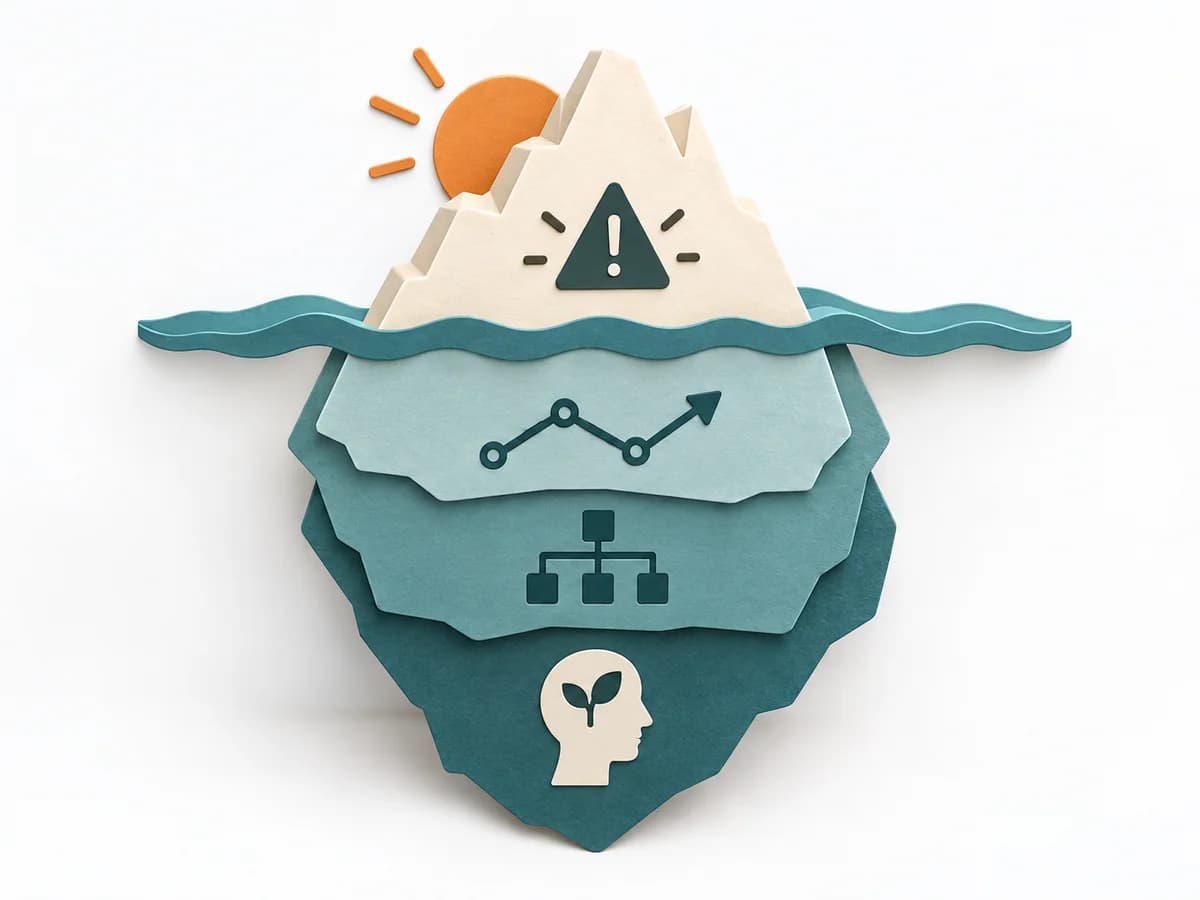 Systems Thinking Iceberg Model |  Knowledge Modeling Knowledge Mapping |
|---|---|---|---|---|
Purposedifferent | Concept Mapping arranges terms and relationships in a network that makes subject-matter connections tangible. It fits when a topic needs to be understood structurally rather than linearly. | The Feynman Technique checks understanding by explaining a topic so that it stays easy for others to understand. It makes knowledge gaps visible before they become costly in everyday work. | The Iceberg Model separates visible events from patterns, structures, and mental models. This turns a single observation into a deeper understanding of why a problem keeps recurring. | Knowledge Mapping makes knowledge, gaps, and transfer paths visible across a field. It fits when expertise should not just exist but also be findable and transferable. |
Complexitydifferent | Medium | Low | Low | Medium |
Timedifferent | 1-2 h | 20-60 min | 30-60 min | 1-3 h |
Participantsdifferent | 1-8 | 1 | 2-10 | 3-12 |
Formatdifferent | Workshop + async | Async | Workshop + async | Workshop |
Outputdifferent | Concept Map, Relationship Labels, Knowledge Gaps | Plain-language Explanation, Knowledge Gaps, Study Notes | Iceberg Worksheet, Pattern Notes, Intervention Ideas | Knowledge Map, Critical Knowledge Areas, Transfer Plan |
Tagsno overlap | KnowledgeConceptsMappingSensemaking | LearningKnowledgeUnderstanding | Systems thinkingRoot causePatterns | KnowledgeMappingRisk |