View methods side by side.
Choose up to four methods. Add them using the search and share the comparison by copying its link.
| Criterion |  Knowledge Modeling Concept Mapping |  Operations Change Analysis | 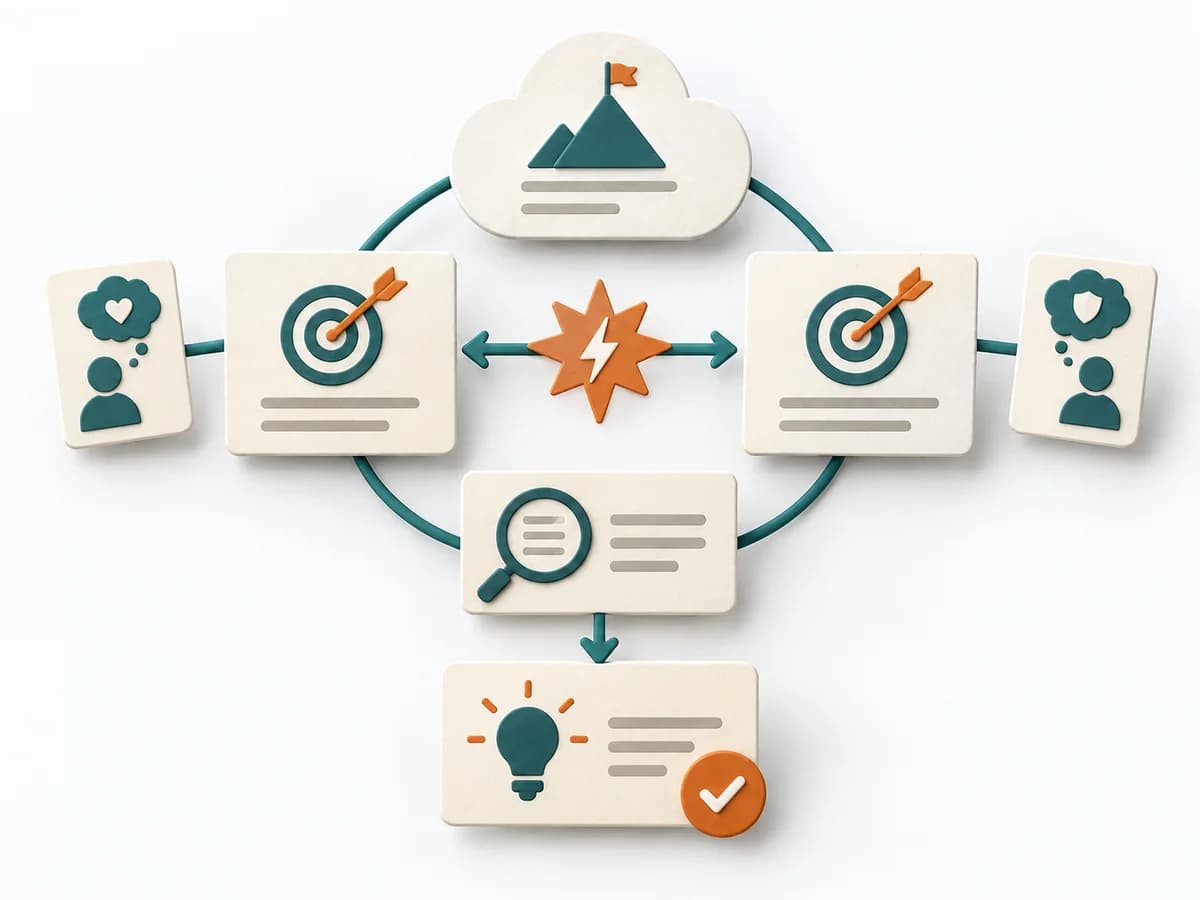 Systems Thinking Evaporating Cloud | 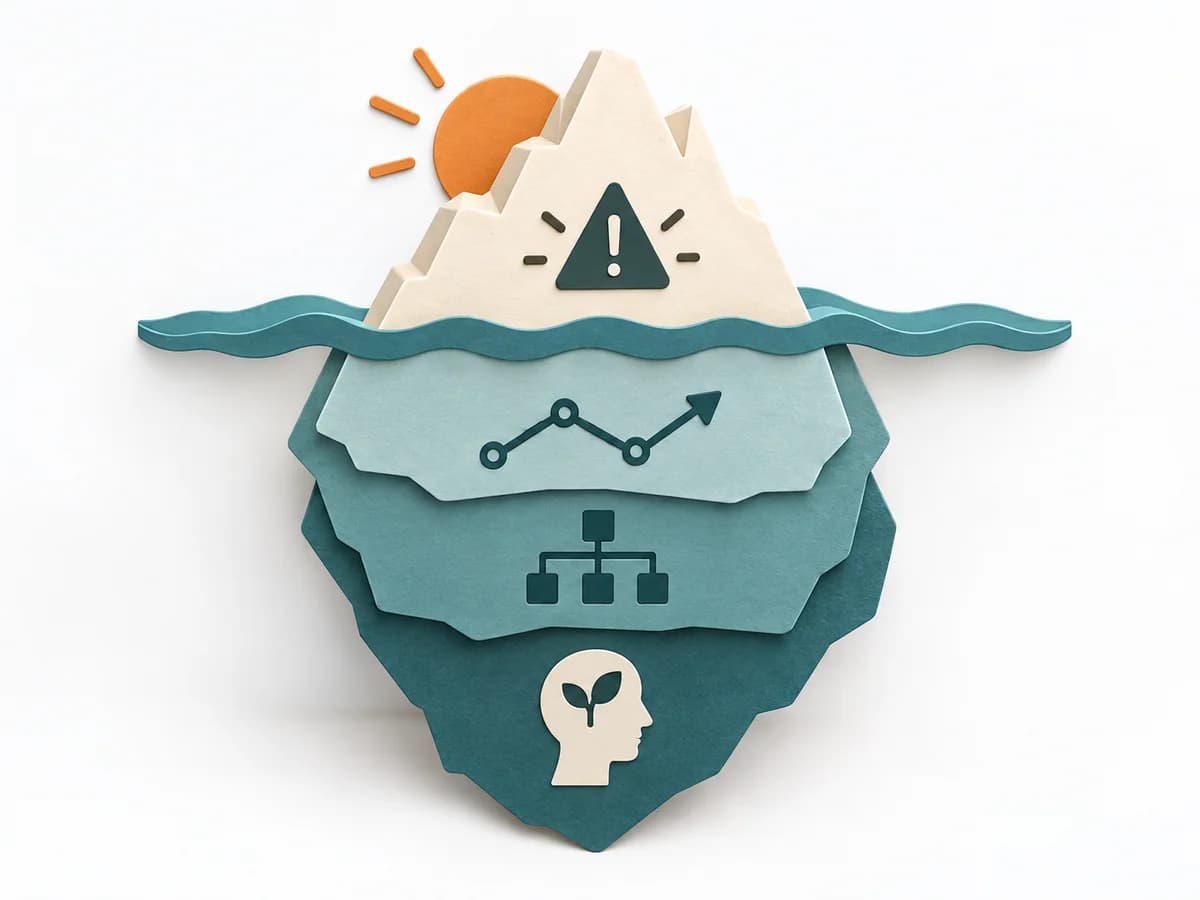 Systems Thinking Iceberg Model |
|---|---|---|---|---|
Purposedifferent | Concept Mapping arranges terms and relationships in a network that makes subject-matter connections tangible. It fits when a topic needs to be understood structurally rather than linearly. | For a deviation after a change, the method isolates the influence of the altered condition. It narrows down which differences are relevant and which are just accompanying noise. | The method makes visible why two seemingly incompatible demands arise and which assumption must be tested to resolve the conflict. | The Iceberg Model separates visible events from patterns, structures, and mental models. This turns a single observation into a deeper understanding of why a problem keeps recurring. |
Complexitydifferent | Medium | Medium | Medium | Low |
Timedifferent | 1-2 h | 45-120 min | 60-120 min | 30-60 min |
Participantsdifferent | 1-8 | 2-6 | 2-8 | 2-10 |
Formatdifferent | Workshop + async | Workshop + async | Workshop | Workshop + async |
Outputdifferent | Concept Map, Relationship Labels, Knowledge Gaps | Change Matrix, Cause Hypotheses, Validation Questions, Action List | Conflict Cloud, Assumption List, Breakthrough Ideas, Next Experiments | Iceberg Worksheet, Pattern Notes, Intervention Ideas |
Tagsno overlap | KnowledgeConceptsMappingSensemaking | ChangeRoot causeTroubleshootingComparison | Theory of ConstraintsAssumptionsSystems thinking | Systems thinkingRoot causePatterns |