View methods side by side.
Choose up to four methods. Add them using the search and share the comparison by copying its link.
| Criterion | 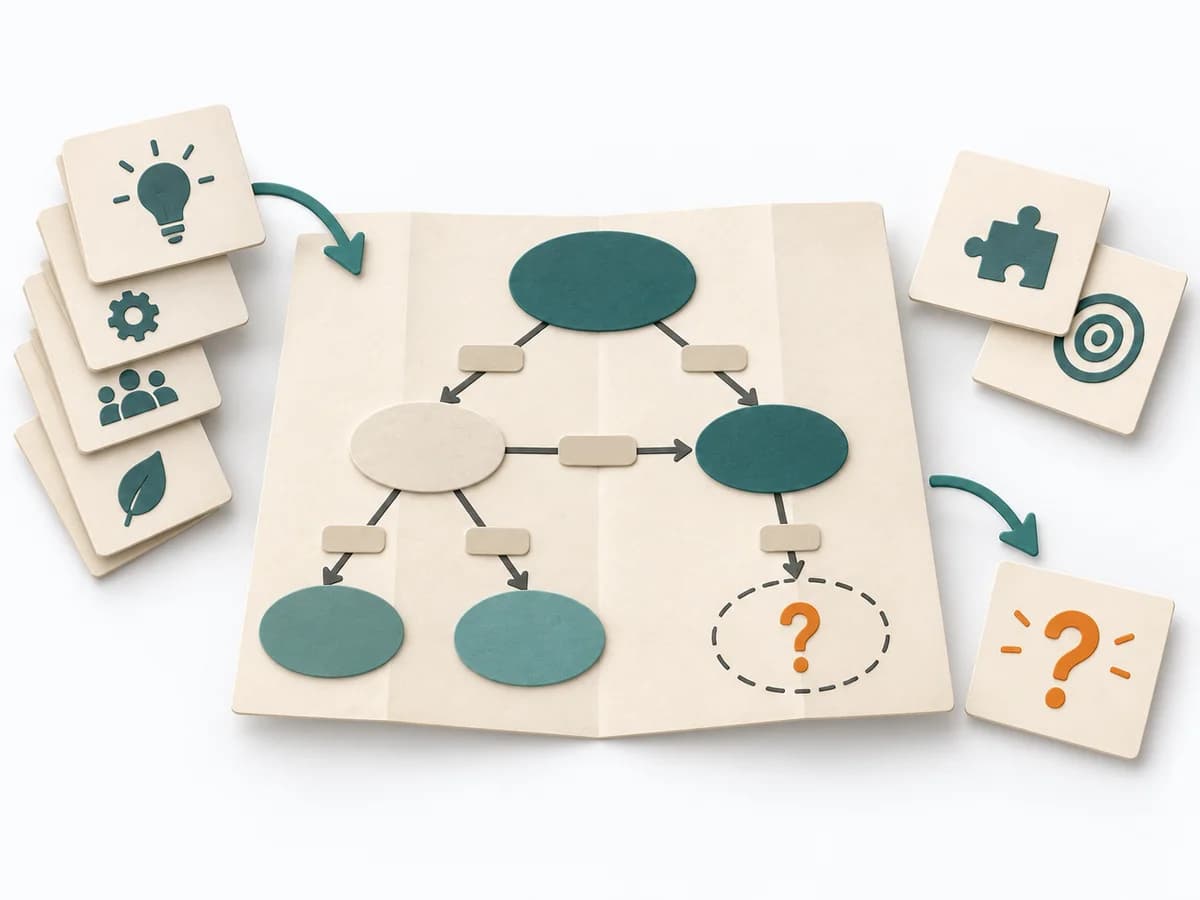 Knowledge Modeling Concept Mapping | 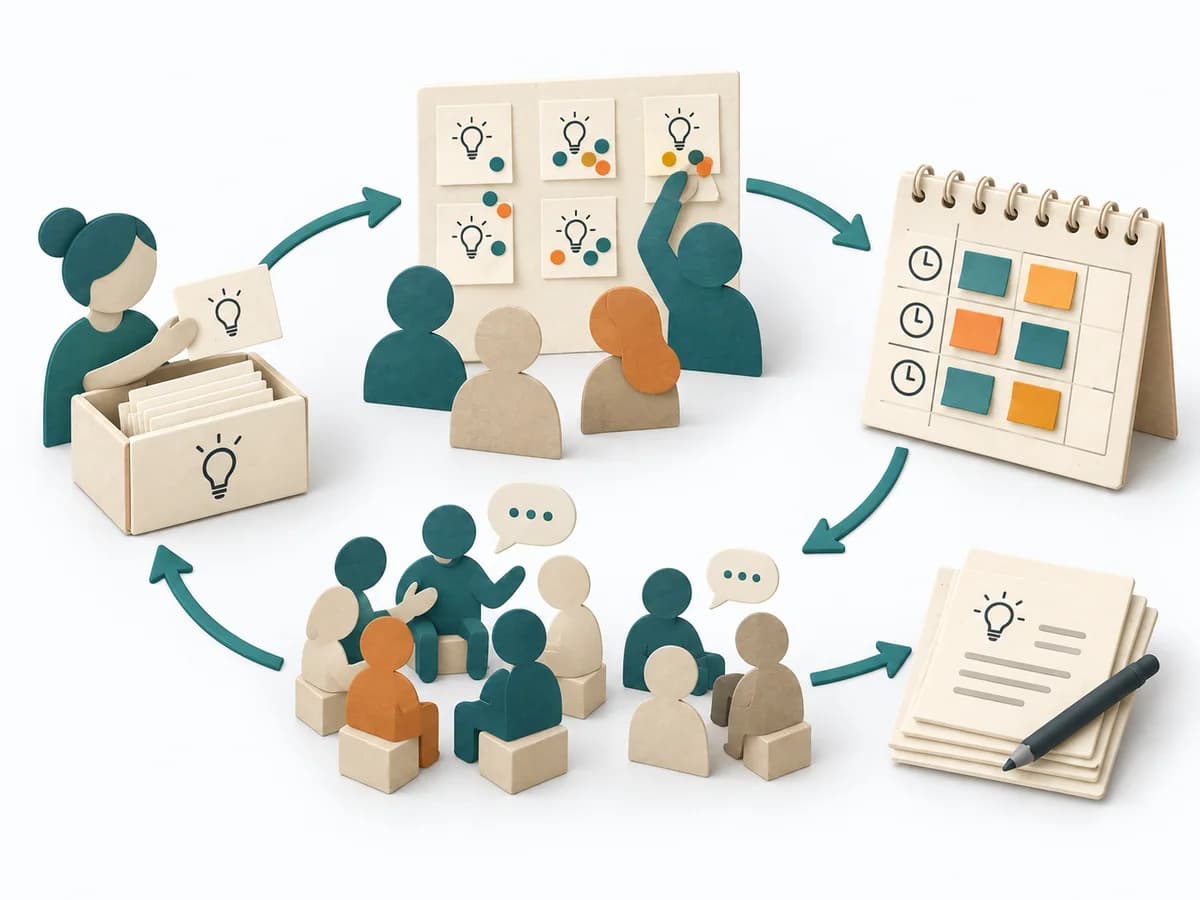 Facilitation Barcamp | 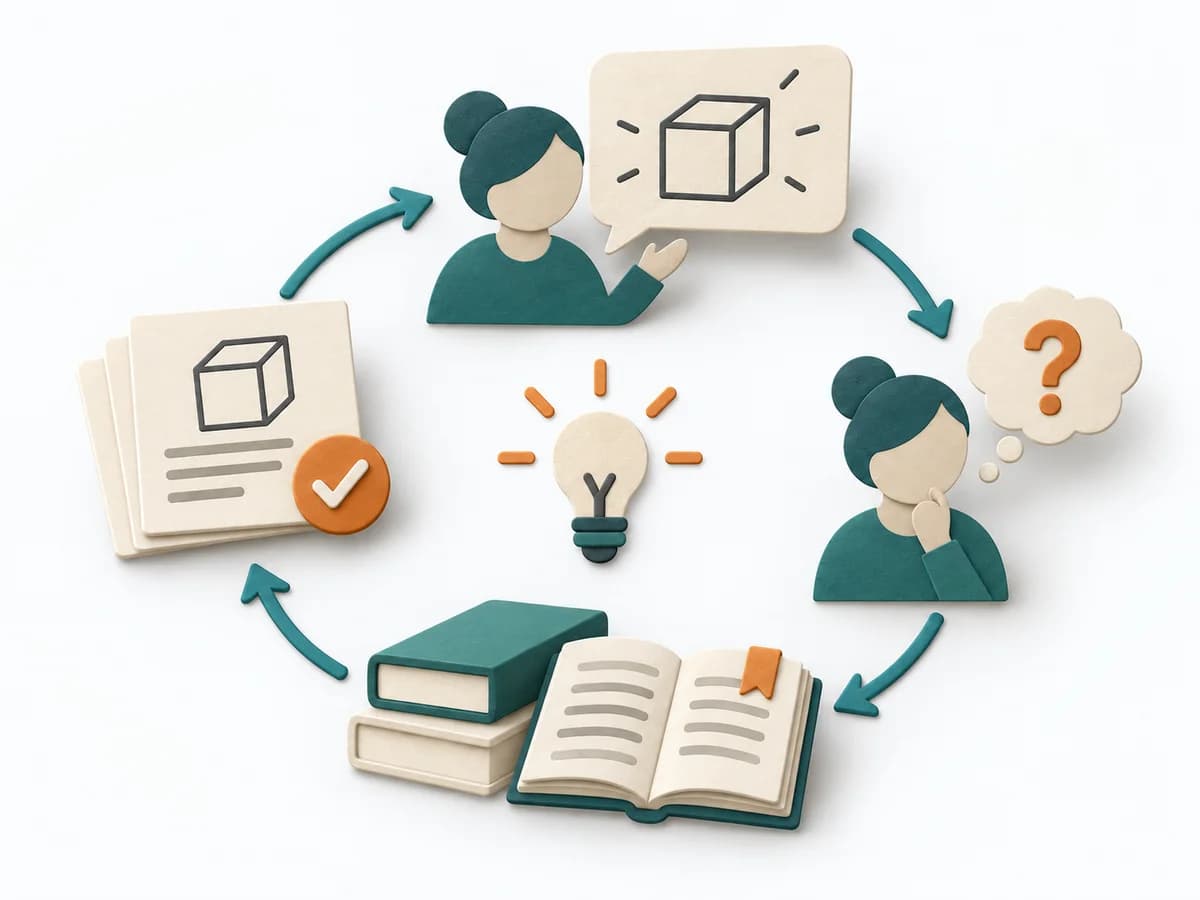 Knowledge Modeling Feynman Technique | 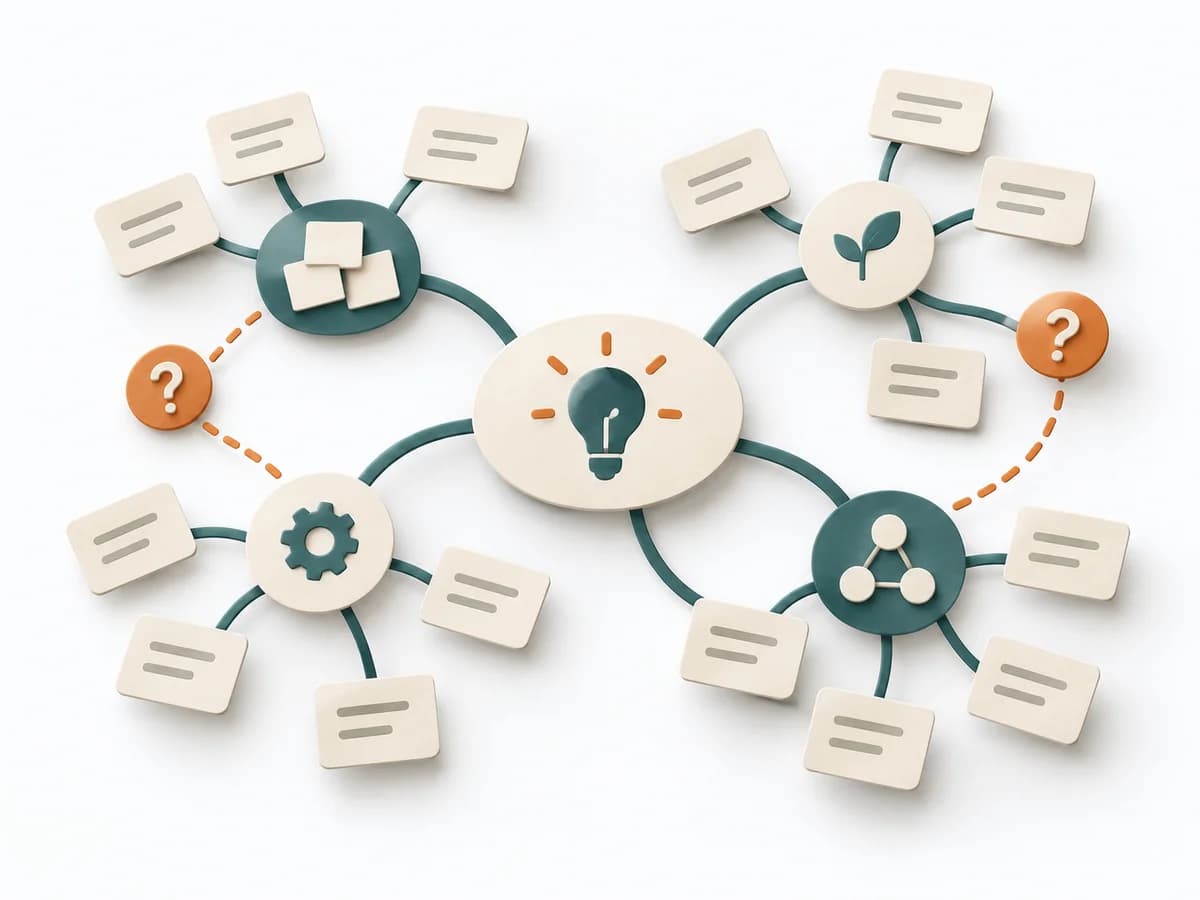 Facilitation Mind Mapping |
|---|---|---|---|---|
Purposedifferent | Concept Mapping arranges terms and relationships in a network that makes subject-matter connections tangible. It fits when a topic needs to be understood structurally rather than linearly. | When many people can contribute knowledge and the flow should stay open, Barcamp provides a framework for self-organized sessions. The format channels energy without defining the content too narrowly in advance. | The Feynman Technique checks understanding by explaining a topic so that it stays easy for others to understand. It makes knowledge gaps visible before they become costly in everyday work. | When a topic is still unclear and too many thoughts surface at once, Mind Mapping creates an open surface for ordering them. It makes connections, subtopics, and starting points visible without fixing them too early. |
Complexitydifferent | Medium | Medium | Low | Low |
Timedifferent | 1-2 h | Halber Tag bis 2 Tage | 20-60 min | 15-45 min |
Participantsdifferent | 1-8 | 15-200 | 1 | 1-10 |
Formatdifferent | Workshop + async | Workshop | Async | Workshop + async |
Outputdifferent | Concept Map, Relationship Labels, Knowledge Gaps | Session Board, Session Notes, Community Learnings | Plain-language Explanation, Knowledge Gaps, Study Notes | Mind Map, Topic Clusters, Open Questions |
Tagsno overlap | KnowledgeConceptsMappingSensemaking | FacilitationLarge groupLearning | LearningKnowledgeUnderstanding | BrainstormingIdeasMappingStructureFacilitation |