View methods side by side.
Choose up to four methods. Add them using the search and share the comparison by copying its link.
| Criterion | 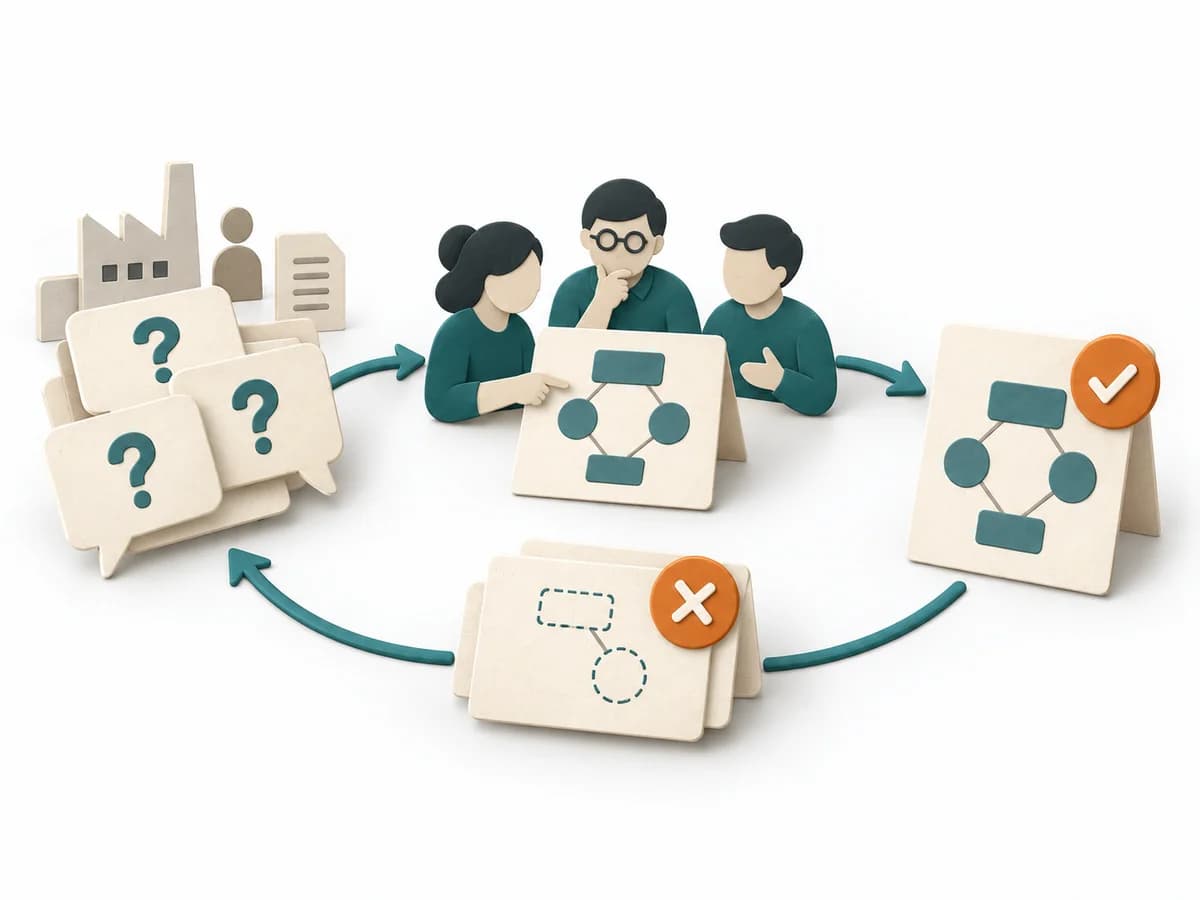 Knowledge Modeling Competency Questions |  Product Discovery Context Canvas | 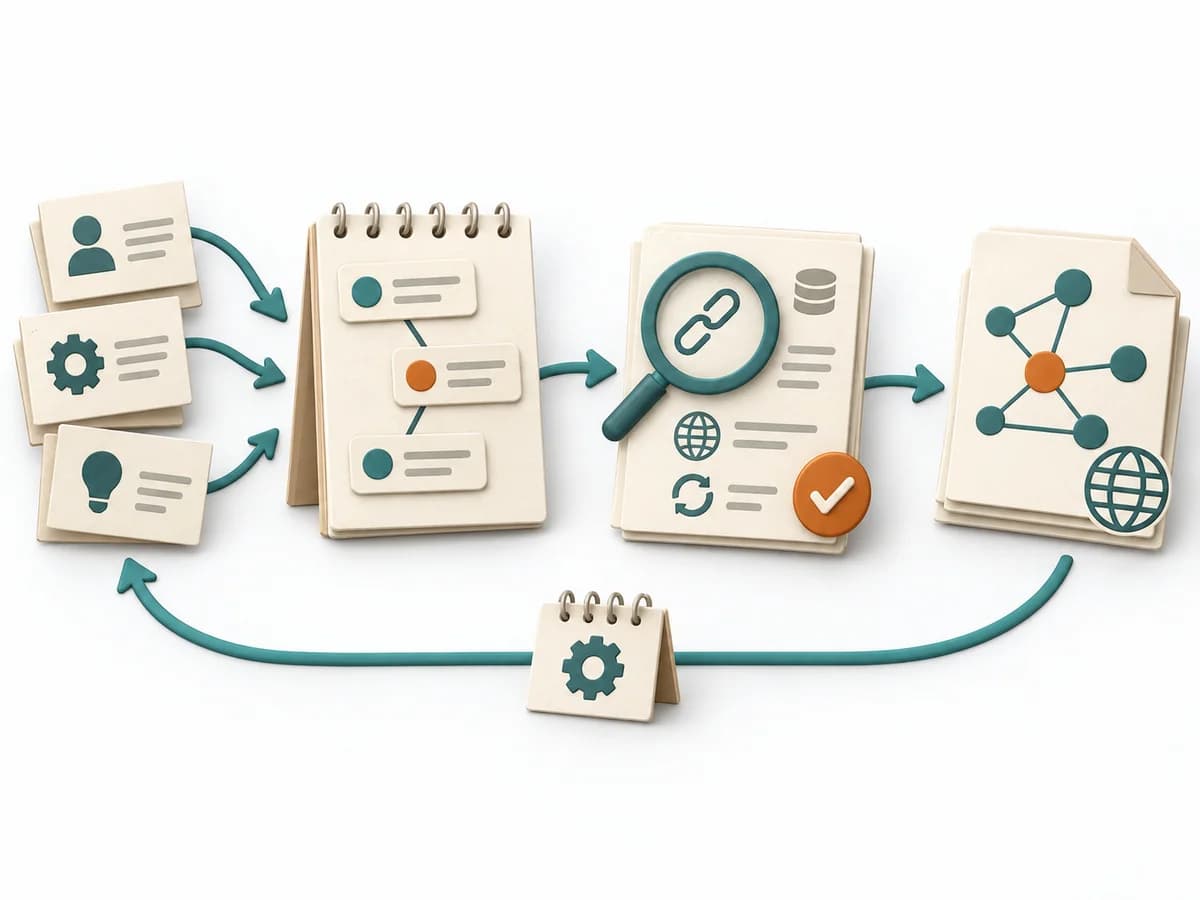 Knowledge Modeling Linked Open Terms |  Product Strategy Product Canvas |
|---|---|---|---|---|
Purposedifferent | Competency Questions translate a domain model into concrete questions that it must be able to answer. The method keeps the model's scope clean and prevents pretty but useless structures. | When an environment of users, systems, and constraints is hard to grasp, it puts the context compactly on the table. It creates a clear reading of influence, boundary, and dependency. | Linked Open Terms connects terminology work with linked-data thinking and makes terminology technically connectable. Vocabulary, meanings, and references can thereby be maintained consistently. | When product goal and feature scope don't yet fit cleanly together, it creates a shared working picture. It connects need, core features, and assumptions into a solid starting point. |
Complexitydifferent | Medium | Low | Medium | Medium |
Timedifferent | 2-4 h | 45-90 min | Wochen bis Monate | 1-2 h |
Participantsdifferent | 2-8 | 3-10 | 2-8 | 2-8 |
Formatdifferent | Workshop + async | Workshop | Workshop + async | Workshop + async |
Outputdifferent | Competency Question Set, Required Concepts, Test Queries, Coverage Matrix | Context canvas, Open questions, Shared context notes | Ontology Requirements, Conceptual Model, Published Ontology, Documentation, Maintenance Plan | Product Canvas, Product Assumptions, Scope Notes |
Tagsno overlap | OntologyKnowledge graphScopeRequirementsSemantic | ContextFramingRequirementsCanvas | OntologyMethodologyAgileSemantic | CanvasDiscoveryScope |