View methods side by side.
Choose up to four methods. Add them using the search and share the comparison by copying its link.
| Criterion |  Operations Change Analysis |  UX Research Usability Testing | 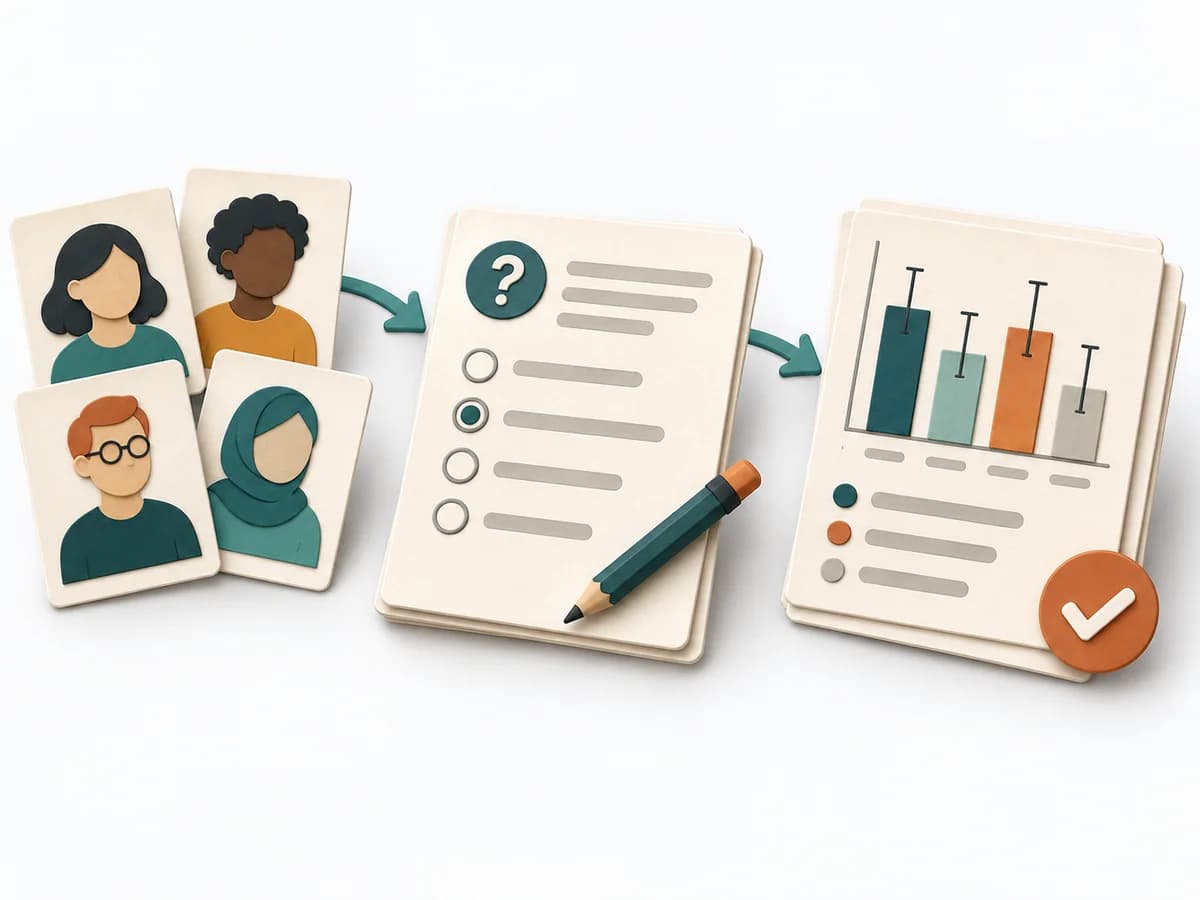 UX Research Surveys | 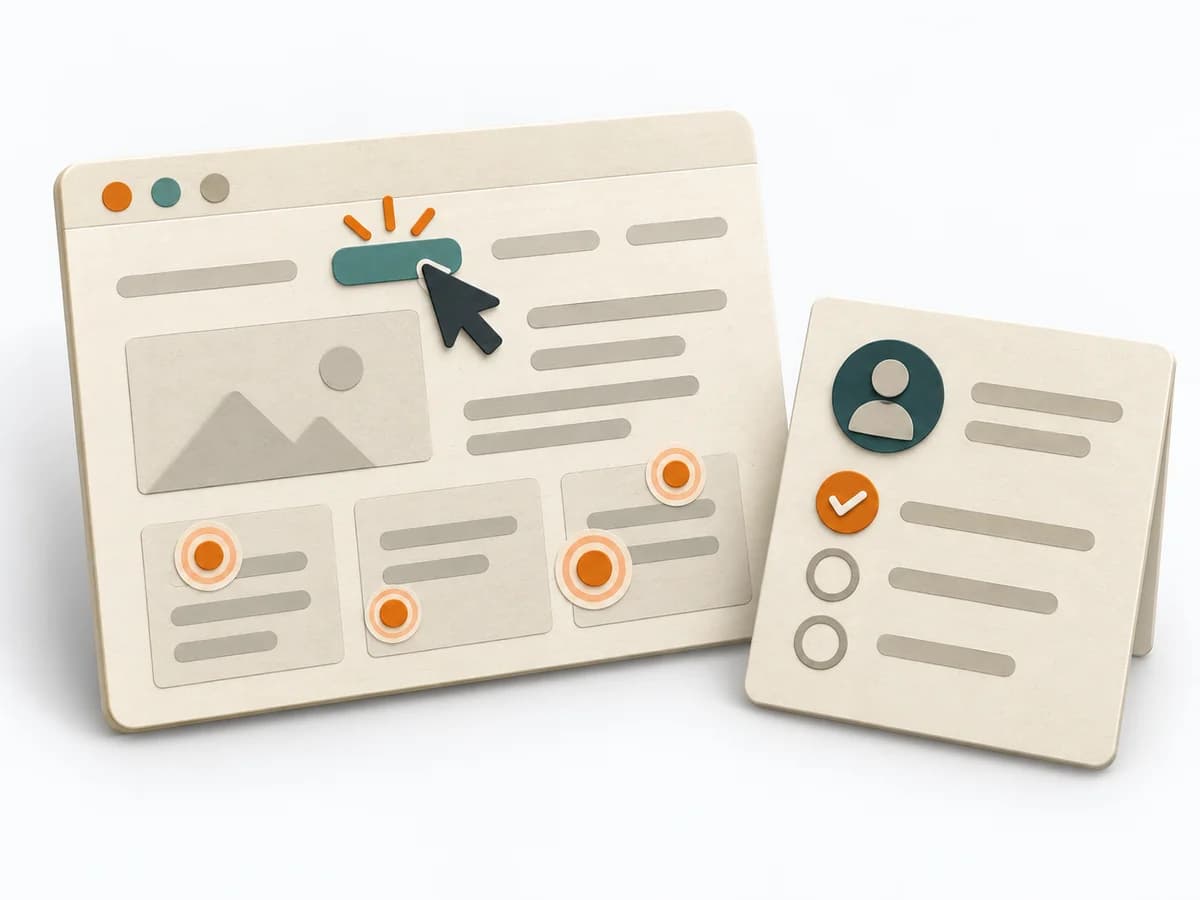 UX Research First-click Testing |
|---|---|---|---|---|
Purposedifferent | For a deviation after a change, the method isolates the influence of the altered condition. It narrows down which differences are relevant and which are just accompanying noise. | When a product is built but people get stuck on tasks, usability testing shows the friction at concrete points. Observed use instead of self-report makes visible where orientation, understanding, or interaction breaks down. | When a topic needs to be validated broadly and many people can answer the same question, surveys gather structured feedback in a scalable form. Answers become comparable and segmentable instead of remaining merely anecdotal. | When users immediately turn the wrong way on a screen or wireframe, first click testing checks initial orientation at high speed. The first click shows early whether expectation, labeling, and wayfinding fit together. |
Complexitydifferent | Medium | Medium | Medium | Low |
Timedifferent | 45-120 min | 1-2 h je Session | 3-14 Tage | 1-2 Tage |
Participantsdifferent | 2-6 | Based on research question | 50+ | 10-30 |
Formatdifferent | Workshop + async | Workshop + async | Async | Async |
Outputdifferent | Change Matrix, Cause Hypotheses, Validation Questions, Action List | Usability Issues, Severity List, Recommendations | Survey Results, Charts, Segment Insights | Click Heatmap, Success Rate, Design Recommendations |
Tagsno overlap | ChangeRoot causeTroubleshootingComparison | ValidationUXPrototype | QuantitativeResearchValidation | UXNavigationFindabilityValidation |