View methods side by side.
Choose up to four methods. Add them using the search and share the comparison by copying its link.
| Criterion |  Operations Change Analysis | 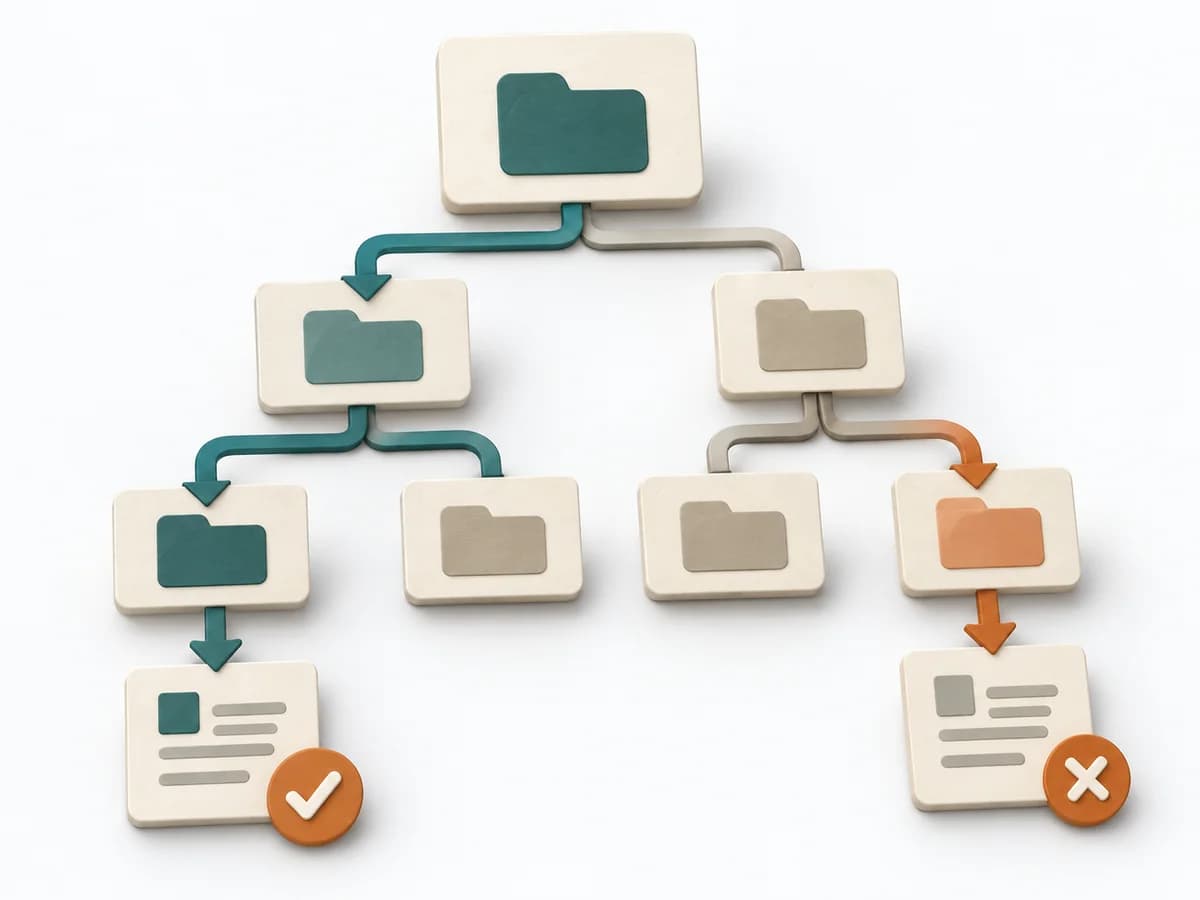 UX Research Tree Testing | 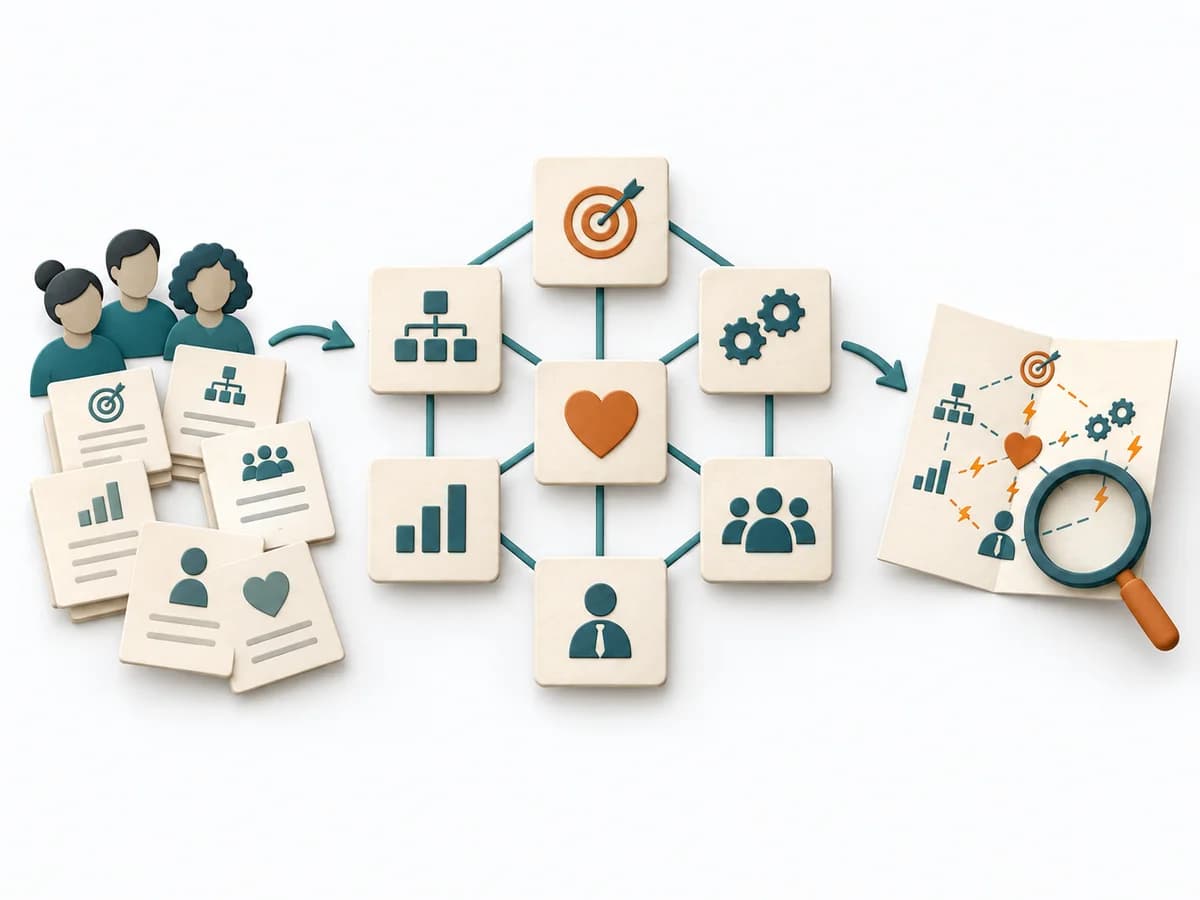 Business Strategy McKinsey 7S |  Facilitation Alignment Mapping |
|---|---|---|---|---|
Purposedifferent | For a deviation after a change, the method isolates the influence of the altered condition. It narrows down which differences are relevant and which are just accompanying noise. | When a navigation exists but search paths still fail, tree testing checks findability without visual distraction. The method shows whether labels, levels, and paths really lead to the intended destination. | McKinsey 7S checks whether Strategy, Structure, Systems, Shared Values, Skills, Style, and Staff fit together. Organizational misalignments become visible across multiple levers as a result. | When several people work toward one goal but hold different mental maps, Alignment Mapping makes the discrepancies visible. It arranges goals, assumptions, and priorities so shared direction becomes verifiable. |
Complexitysame | Medium | Medium | Medium | Medium |
Timedifferent | 45-120 min | 1-2 Tage | 2-4 h | 1-2 h |
Participantsdifferent | 2-6 | Based on research question | 3-12 | 4-12 |
Formatdifferent | Workshop + async | Async | Workshop | Workshop |
Outputdifferent | Change Matrix, Cause Hypotheses, Validation Questions, Action List | Findability Metrics, Path Analysis, Revised IA | 7S Assessment, Alignment Gaps, Change Actions | Alignment Map, Open Issues, Decision Questions |
Tagsno overlap | ChangeRoot causeTroubleshootingComparison | Information architectureNavigationFindability | OrganizationStrategyAlignmentChange | AlignmentStakeholdersStrategyFacilitation |