View methods side by side.
Choose up to four methods. Add them using the search and share the comparison by copying its link.
| Criterion |  Operations Change Analysis | 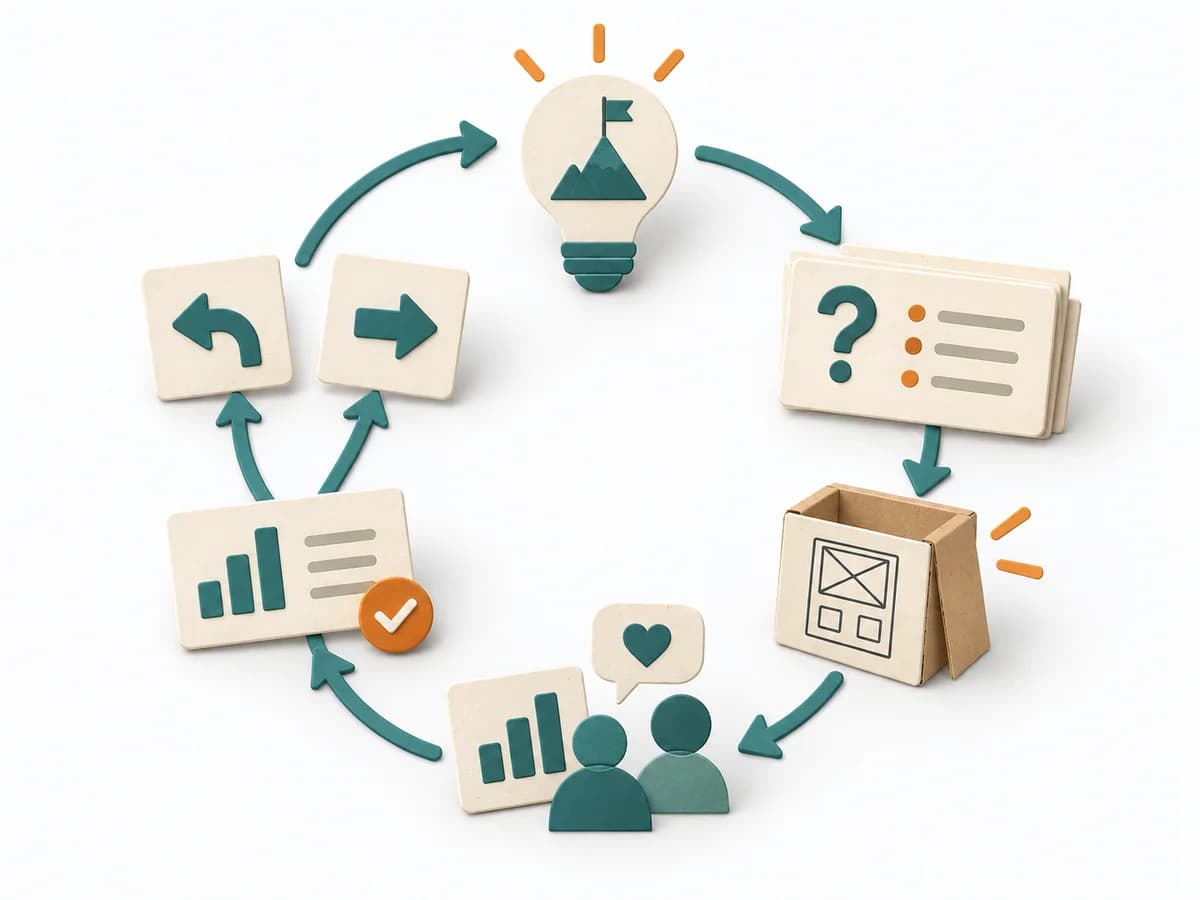 Innovation Lean Startup | 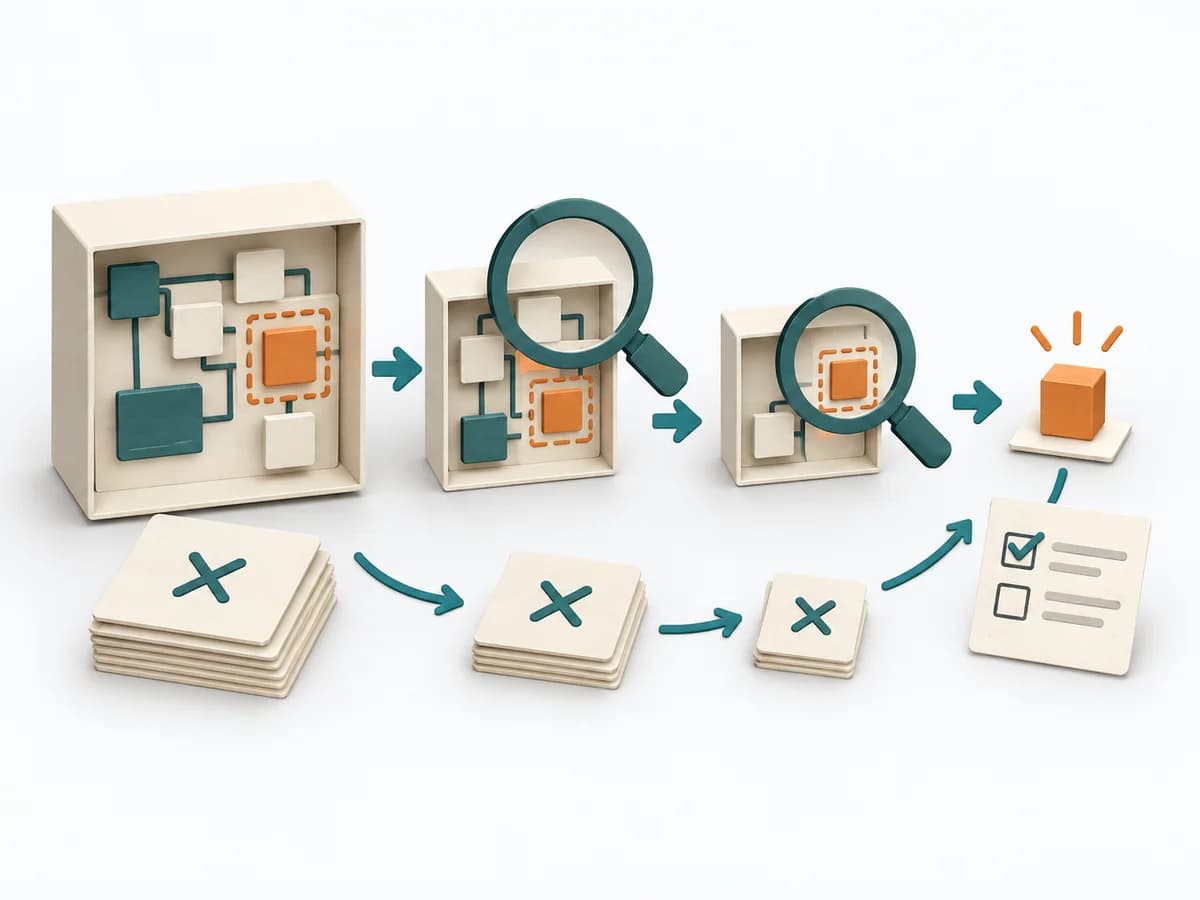 Engineering Fault Isolation |  Engineering Hypothesis-Driven Troubleshooting |
|---|---|---|---|---|
Purposedifferent | For a deviation after a change, the method isolates the influence of the altered condition. It narrows down which differences are relevant and which are just accompanying noise. | For uncertain business assumptions, the method forces the idea into contact with real market reactions early. It separates wishful picture, assumption, and observable behavior, so that learning becomes faster than planning. This translates uncertainty into measurable insight. | In technical failures, the visible symptom often gets mixed up with the actual cause. Fault Isolation narrows the fault space and progressively reduces which part of the system is truly affected. | When systems fail unexpectedly, spontaneous attempts often produce more noise than insight. Hypothesis-driven Troubleshooting translates symptoms into testable assumptions and makes troubleshooting learnable. |
Complexitysame | Medium | Medium | Medium | Medium |
Timedifferent | 45-120 min | Wochen bis Monate je Lernzyklus | 30-180 min | 30-240 min |
Participantsdifferent | 2-6 | 2-8 | 1-6 | 1-6 |
Formatsame | Workshop + async | Workshop + async | Workshop + async | Workshop + async |
Outputdifferent | Change Matrix, Cause Hypotheses, Validation Questions, Action List | Hypothesis list, MVPs, Learning reports, Pivot or persevere decision | Fault Isolation Map, Test Log, Excluded Hypotheses, Narrowed Fault Area | Hypothesis Log, Test Plan, Evidence Notes, Diagnosis Summary |
Tagsno overlap | ChangeRoot causeTroubleshootingComparison | LeanStartupValidationMVP | TroubleshootingDiagnosisEngineering | TroubleshootingProblem solvingDiagnosis |