View methods side by side.
Choose up to four methods. Add them using the search and share the comparison by copying its link.
| Criterion | 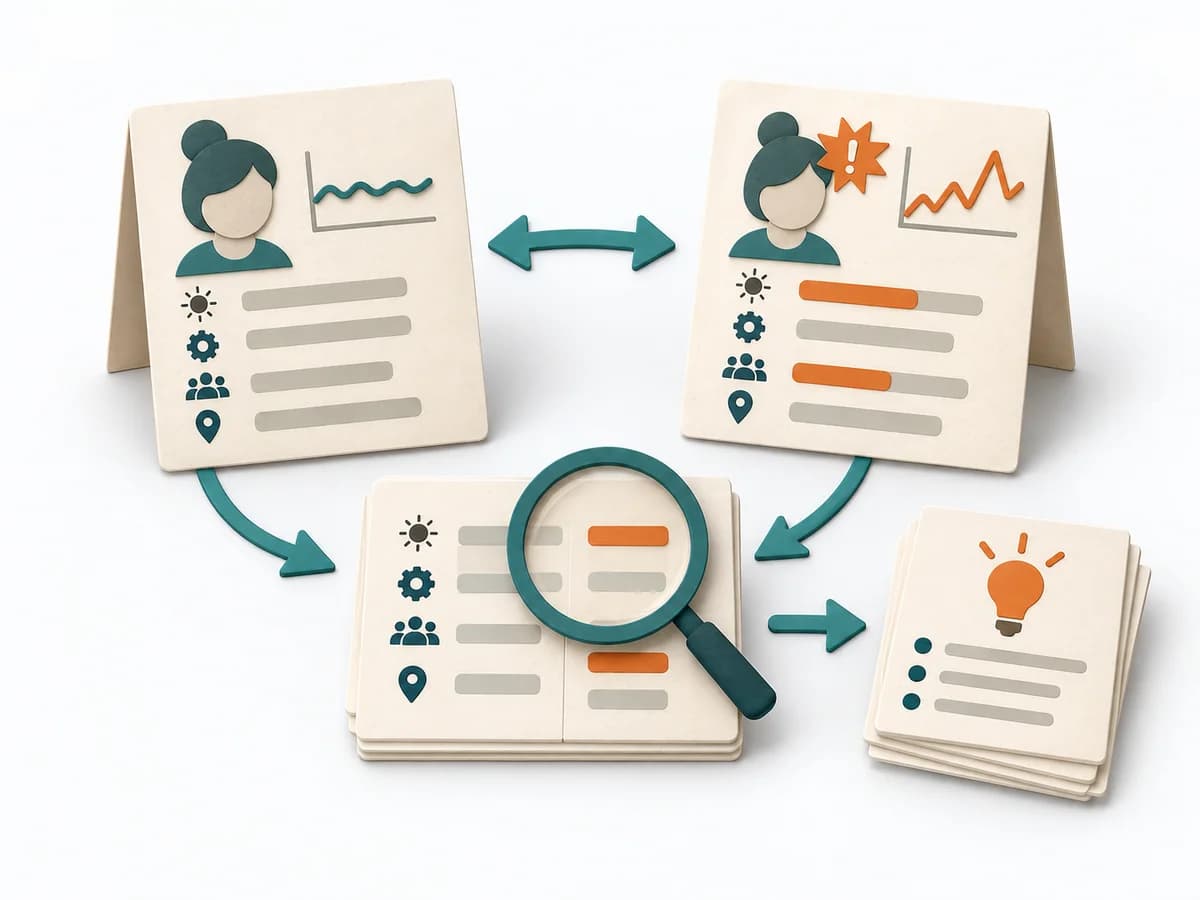 Operations Change Analysis |  Business Strategy GAP Analysis | 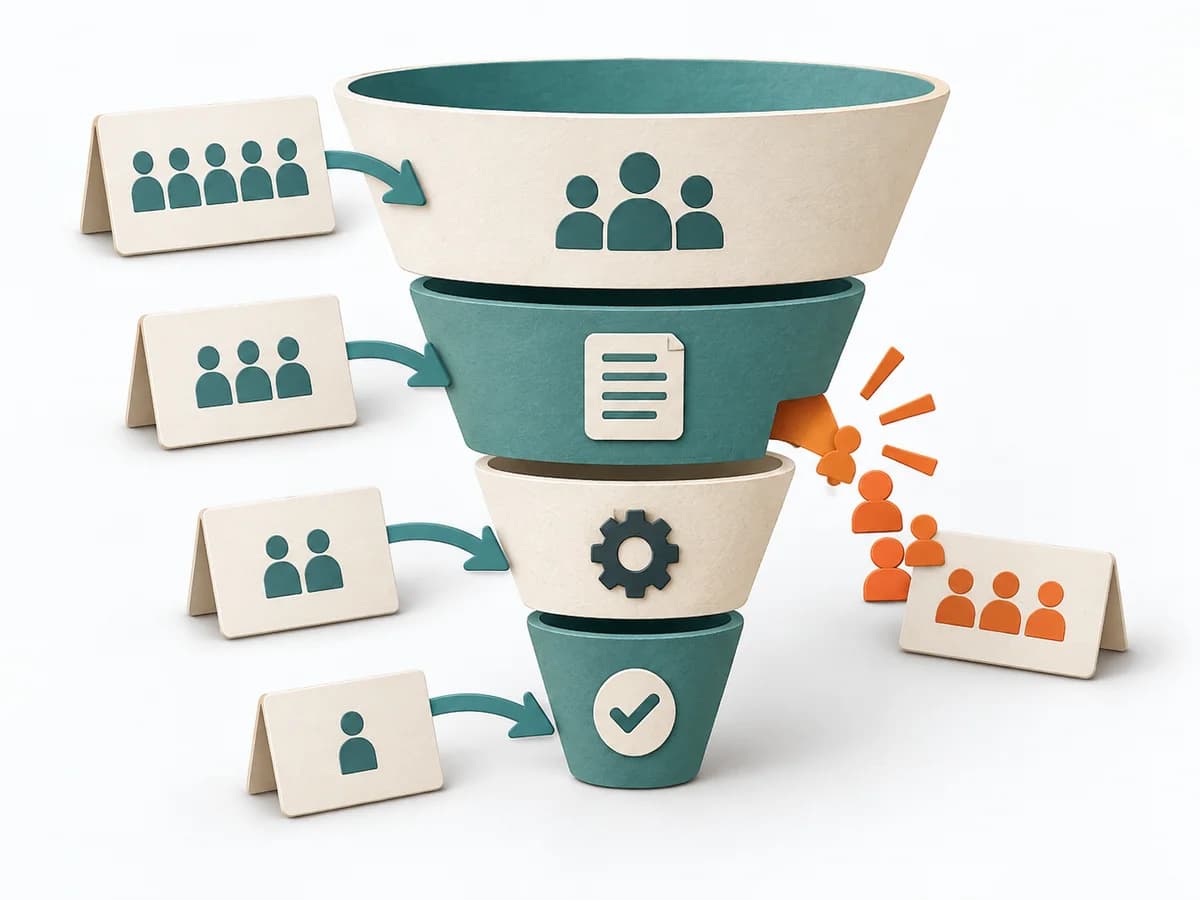 Growth Funnel Analysis |  Decision Making Force Field Analysis |
|---|---|---|---|---|
Purposedifferent | For a deviation after a change, the method isolates the influence of the altered condition. It narrows down which differences are relevant and which are just accompanying noise. | GAP Analysis compares the current state with a target picture and makes the distance manageable. It becomes useful when, ahead of new initiatives, it must become clear which capabilities, processes, or resources are missing. | When many visitors or users drop off along the way, the reason behind the number often stays hidden. Funnel Analysis exposes these transitions and makes visible exactly where the path collapses. | In change initiatives, supporting and restraining forces sit at the table at the same time. Force Field Analysis makes these tensions explicit and shows where change can be pushed forward by strengthening or relieving. |
Complexitydifferent | Medium | Medium | Medium | Low |
Timedifferent | 45-120 min | 1-3 h | 1-3 h | 45-90 min |
Participantsdifferent | 2-6 | 2-8 | 1-5 | 3-12 |
Formatdifferent | Workshop + async | Workshop + async | Async | Workshop |
Outputdifferent | Change Matrix, Cause Hypotheses, Validation Questions, Action List | Gap Matrix, Action Plan, Risk Notes | Funnel report, Drop-off analysis, Optimization hypotheses | Force Field Map, Change Levers, Risk Notes |
Tagsno overlap | ChangeRoot causeTroubleshootingComparison | StrategyAnalysisPlanning | AnalyticsConversionGrowth | ChangeDecisionStrategy |