View methods side by side.
Choose up to four methods. Add them using the search and share the comparison by copying its link.
| Criterion |  Operations Change Analysis | 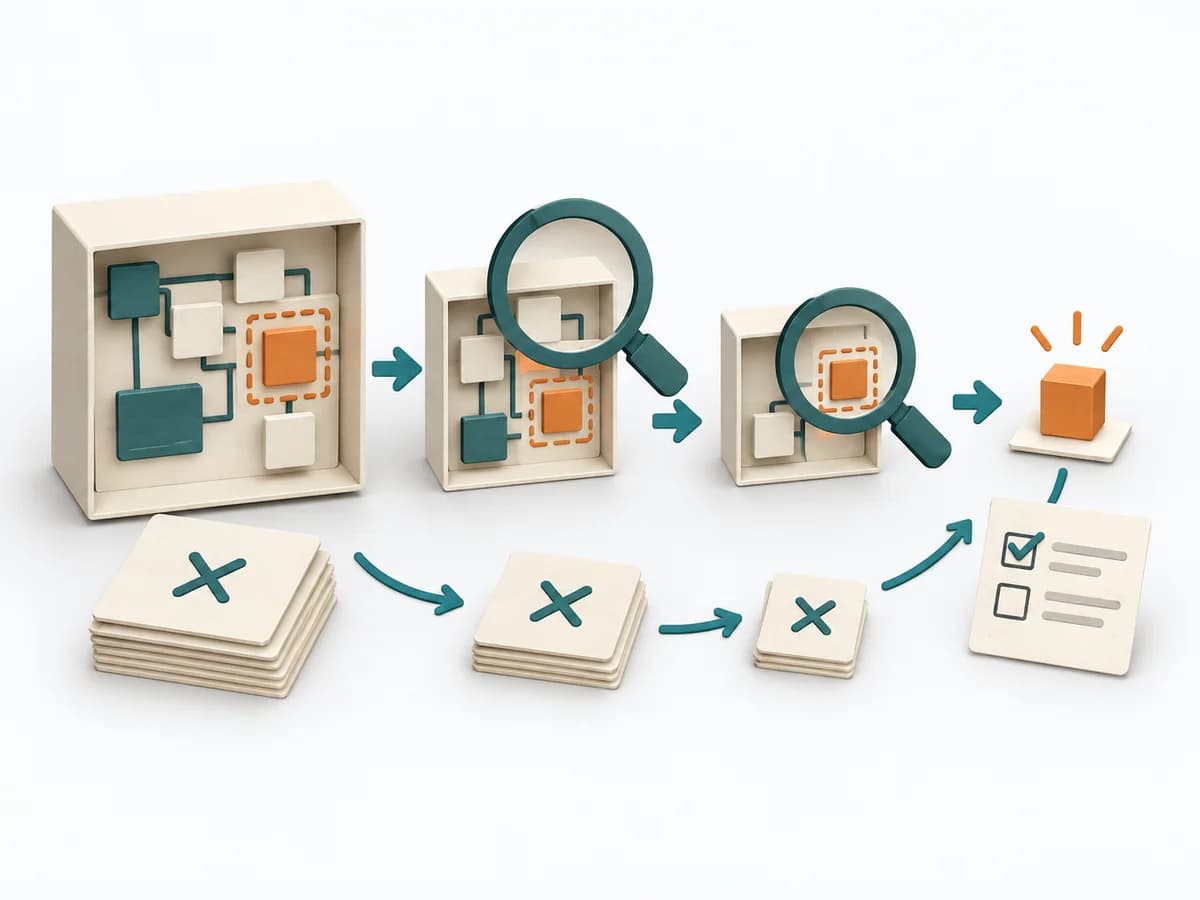 Engineering Fault Isolation | 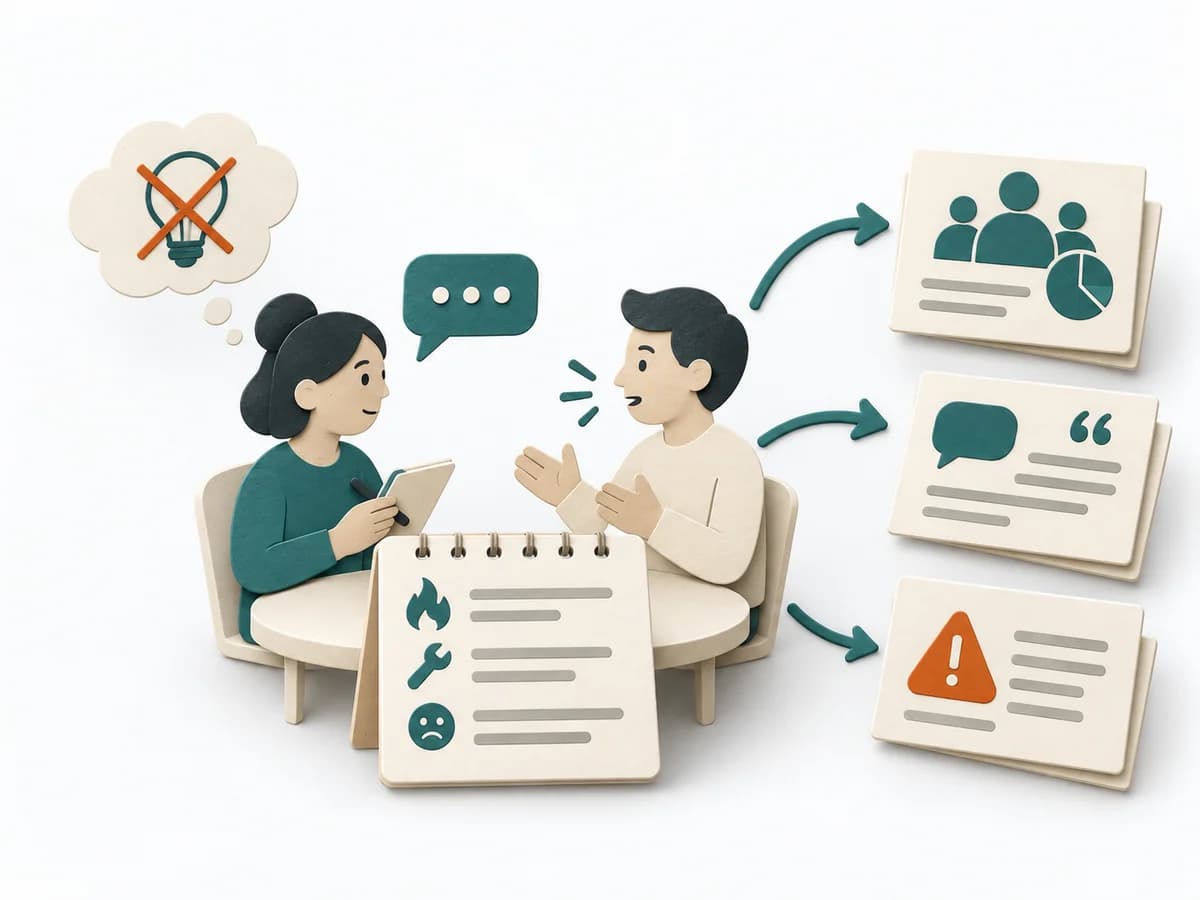 Product Discovery Problem Interview |  Product Discovery Experiment Canvas |
|---|---|---|---|---|
Purposedifferent | For a deviation after a change, the method isolates the influence of the altered condition. It narrows down which differences are relevant and which are just accompanying noise. | In technical failures, the visible symptom often gets mixed up with the actual cause. Fault Isolation narrows the fault space and progressively reduces which part of the system is truly affected. | When the picture of the problem still needs to become solid, it asks about real situations and consequences. It separates genuine suffering from mere interest in a solution. | When experiments become unreadable after the fact, it arranges hypothesis, signal, and learning goal on a single canvas. It separates problem, assumption, solution, and evidence. The result is captured as a Completed Experiment Canvas and a Success Metric. |
Complexitydifferent | Medium | Medium | Medium | Low |
Timedifferent | 45-120 min | 30-180 min | 30-60 min je Interview | 30-60 min |
Participantsdifferent | 2-6 | 1-6 | 5-12 Interviews | 1-5 |
Formatsame | Workshop + async | Workshop + async | Workshop + async | Workshop + async |
Outputdifferent | Change Matrix, Cause Hypotheses, Validation Questions, Action List | Fault Isolation Map, Test Log, Excluded Hypotheses, Narrowed Fault Area | Problem Evidence, Risk Notes, Customer Segments | Completed Experiment Canvas, Success Metric |
Tagsno overlap | ChangeRoot causeTroubleshootingComparison | TroubleshootingDiagnosisEngineering | DiscoveryInterviewsValidation | ExperimentsValidationDiscoveryHypothesis |